


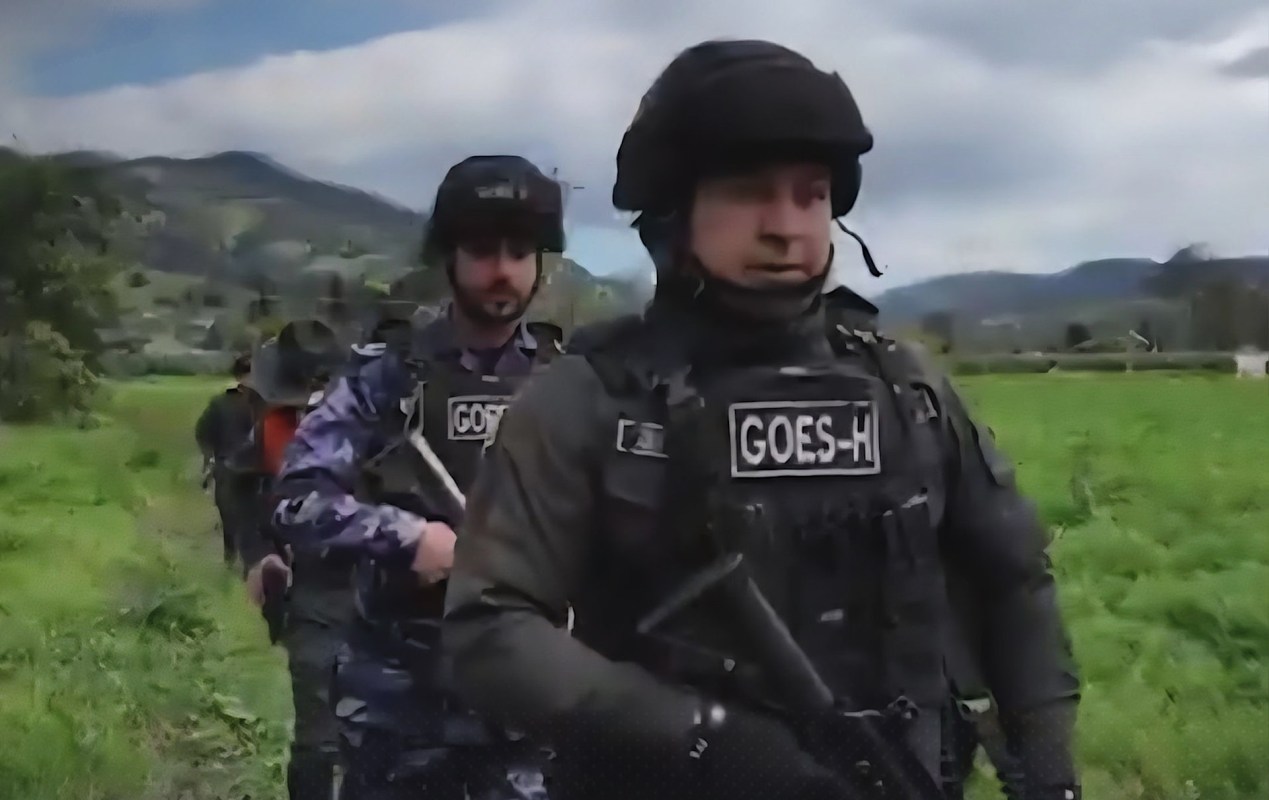
An international law enforcement operation has disrupted criminal networks working in the Amazon rainforest.
The multicountry initiative, Operation Green Shield, was led by the United Arab Emirates Ministry of Interior and was supported by partner agencies in Brazil, Colombia, Ecuador, and Peru. More than 1,500 officers were deployed across the participating South American nations, targeting hotspots for trafficking and smuggling in the Amazon Basin.
Officers uncovered organized criminal networks, leading to the seizure of hundreds of tons of resources, including raw minerals, timber, and fuel. Perhaps most disturbingly, authorities recovered more than 2,100 live animals to be trafficked, as well as 6,350 dead specimens from native birds, lizards, and mammals.
"It is an honor for the National Police of Peru to participate for the second consecutive year in Operation Green Shield," Gen. Manuel Elías Lozada Morales, director of the Environment Division of the National Police of Peru, said. "We are deeply satisfied with the joint work carried out with the countries of the region, and we thank the United Arab Emirates for their firm commitment to the defense of the Amazon rainforest. This international cooperation shows that, united, we can effectively protect one of the most important ecosystems on the planet and ensure its preservation for future generations. This is a magnificent example of international cooperation."
The Amazon is home to possibly tens of millions of species of plants and animals. It's known to be the habitat of 427 types of mammals, 1,300 types of birds, 378 species of reptiles, and more than 400 species of amphibians. All those species are at risk of being smuggled out of the rainforest and into countries where they could be considered invasive.
Florida, in particular, has seen its fair share of invasive species from all over the world, many brought to the country as pets and set free by accident or purposefully. Creatures from Burmese pythons to prehistoric-looking fish have infiltrated the state's ecosystems and are taking over.
The trafficking of animals from the Amazon is a growing global problem. For example, 95% of mammals smuggled from the Americas are found in Brazil. Birds are targeted for their brightly colored feathers and eggs, while reptiles are taken as pets and for their skins.
"This effort is part of a comprehensive strategy that not only strengthens environmental security but also promotes international cooperation in the face of shared threats," Col. Jorge Andrés Bernal Granada, director of Carabineers and Environmental Protection at the National Police of Colombia, said. "We invite allied countries, including the United Arab Emirates, to continue fostering collaborative spaces that safeguard the Amazon as a natural heritage of humanity."
|
Do you think America does a good job of protecting its natural beauty? Click your choice to see results and speak your mind. |
 Definitely 👍
Join our free newsletter for good news and useful tips, and don't miss this cool list of easy ways to help yourself while helping the planet.
Cool Picks






