


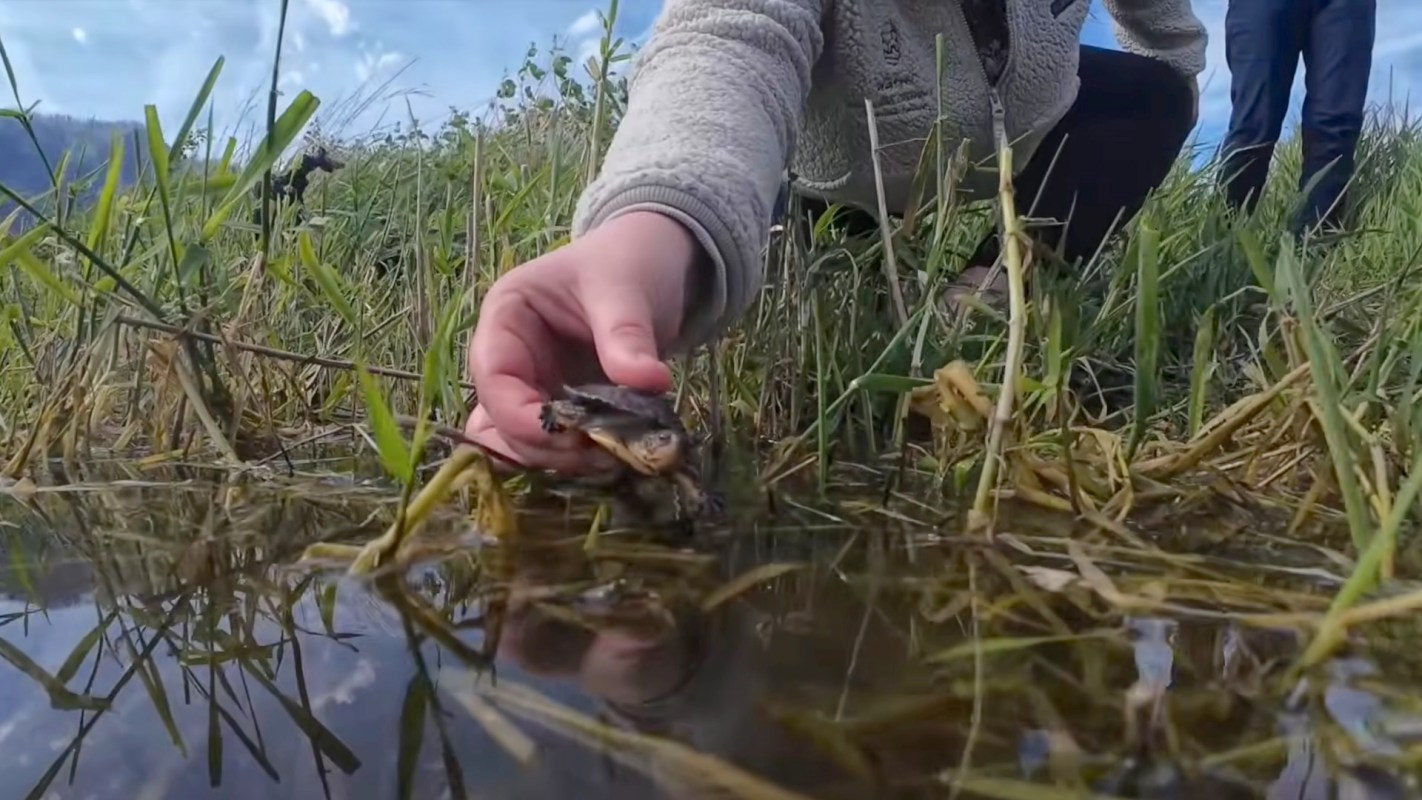
A hopeful wildlife release in the Columbia River Gorge is getting attention for all the right reasons. Officials from the Oregon Zoo released 22 endangered northwestern pond turtles in the gorge this week after being raised in captivity long enough to improve their odds in the wild.
What happened?
As The Columbian detailed, the turtles were gathered as hatchlings in the gorge last spring by Washington Department of Fish & Wildlife biologists and later taken to the Oregon Zoo's conservation lab in Portland. There, the staff used heat lamps and abundant food so the turtles could grow fast before release.
The young turtles returned to a carefully selected habitat in the gorge — a major milestone for a species that has spent decades struggling to survive.
According to The Columbian, Jen Osburn Eliot, who oversees the zoo's turtle conservation program, explained why the "head-starting" strategy has been so effective. "In a year, they grew to about the size of 3-year-old turtles," she said, adding that raising them in the lab "gives them a much better chance of survival in the wild."
That extra growth matters because larger turtles are less vulnerable to predators, especially invasive American bullfrogs. As Eliot put it: "The bigger the turtle, the harder it is for a bullfrog to gobble it up."
Why does it matter?
According to The Columbian, Washington classifies the northwestern pond turtle as endangered, while Oregon considers it a sensitive species. Wildlife officials in the 1990s determined the wild population had fallen steeply to about 150 turtles.
TCD Picks » Quince Spotlight
💡These best-sellers from Quince deliver affordable, sustainable luxury for all




Since then, conservationists have worked together for years on the recovery effort. The program has released more than 1,600 northwestern pond turtles in the Columbia River Gorge since 1991, and about 800 now live in the wild — nearly all of them linked to the recovery effort.
That's encouraging news not only for turtles but also for people. Healthy wetland ecosystems support biodiversity, strengthen local landscapes, and help protect the natural spaces communities rely on for recreation and clean water.
Conservation projects like this also show how public agencies, zoos, and volunteers can work together on practical solutions. It's the kind of progress that can ripple outward.
What are people saying?
The experts involved in the effort made it clear that every release matters.
"Every turtle we put back in a pond matters," Eliot said, according to The Columbian. "We need to do our part to keep the population going."
Britton Ransford, the communications manager for Fish & Wildlife's Southwest Region, emphasized the scale of the project.
The message is simple: Patient, hands-on conservation work can help bring a species back from the brink.

Get TCD's free newsletters for easy tips, smart advice, and a chance to earn $5,000 toward home upgrades. To see more stories like this one, change your Google preferences here.







