


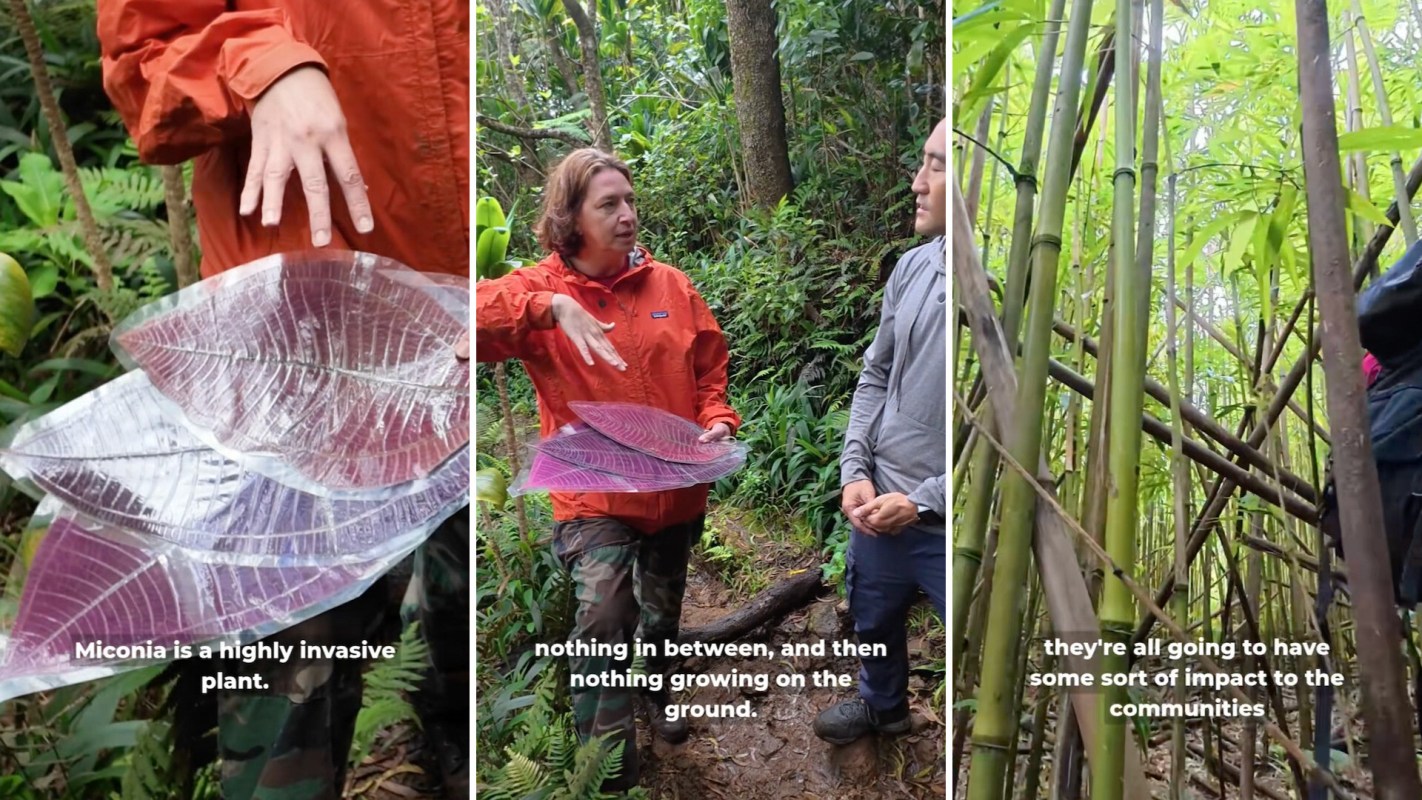
An invasive plant spreading through Hawaiʻi's Koʻolau mountains is raising alarms for more than just ecological reasons.
In a recent TikTok mini-documentary, local storyteller Here in Hawai'i (@HereInHawaiiTV) highlighted how miconia — a fast-growing plant — could worsen flooding and landslides for communities below.
The video follows efforts to control miconia in Oʻahu's watershed areas, where crews are working through dense vegetation to stop the plant from spreading.
@hereinhawaiitv The Koʻolaus getting taken over by an invasive plant is actually terrifying. Watch the full episode (Flood Control: OISC) → link in bio. Support the Invasive Species Committee on your island: 💛 Oʻahu (OSIC) – https://www.instagram.com/oahuisc/ ❤️ Big Island (BIISC) – https://www.instagram.com/bigislandinvasivespecies/ 🩷 Maui (MISC) – https://www.instagram.com/mauiinvasive/ 💜 Kaua'i (KISC) – https://www.instagram.com/kauaiisc/ 💚 Molokaʻi (MoMISC) – https://molokaiisc.org/ Mahalo to Dr. Leah Bremer at the Institute for Sustainability and Resilience for making this story happen!
♬ original sound - Here in Hawai'i
According to the video, a single miconia plant can produce up to 9 million seeds every year. It may reach 50 feet in under 10 years, outpacing native ʻōhiʻa and koa trees.
Once mature miconia takes hold, it creates a dark canopy that prevents other plants from growing underneath. As one speaker in the video explained, "The only thing that starts coming up underneath those mature plants are more miconia."
The post's caption called the prospect of the Koʻolaus being overtaken by the species "actually terrifying" and directed viewers to invasive species committees across Hawaiʻi that are working to contain it.
TCD Picks » Quince Spotlight
💡These best-sellers from Quince deliver affordable, sustainable luxury for all




The biggest concern is what happens to the land — and the people living below it — when healthy forest systems are replaced by invasive growth.
In the video, speakers compare a healthy watershed to something that holds water gradually rather than shedding it quickly. But with invasive plants such as miconia, that system starts behaving more like "a water slide," sending runoff downhill instead of absorbing it.
That can mean more severe flooding, more landslides, and heavier sediment flowing into streams and nearshore reefs.
Native forests support biodiversity and help protect communities from extreme runoff, while degraded watersheds create greater risks and more costly damage.
The good news is that crews are already targeting the plant before it can spread further. In the video, workers explain they are searching for "incipient species," or early-stage outbreaks, in hopes of preventing miconia from taking over "acres and acres" and eventually "hundreds of acres."
Their work is part of a broader push by Hawaiʻi's island-based invasive species committees, which the creator encouraged viewers to support.
For residents, supporting local invasive species programs, staying informed about problem plants in their area, and paying attention to community-led conservation efforts will all help. Public support and funding can make a major difference in how quickly these outbreaks are found and controlled.
As the video makes clear, the goal is urgent but straightforward: Stop the spread before the damage grows.
"With invasive plants like these, it kind of works like a water slide," one speaker said. Another summed up the mission this way: "We're suppressing it, and we're working towards eradication."
Commenters on the post praised that work, with one writing, "Fighting invasive takes a lot of effort. Thank you for your work."
"Sad to see it is so aggressive and hard to eradicate, but I am glad you are continuing in the efforts," another added. "Our native plants depend on it."

Get TCD's free newsletters for easy tips, smart advice, and a chance to earn $5,000 toward home upgrades. To see more stories like this one, change your Google preferences here.







