


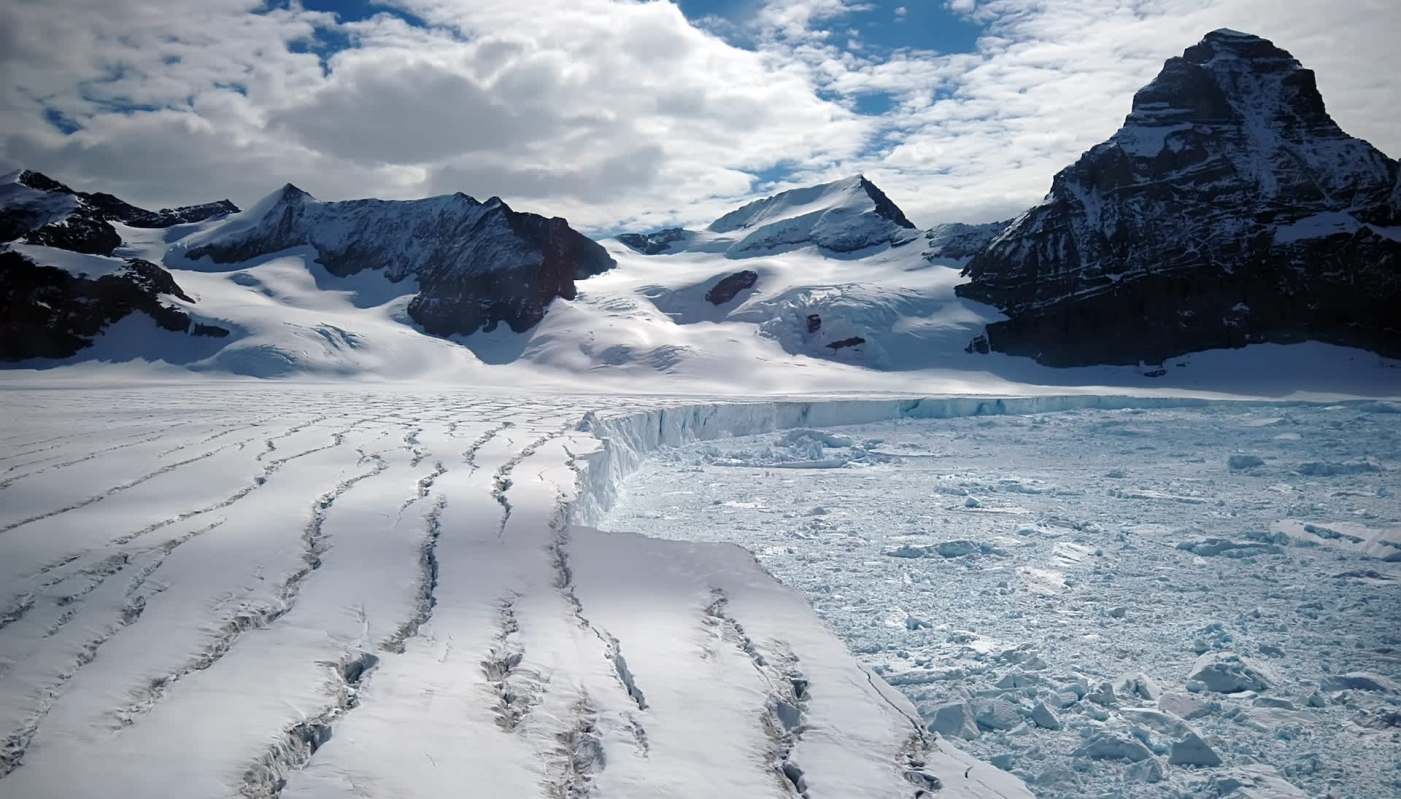
Researchers mapped out the regions where Antarctic ice melt would be most felt, providing a clearer picture of the consequences of warming temperatures.
What's happening?
Warming global temperatures, caused by heat-trapping air pollution, have led to the rapid melting of glaciers and ice sheets in Antarctica. In a new study published in Nature Communications, scientists observed how melting ice sheets on the continent impact rising sea levels. The team used computer models to get a better understanding of how the phenomenon impacts different communities around the world.
When you submerge an object in a bowl of water, the liquid will rise evenly. But when ice sheets melt, sea levels don't rise at the same rate everywhere. Instead, some regions experience higher sea levels while the water nearest to the ice sheets drops. Researchers also found that ice melt causes the Earth's rotation to change, redistributing water around the planet.
If warming continues at this pace, coastal and island communities near the Indian, Pacific, and Western Atlantic oceans will be at risk, according to the study. The Caribbean and Pacific Island nations are particularly vulnerable to rising sea levels, despite contributing little to climate change.
Why are rising sea levels important?
Melting ice sheets further add to the threat of extreme weather events, which have already been worsened by rising global temperatures. Coastal communities face major flood risks as sea levels continue to rise. This could potentially destroy homes and make different neighborhoods uninhabitable. Low-income residents would be impacted the most, with many unable to afford to relocate.
This study highlights the need to cut carbon pollution, which individuals can do by reducing their use of dirty energy. Fossil fuels like gas, coal, and natural gas create heat-trapping fumes that accelerate warming. In order to slow the rate of melting, researchers say we must do our part to mitigate rising temperatures.
What's being done about rising sea levels?
The best way to start tackling our climate crisis is through education. This way, we can learn the best and most practical ways to care for the environment in our local communities.
One way to cut pollution and benefit your household is to install solar panels. Solar energy is a great way to make your home more resilient to extreme weather while reducing your carbon emissions. When paired with battery storage, they help save money on your utility bills and temper rising energy prices.
TCD's Solar Explorer can connect you with vetted installers and save money on solar installations by curating competitive bids. For example, EnergySage provides a free service that makes it easy for readers to connect with vetted local installers. EnergySage users often save up to $10,000 on solar installations.
|
Should the government offer tax incentives for energy-saving home upgrades? Click your choice to see results and speak your mind. |
 Absolutely 👍
💰Get TCD's free newsletters for easy tips to save more, waste less, and make smarter choices — and earn up to $5,000 toward clean upgrades in TCD's exclusive Rewards Club.
TCD Picks » Quince Spotlight
💡These best-sellers from Quince deliver affordable, sustainable luxury for all




Cool Picks






