


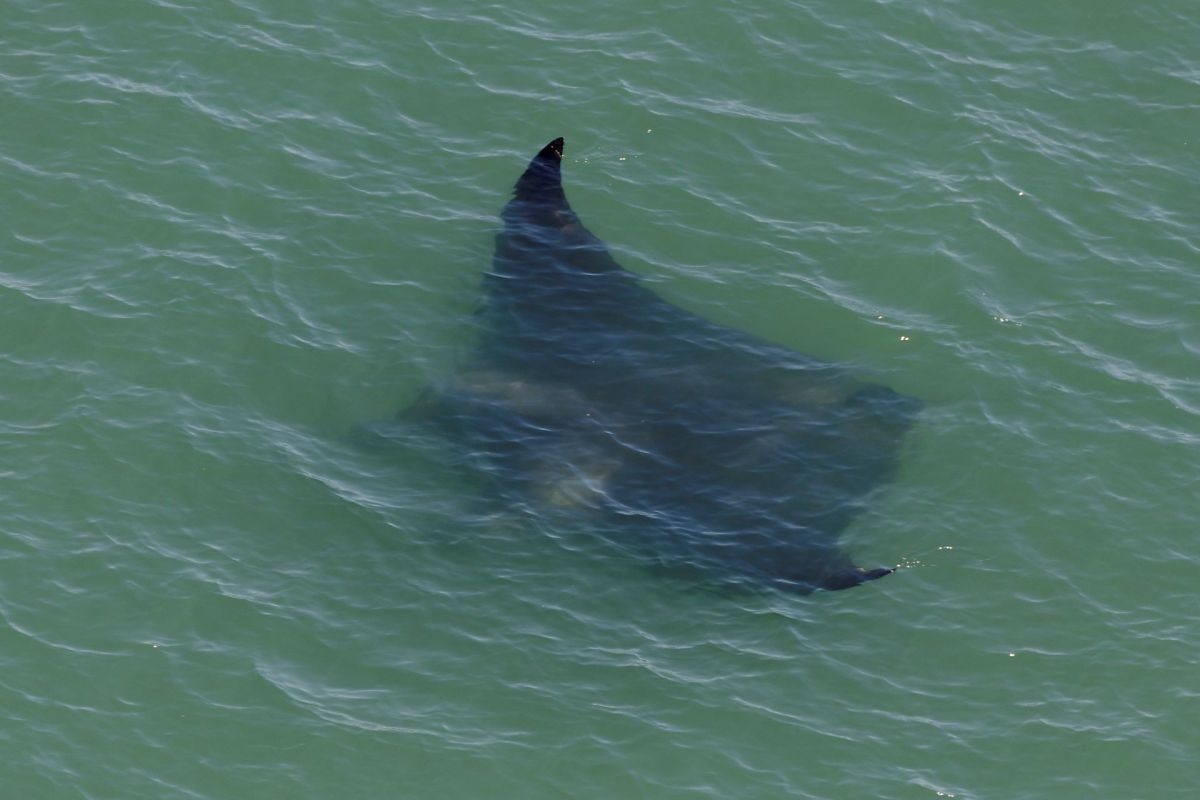
Manta rays living in Florida waters provide great benefits to other marine life and even create mobile ecosystems, according to new evidence.
Researchers from the University of Miami and the nonprofit Marine Megafauna Foundation recently released a new study on manta rays. It focused on their behavior in South Florida and how they affect other fish around them.
"Using video footage collected between 2016 and 2021, we analyzed 465 videos to better understand which species swim with manta rays and how they interact," said Emily Yeager, lead author of the study, in a University of Miami press release.
Yeager later added, "The findings provide valuable insights for marine conservation and policy, showing that manta rays act as living habitats that support biodiversity in coastal waters."
The videos showed that young Caribbean manta rays in the area tend to swim with groups of other fish. The manta rays and other fish also like to form symbiotic relationships. The researchers took note of which fish swam with the rays and how they clustered around them.
In this process, manta rays create small, moving ecosystems and support other marine species. The habitats they help create can protect the small fish that swim with them. The areas can even serve as a mating site or nursery ground.
By protecting manta rays, the benefits they bring to marine ecosystems can ripple out and benefit humans. Balanced and biodiverse oceans allow people to keep their livelihoods, food sources, and beautiful marine views.
The authors concluded from this analysis that manta rays play a more complex role in ecosystem dynamics than science previously understood.
"Understanding ecological interactions between species is essential to conserving the marine environment," said Catherine Macdonald, co-author of the study. "Our results suggest that these species may be interdependent and form long-lasting and relatively stable relationships, creating mobile ecosystems where fish may mature, feed, or mate."
In the paper, the authors suggested that further research focused on manta rays is needed to better understand the "complex and cryptic relationships" they form with other fish. The more scientists know about how they function, the better they can preserve important species and support critical marine ecosystems in our environment.
TCD Picks » Quince Spotlight
💡These best-sellers from Quince deliver affordable, sustainable luxury for all




|
What's the most you'd pay per month to put solar panels on your roof if there was no down payment?
Click your choice to see results and speak your mind. |
 $200 or more 💰
Get TCD's free newsletters for easy tips to save more, waste less, and make smarter choices — and earn up to $5,000 toward clean upgrades in TCD's exclusive Rewards Club.
Cool Picks






