


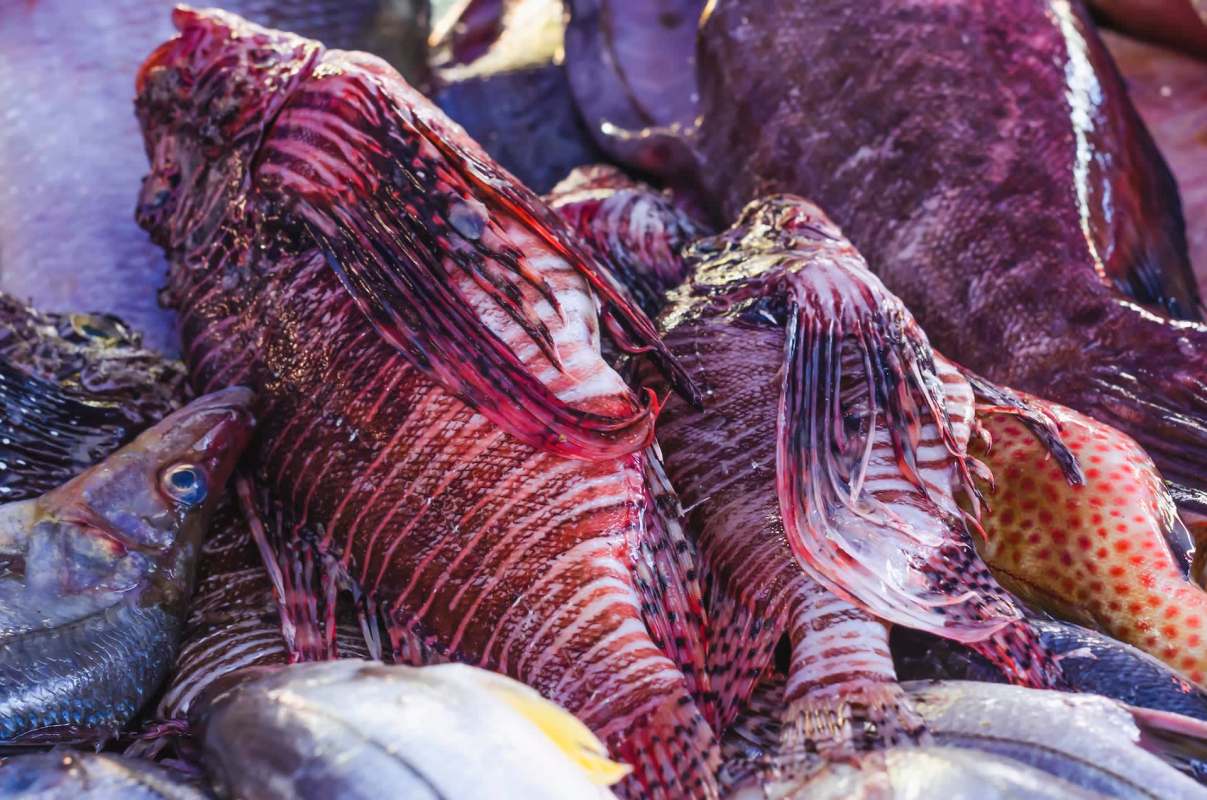
The Mediterranean diet has a new menu option in the form of a colorful, venomous sea creature.
That's because European Union fisheries officials are among watchdogs encouraging people to eat the prolific lionfish as a way to combat its invasive spread, according to Euronews.
It's a competitively priced and abundant option — with some baggage.
"It leaves nothing behind and multiplies because it has no enemies. It is very dangerous for all fish in the areas where it multiplies and stays," Cyprus fisherman Photis Gaitanos told Euronews. He is part of an industry being impacted by the burgeoning population.
Lionfish are beautiful sea creatures with brown or red and white stripes and an array of venomous spines. They devour vast amounts of other marine life and cause biodiversity problems, according to the North American Invasive Species Management Association.
Lionfish are also causing problems along America's Southeast coast, where the association reported it was "unknowingly" released into the ocean as part of the aquarium trade, causing devastating damage. That's why Tampa Bay, Florida-based Inversa is turning the fish into luxury handbags.
The General Fisheries Commission for the Mediterranean said that sea warming is contributing to invasive species populations growing there. Lionfish could "swarm" the waters if the planet's overheating continues unchecked, Euronews reported.
For reference, the ocean absorbs 91% of the world's excess heat, the National Oceanic and Atmospheric Administration said.
Social media campaigns are part of efforts to encourage chefs and diners to try invasive species. Success would have economic as well as ecological benefits, as Euronews reported that there are 150 professional Cypriot anglers being harried by lionfish.
"The native marine biodiversity of a specific region, as in the case of Cyprus, faces heightened competition and pressure, with implications for local ecosystems and industries dependent on them," EU Fisheries Commissioner Costas Kadis said in the story.
TCD Picks » Quince Spotlight
💡These best-sellers from Quince deliver affordable, sustainable luxury for all




|
How often do you eat meat each week on average? Click your choice to see results and speak your mind. |
 I don't eat meat 🙅
 Non-native animal problems are driving innovative solutions elsewhere as well. Kentucky wildlife officials have upped the bounty for aggressive carp populations that are muddying lakes. Missouri Coast Fisheries is catching boatloads of silver carp and turning the harvests into useful products, monetizing a solution.
Lionfish cuisine has one big box to check for it to take off: taste. Florida's Lionfish Central, a nonprofit working to address the predator's increasing numbers, said diners are in for a "flavorful surprise." It's mild, delicate, and sweet — with nutty undertones.
"When they try it, it's not any less tasty than any other fish," Stephanos Mentonis, who runs a popular fish tavern in Cyprus, told Euronews.
Consumers can help by trying the foods and products being made from invasive species. Lionfish can be bought through online markets, and Lionfish Central has a full recipe list that includes nachos. Removing the venomous spines is likely the best place to start. "Take precautions and use proper equipment when attempting to capture or handle these fish," the NOAA wrote in its list of safety tips.
Talking with friends and family about how human activity is contributing to biodiversity problems can also help raise awareness and encourage participation in solutions.

Get TCD's free newsletters for easy tips to save more, waste less, and make smarter choices — and earn up to $5,000 toward clean upgrades in TCD's exclusive Rewards Club.
Cool Picks






