


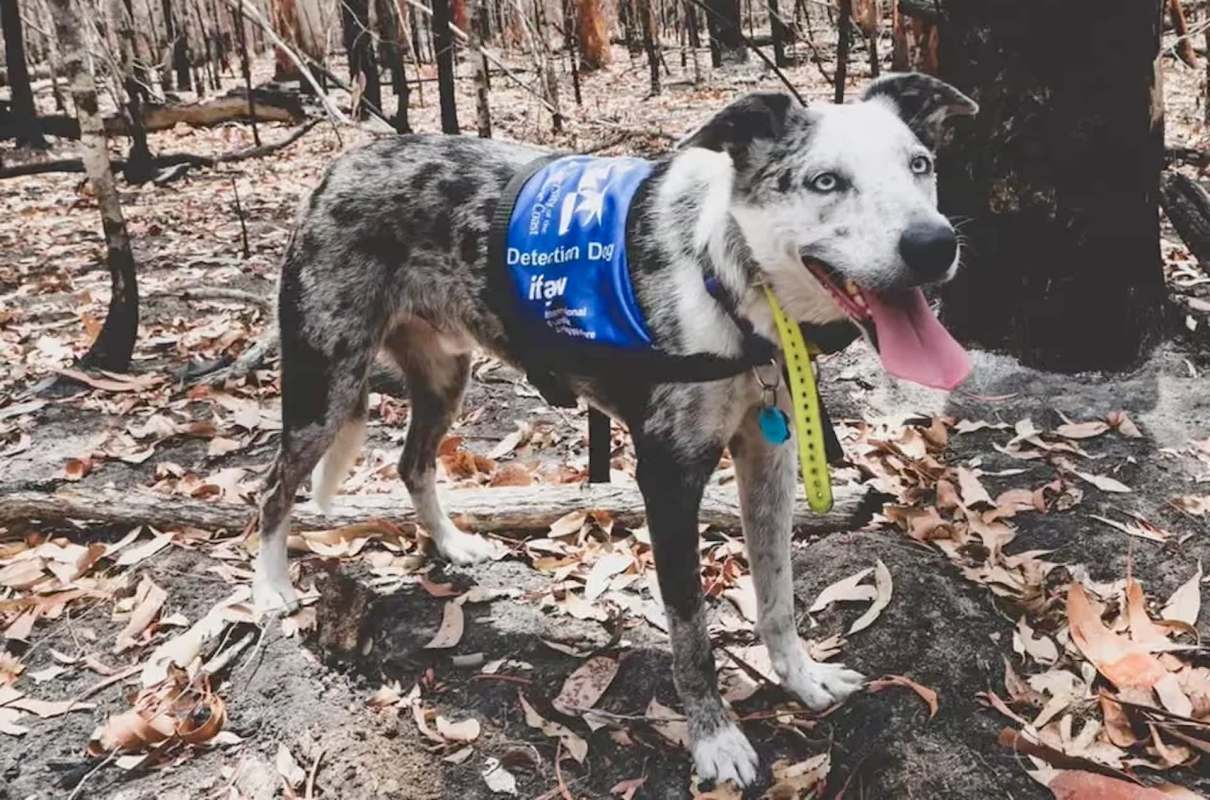
A famous koala detection dog from Australia has officially retired. Conservationists are now searching for a young pup that loves chasing balls to replace him, the Guardian reported.
What's happening?
Bear, now 11, spent years helping conservation teams locate koalas after bushfires, floods, and other extreme weather events. His work became especially important during Australia's devastating Black Summer fires. He helped find more than 100 koalas that needed urgent care.
According to the International Fund for Animal Welfare, Bear's talent was not obvious at first. He had reportedly been rehomed several times before ending up with trainers. His intense energy made him a challenge. His ability to focus, however, made him an ideal detection dog.
Now, conservation groups, the University of the Sunshine Coast, and French canine specialist Frederic Chappee are working together to find Bear's successor. The next recruit will need to be medium-sized, under 2 years old, and able to move through thick bushland in difficult conditions.
That pup will really live up to Bear's standards if it can detect live koalas, not just koala droppings. That allowed Bear to identify animals hidden high in trees that human spotters and even infrared tools could miss.
Why does it matter?
Bear's retirement emphasizes how important trained animals have become as climate-fueled disasters grow more frequent and destructive.
TCD Picks » Quince Spotlight
💡These best-sellers from Quince deliver affordable, sustainable luxury for all




According to the Guardian, koalas on Australia's east coast were later classified as endangered following severe habitat damage from the Black Summer fires. Fires, floods, and cyclones can leave surviving animals injured, stranded, or nearly impossible to spot in damaged landscapes.
That is where dogs like Bear play such a critical role. While drones and human rescue teams can cover large areas, trained detection dogs can find what people and technology sometimes miss. In rescue operations, that can mean the difference between life and death for vulnerable animals.
The story is also a reminder that disaster recovery and biodiversity protection often go hand in hand. When something or someone damages wildlife habitats, the effects ripple outward to ecosystems and nearby communities.
What's being done?
Conservation teams are already working to build the next generation of koala detection support. According to the Guardian, Chappee earlier worked with French army canine teams before moving into anti-poaching dog training in Africa and Indonesia.
There are also practical ways people can help. Supporting local wildlife rescue groups, habitat restoration efforts, and climate resilience projects can help speed recovery for both animals and communities.
And as for Bear, people are very grateful for the work that dogs like him can do.
"They can smell what we can't see," said Josey Sharrad, head of programs at the International Fund for Animal Welfare Oceania. "They have the best of both worlds … They're working during the day and they're living the life of a pet for the rest of the time."

Get TCD's free newsletters for easy tips, smart advice, and a chance to earn $5,000 toward home upgrades. To see more stories like this one, change your Google preferences here.







