


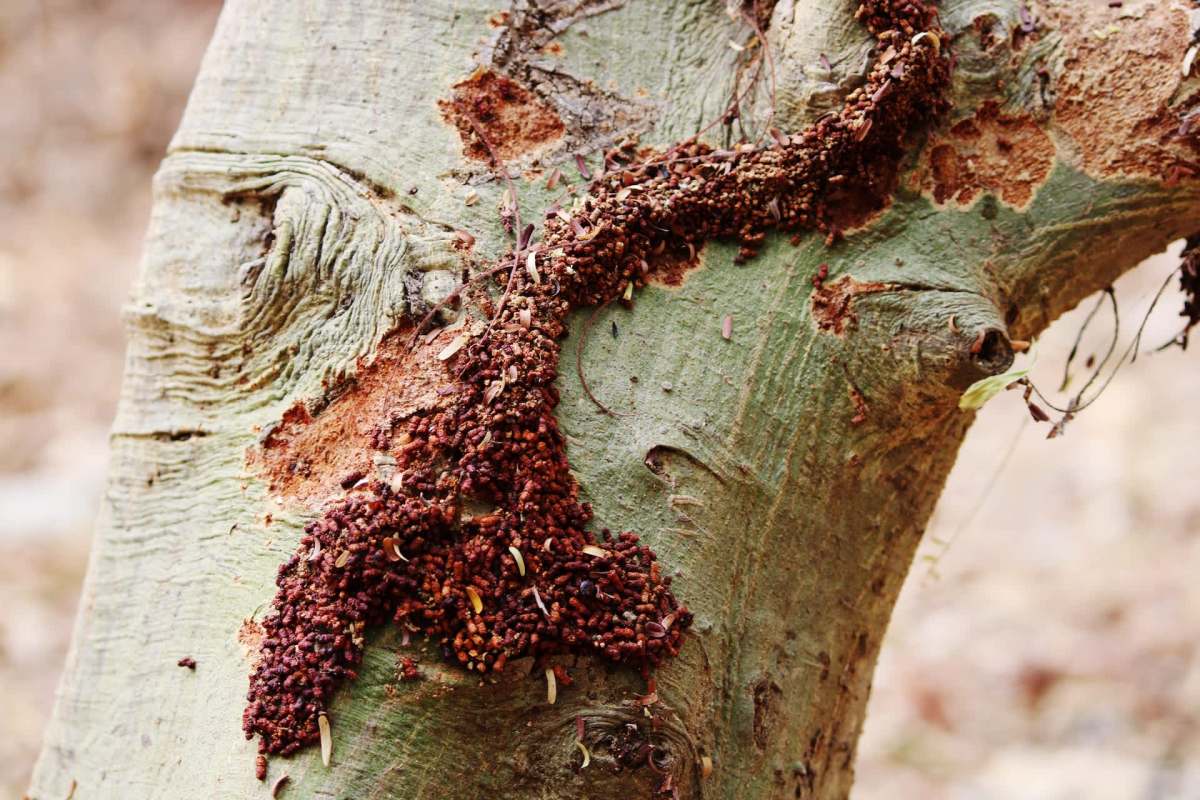
Two species of invasive termites, once confined to South Florida, are quickly spreading across the state.
What's happening?
A study published in the Journal of Economic Entomology tracked the spread of Asian subterranean termites and Formosan termites between 1990 and 2025.
Formosan termites entered the U.S. from Asia in the 1950s, while Asian termites were discovered on the continent in the 1990s, according to the Florida Department of Agriculture and Consumer Services and the Institute of Food and Agricultural Sciences, respectively.
Thomas Chouvenc, the study's lead author, told the University of Florida News that subterranean termites are notoriously hard to track. People typically only find out about infestations when the "damage is already extensive."
"Not only are they hard to detect without regular professional inspections, but they are also rarely reported, making the tracking of their spread much more difficult," he said.
On the bright side, that made Chouvenc's study a game-changer. He collaborated with private pest control companies to track the spread of termites and pinpoint specific locations.
Unfortunately, it also revealed just how widespread these invasive species are. UF News reported that the Formosan termite is established in all of Florida's coastal counties, while the Asian termite is pushing further north.
As it stands, the Formosan termite could spread throughout the entire state before 2050.
Why does the spread of these termites matter?
This isn't just a Florida problem. While researchers don't predict that the Asian termite will leave South Florida, the Formosan termite has been found in 12 other states, including Alabama, Georgia, and Louisiana, according to the FDACS.
That doesn't mean you should underestimate Asian subterranean termites. They may be reluctant to travel, but they're perfectly fine with cross-breeding. Scientists have found hybrid swarms containing both Asian and Formosan termites.
TCD Picks » Quince Spotlight
💡These best-sellers from Quince deliver affordable, sustainable luxury for all




|
Which of these savings plans for rooftop solar panels would be most appealing for you?
Click your choice to see results and speak your mind. |
 Save $1,000 this year 💸
 These termites are also known to damage food production. For example, the insects attacked crops in Fiji, hurting farmers' livelihoods.
Both invasive species could wreak havoc on Florida's infrastructure. According to the FDACS, the average cost of termite damage per home is typically between $40,000 and $60,000; in severe cases, demolition is the only option.
Based on information from the study, UF News reported that half of all structures in the South Florida metro area could be at risk of infestation of one or both termite species.
What's being done about these invasive insects?
The study's identification framework is being used by the North American Termite Survey, according to UF News. The NATS develops training materials for professionals and has a distribution map for Formosan termites, per its website.
UF News also reported that collaboration between researchers and private pest control companies improved over the past decade, making it easier to track the spread.
As Chouvenc told the university news outlet, "Knowing where they are is half the battle."

Get TCD's free newsletters for easy tips to save more, waste less, and make smarter choices — and earn up to $5,000 toward clean upgrades in TCD's exclusive Rewards Club.
Cool Picks






