


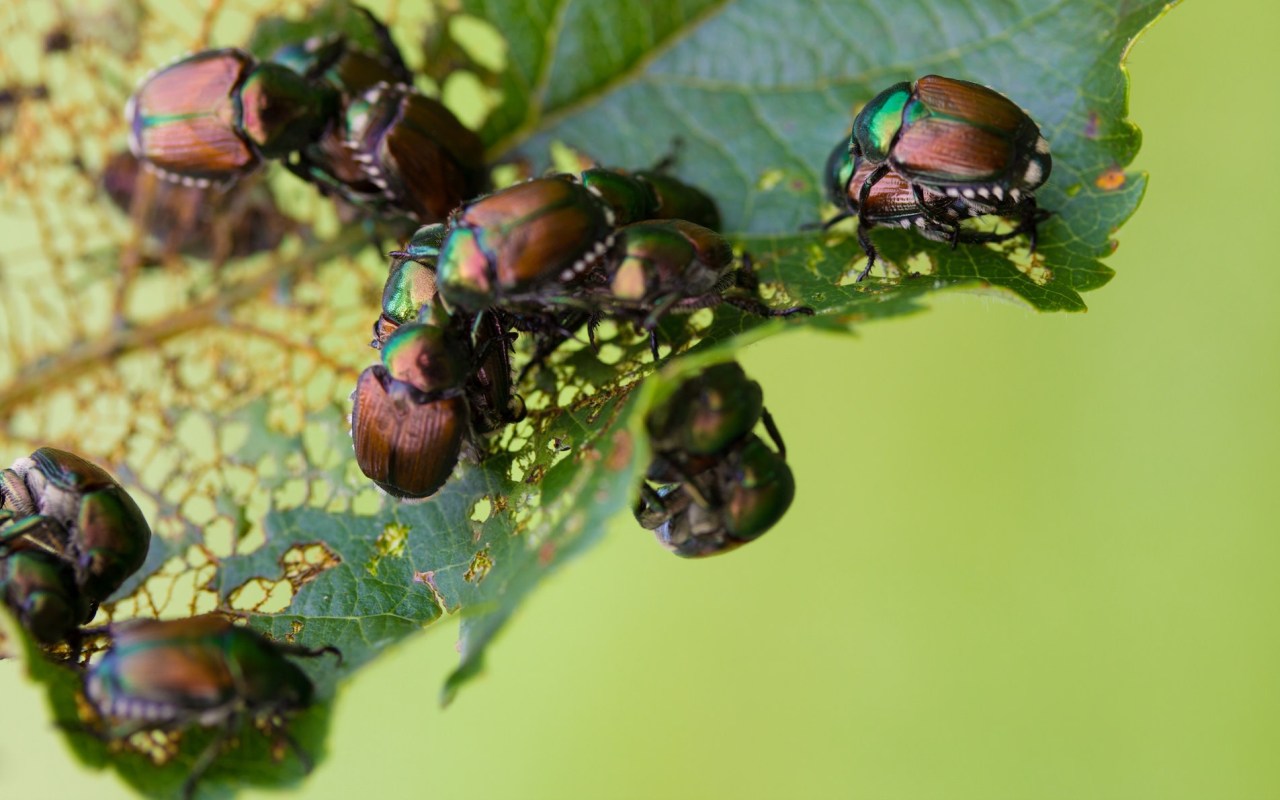
An infestation of invasive Japanese beetles in Kamloops, British Columbia, has officials on alert after some were spotted outside the city's containment zone. This raises concerns about the potential spread of the beetle, which has already devastated plant life in other parts of the province.
What's happening?
As reported by CBC News, a resident living on Kamloops' west side reported finding dozens of Japanese beetles on her rose and raspberry bushes after returning from vacation. The area is outside the city's downtown, which was previously designated a containment zone. That came after they were first found in the B.C. Interior in 2024, indicating they were spreading from the Lower Mainland — a region that had been dealing with the problem since 2017.
The Japanese beetle (Popillia japonica) eats grass roots and the leaves of more than 300 plant species. That's a big problem for crops, native plants, and backyard gardens in the area. The Canadian Food Inspection Agency and local officials set restrictions and launched a survey to prevent the beetles from spreading from the downtown area, but it seems like they've already breached the perimeter.
Why are invasive Japanese beetles concerning?
While small and admittedly cute, Japanese beetles are invasive to the region. Invasive species can outcompete native species, weaken local ecosystems, and damage crops. According to the Invasive Species Council of B.C., the beetle "poses a severe threat to ecosystems and industries."
Once they settle into an area, they're extremely difficult to get rid of. They reproduce rapidly and are hard to detect because they're so small and mobile. Plus, they spread through human activities such as moving soil and transporting plants (hence the city's restrictions). Their presence also threatens urban green spaces, which provide shade in extreme heat and habitat for pollinators.
What's being done about it?
Officials are urging residents to report and trap the beetles (ideally by freezing them) so inspectors can study their spread. This data will allow officials to use pesticides in targeted zones rather than blanket-spraying, which is less effective and more harmful for the environment and local community.
Environmental leaders are also encouraging residents to avoid moving plant waste and to compost when possible to prevent the beetles from "hitchhiking" to new locations. Experts say homeowners and gardeners are often the first line of defense when it comes to catching new infestations early.
While this latest spread is alarming, it's another reminder of the importance of native plants and local biodiversity. Stopping invasive species is essential to preserving healthy landscapes and ensuring long-term food security. One way to protect your local ecosystem is by rewilding your yard and exploring critical climate issues in your area.
|
Do you think America does a good job of protecting its natural beauty? Click your choice to see results and speak your mind. |
 Definitely 👍
Join our free newsletter for good news and useful tips, and don't miss this cool list of easy ways to help yourself while helping the planet.
Cool Picks






