


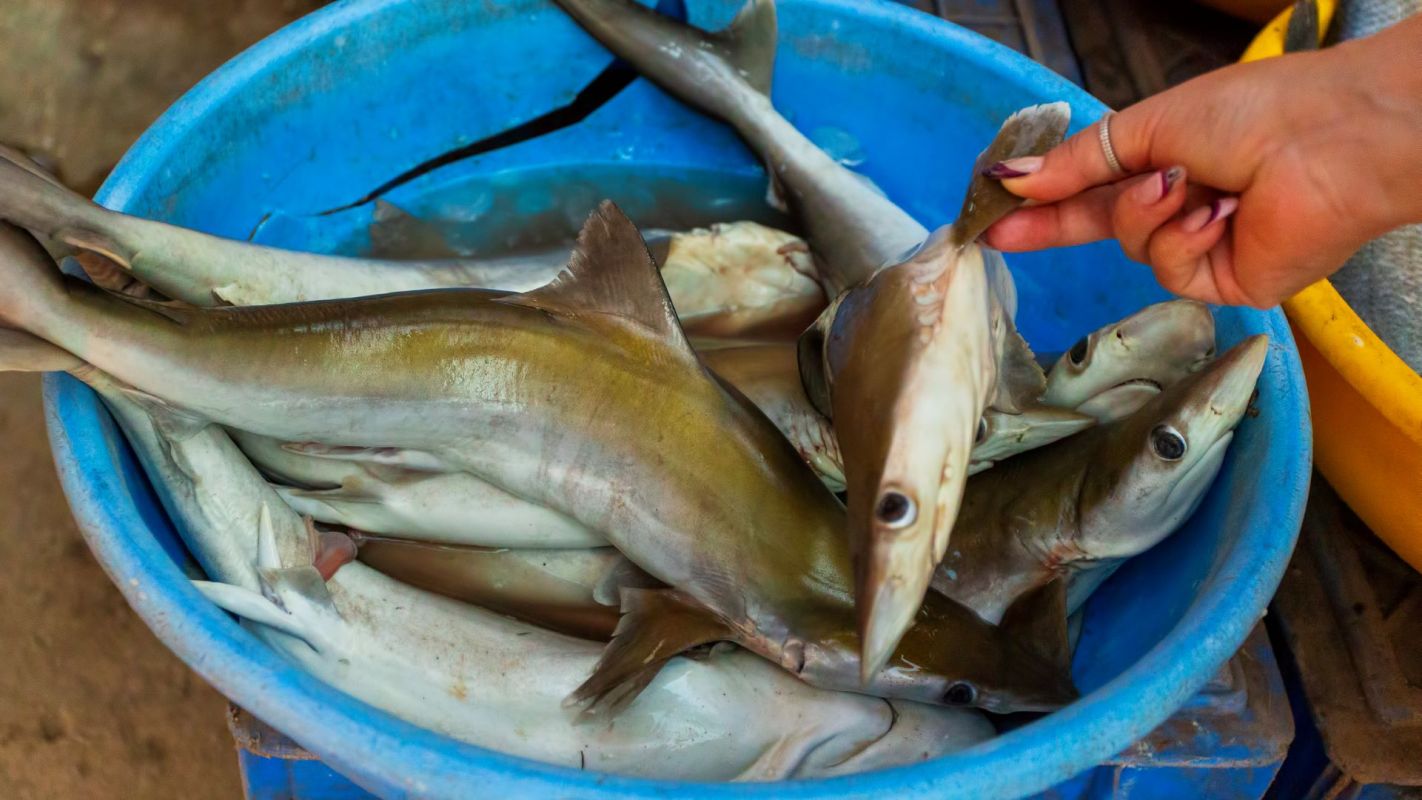
The illegal shark product trade has been a persistent threat to a variety of species, and now, researchers have made a worrying discovery in Australia and New Zealand about the origins and impact of the illicit products.
What's happening?
In a study published in the journal Pacific Conservation Biology, the University of Adelaide's School of Biological Sciences and Wildlife Crime Research Hub found evidence of shark products entering both countries through a variety of means.
The study found that products intended for personal use, like trophies or consumption, were carried in personal luggage and postage. Most of the products came from Asia, predominantly shark fins, and trophy items mostly came from the U.S.
One of the most surprising discoveries was that Australia was the dominant country of origin for passenger and mail seizures.
"We did not expect Australia to be a dominant country of origin for seizures in Aotearoa/New Zealand, given Australia showed a decline in the number of seizures over time and Aotearoa/New Zealand's seizures increased," Josephine Lingard, a Ph.D. candidate at the University of Adelaide, said.
Lingard also said there was missing data on which species were being traded, meaning there was a lack of information available on which species were being threatened.
TCD Picks » Quince Spotlight
💡These best-sellers from Quince deliver affordable, sustainable luxury for all




However, the data available showed that 14 of the 18 species were on the Convention on International Trade in Endangered Species.
Why is the illegal shark product trade important?
Sharks are apex predators, playing a key role in maintaining ocean biodiversity, managing carbon sinks, and transferring nutrients through their migrations, according to the World Wildlife Fund.
Unfortunately, they're vulnerable due to the popularity of having them as trophies and the practice of shark finning, which involves cutting off their fins while they're still living and being dumped back in the ocean.
As of 2023, at least 100 million sharks had fallen victim to this trade, according to a study published in the journal Marine Policy, cited by Earth.org. Higher numbers are possible due to a lack of data.
|
Do you worry about air pollution in your town? Click your choice to see results and speak your mind. |
 All the time 💯
 The illegal animal trade, as well as the legal one, has a severe impact on biodiversity, resulting in an alarming two-thirds depletion of threatened species, per Mongabay.
Losing biodiversity is devastating for the future of everything on the planet, impacting weather, agriculture, and everyday life.
What's being done about the illegal shark product trade?
There are laws in place prohibiting illegal shark trade, through organizations like CITES, the Convention on International Trade in Endangered Species of Wild Fauna and Flora, which compels governments that join to create laws to protect species.
But speaking to friends and family about this issue can increase awareness, and that could encourage activism to protect these vital creatures.

Join our free newsletter for good news and useful tips, and don't miss this cool list of easy ways to help yourself while helping the planet.







