


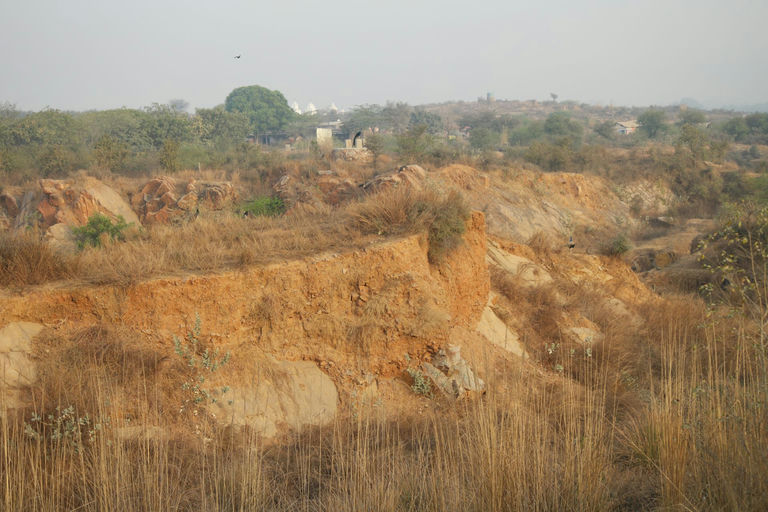
In a creative effort to shut down illegal mining routes and restore damaged forest land, officials in the northern Indian state of Haryana have tried an interesting tactic: planting trees.
According to The Times of India, they planted roughly 7,500 saplings over a 15-kilometer stretch of land once carved out by mining operators.
The project, completed in just under two weeks, aims to turn two illegally constructed roads in Nuh district's Basai Meo village into green barricades. This is a bold new attempt to stop the persistent quarrying of the nearby Aravalli Range, a vital and fragile ecosystem.
"We completed the plantation drive over a 15km stretch in the ridge area along the two illegal roads, which were paved for non-forest activities," divisional forest officer Pradeep Gulia said in a statement. "The objective is to develop a green patch on the 33-foot-wide illegal roads."
The Aravallis, which run across parts of northwestern India, are a major shield against desertification and an important recharge zone for groundwater. But unchecked mining has degraded the landscape and violated multiple environmental protections, including a 2009 Supreme Court ban on mining in parts of the range.
Officials say the trees are just one piece of a multipronged solution. Drone surveillance will help monitor the growth of the saplings and detect any new incursions.
The forest department's efforts also respond to growing public pressure to enforce long-standing environmental regulations in a region that has seen repeated instances of illegal activity. Earlier investigations confirmed the unauthorized construction of a 1.5-kilometer road for the transport of quarried stone.
While the tree planting doesn't address the root causes of illegal mining, such as demand for construction materials and enforcement loopholes, it does offer a visible and community-driven show of resistance.
That's a strategy other regions have taken up as well, from reforestation projects in the Peruvian Amazon to green buffer zones in Italy.
In the case of Nuh, the symbolism is hard to ignore. Once a vehicle route for destructive activity, the stretch is now a living, growing barrier to future harm.
TCD Picks » Quince Spotlight
💡These best-sellers from Quince deliver affordable, sustainable luxury for all




|
Do you think America does a good job of protecting its natural beauty? Click your choice to see results and speak your mind. |
 Definitely 👍
Join our free newsletter for good news and useful tips, and don't miss this cool list of easy ways to help yourself while helping the planet.
Cool Picks




