


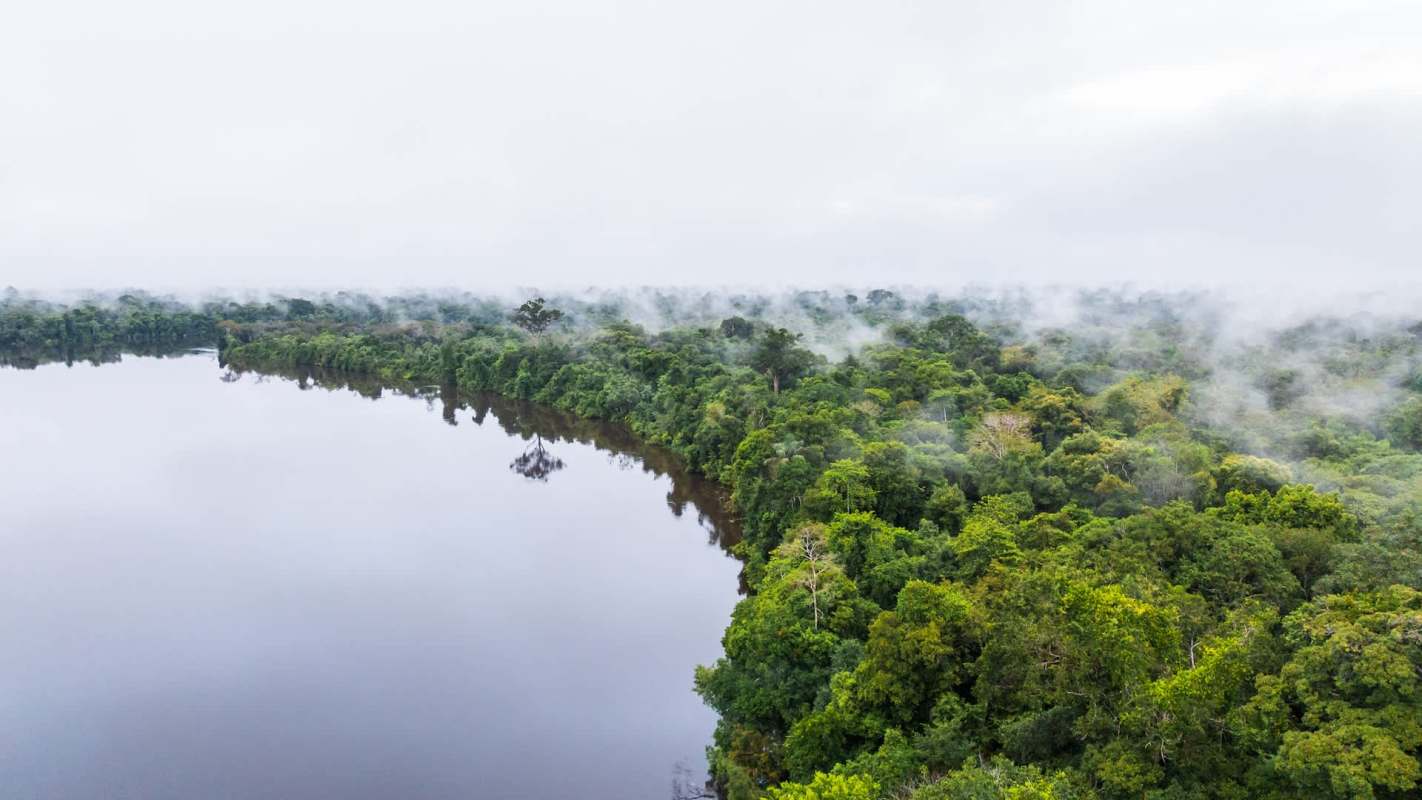
Illegal miners in Peru's Nanay River Basin are changing the color of this vital part of the Amazon. However, officials are upping their tactics to protect the river and the communities it supports.
According to Mongabay, in August, 27 dredges were destroyed by a collaboration between
Mongabay Latam, Mishana National Reserve, and "representatives from the Norwegian and German embassies, and members of the Foundation for Conservation and Sustainable Development (FCDS)."
Even though Peruvian law prohibits river mining, there has been a significant increase in dredges, with 939 recorded between 2021 and 2025, and 688 documented in 2025. It's happening in the Loreto region in 24 rivers, affecting 29 Indigenous communities, per Mongabay.
The miners use mercury to separate gold from other sediments, and it's turning the riverbanks an ochre hue. It's also contaminating the water and the fish.
In June 2025, the Center for Amazonian Scientific Innovation (CINCIA) conducted a study of 273 residents from seven communities located in the Pintuyacu and Nanay river basins. It found that 79% of people had mercury levels exceeding the World Health Organization-recommended limit of 2.2mg/kg.
Residents are at a medium-to-high risk of being exposed to mercury from contaminated fish. The Iquitos residents are also at risk of eating contaminated fish, though it's not known where in the city it's coming from. Per Mongabay, "The Pintuyacu is a tributary of the Nanay, which is the main source of drinking water for the city of Iquitos."
Peru's National Service of Natural Areas Protected by the State and the Peruvian National Police are cracking down on these illegal miners by attempting to stop them from getting their supplies.
Illegal gold mining is not just an issue in Peru. It's also an issue in Ghana, where a recent operation led to the arrest of the suspected leader of an illegal mining site. A special task force moved in after receiving intelligence about the operation.
In the Philippines, authorities have also caught illegal miners attempting to extract sand and gravel without required approvals, in violation of the Water Code of the Philippines.
TCD Picks » Quince Spotlight
💡These best-sellers from Quince deliver affordable, sustainable luxury for all




|
Do you think sewage pollution is a major problem in America? Click your choice to see results and speak your mind. |
 Yes 👍
Yes 👍 To combat illegal mining, Peruvian officials are conducting surveillance operations.
"The threat is ongoing here," said the director of the Allpahuayo-Mishana National Reserve, Biologist Herman Ruiz Abecasis, per Mongabay. "We've suffered two attacks at the surveillance posts when the police were not present."
Additionally, Peruvian National Police Officer José Félix Olazábal told Mongabay, "Right now, they are hiding in the ravines, but maybe later they'll try to pass through the route that they've marked."

Get TCD's free newsletters for easy tips to save more, waste less, and make smarter choices — and earn up to $5,000 toward clean upgrades in TCD's exclusive Rewards Club.
Cool Picks






