


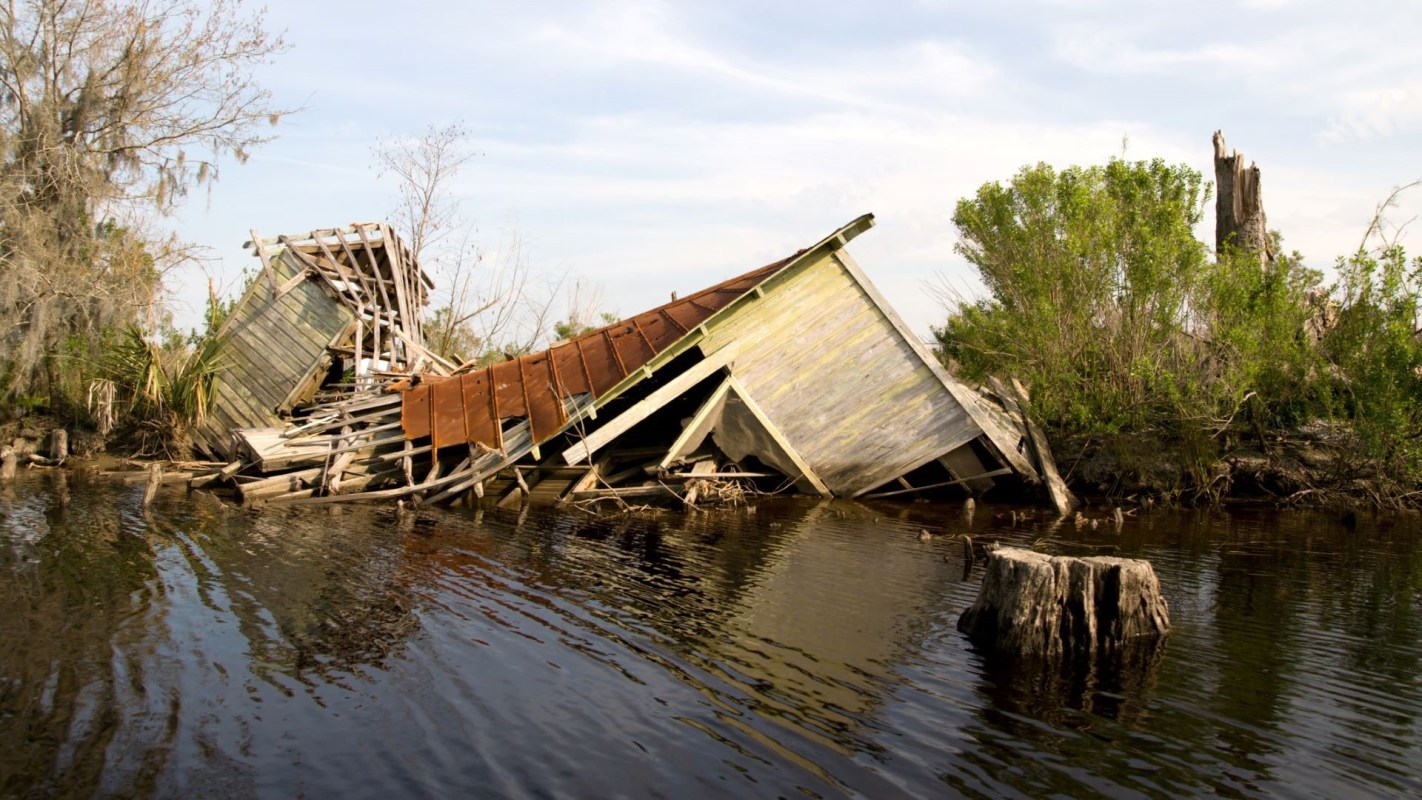
If Hurricane Katrina were to happen today, the impact would be even more destructive than it was 20 years ago.
That was the stark warning coming from Mark Bove, a meteorologist working for Munich Re, a German reinsurance company, according to Reuters.
"The hurricane hazard is rising, and not only in the Gulf region," Bove told Reuters. "Katrina intensified rapidly over the Gulf of Mexico — and we see that much more often today than in 2005, probably because of the higher temperatures in the sea."
What's happening?
Experts have long warned that rising global temperatures would increase the severity of extreme weather events like hurricanes.
The Environmental Defense Fund has explained why higher temperatures fuel stronger storms.
"Evaporation intensifies as temperatures rise, and so does the transfer of heat from oceans to the air," the EDF said on its website. "As the storms travel across warm oceans, they pull in more water vapor and heat, adding more energy to the storm."
"That means heavier rainfall, stronger wind, and more flooding when the storms hit land," the EDF continued.
In the case of low-lying New Orleans, rising sea levels and sinking land would further exacerbate the destruction of another Katrina-style hurricane, Bove told Reuters.
Even improved flood defenses installed after Hurricane Katrina would eventually fail under the current conditions, Bove warned.
Katrina was the most destructive hurricane in U.S. history, resulting in 1,400 deaths and causing an inflation-adjusted $205 billion dollars in damage, according to Reuters.
TCD Picks » Quince Spotlight
💡These best-sellers from Quince deliver affordable, sustainable luxury for all




|
Do you think your house could withstand a hurricane? Click your choice to see results and speak your mind. |
 No way 😨
 Yet Reuters said Bove warned that a similar storm today "would be costlier."
Hurricane Katrina struck New Orleans and hundreds of miles of the Gulf Coast in August 2005.
Why does it matter?
Hurricanes and other weather-related disasters take lives while destroying homes, businesses, crops, and livestock, causing insurance premiums and food prices to increase far beyond the storm's reach.
Further, Hurricane Katrina shut down 90% of Gulf oil production, causing gasoline prices to skyrocket by as much as $1.10 per gallon across the Southern U.S., ABC News reported at the time.
What's being done about more extreme storms?
In the short term, communities can make themselves more resilient to weather-related disasters by building higher sea walls, putting in place more stringent building codes, and increasing the capacity of flood-mitigation infrastructure like storm drains.
However, as Bove pointed out in regard to New Orleans' post-Katrina improvements, such infrastructure projects have their limits.
Over the long term, the only way to reverse the trend of rising global temperatures and more severe storms is to vastly reduce the amount of heat-trapping pollution entering the atmosphere.
To push for political action on reducing planet-heating pollution, you can use your voice, contact your elected representatives, and support pro-climate candidates.
Taking things a step further, you can drive an EV or install solar panels on your home. Powering your home with solar panels can lower your electricity bill to practically zero while also reducing heat-trapping pollution — and with a battery system, it makes your home more resilient to the risk of widespread power outages from storms like these.
With federal tax credits for home solar ending Dec. 31, 2025 and credits for EVs ending on Sept. 30, it's important to act soon if you want to take advantage. Solar can take up to 12 weeks to complete on time, but EnergySage has a great, Expedia-like tool for comparing local solar installers that's worth exploring to find one that still has slots available.

Join our free newsletter for good news and useful tips, and don't miss this cool list of easy ways to help yourself while helping the planet.
Cool Picks






