


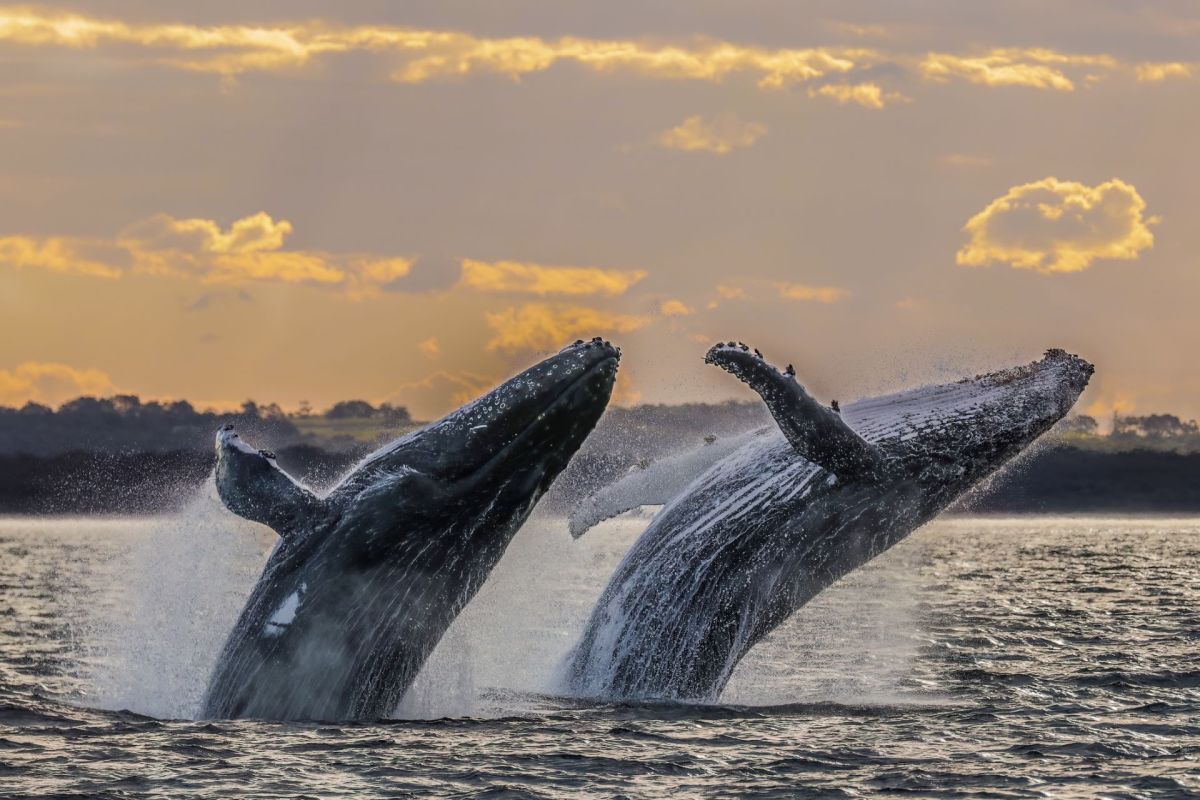
Researchers in Australia have significant concerns about local humpback whale populations in the Southern Ocean due to recent shifts in migration patterns.
What's happening?
The University of Queensland found that the southern migration of humpback whales now occurs weeks earlier than it did 21 years ago.
The cause, as the research team explained in a study published in the journal Scientific Reports, is the warming of the Southern Ocean due to increasing global temperatures.
Associate Professor Rebecca Dunlop from UQ's School of the Environment analyzed that the return migration from northern breeding grounds has shifted from early October in 2003 to mid-September in 2024.
"While migratory timing naturally fluctuates from year to year by about two weeks, since 2021, there has been a clear and sustained change," she said.
Why is the shifting migration of humpback whales concerning?
While the motivations for migratory timing among humpback whales are not entirely clear, there is a definite correlation between summer feeding habits and the Southern Ocean's ecosystem.
Over the 21-year time period of the survey, there has been a significant decline in sea ice in the feeding grounds of the humpback whales.
"Less sea ice, or a shorter ice season, means less algae, which is crucial food for krill," Dr. Dunlop explained. "Fewer available krill prior to the migration could be forcing the whales back to the feeding grounds earlier."
The study also considered other factors at play. The humpback whale population in eastern Australia, for example, has seen a substantial resurgence since the 1960s, growing from only 300 to around 40,000.
However, the team was able to rule out overcrowding from population growth, as well as any human activity that could play into migratory shifts.
TCD Picks » Quince Spotlight
💡These best-sellers from Quince deliver affordable, sustainable luxury for all




|
Do you worry about companies drilling too deep into the ground? Click your choice to see results and speak your mind. |
 Definitely 💯
 "While the whale population increased steadily over the 21 years of this study, a clear shift in migration timing did not occur until after 2021, when rising water temperatures driven by climate change affected sea ice coverage in the Antarctic oceans," Dr. Dunlop said.
She also noted that similar migratory timing changes have been noted in other humpback whale populations along the west coast of Australia and South America.
A shifting migratory pattern can have wider negative impacts on a delicate food chain and ecosystem that might not be fully realized for years to come.
Dr. Dunlop's main worry has to do with maintaining the breeding habits of the humpback whale populations.
"I am concerned at some point we may see a decline in birth rates because females won't have the energy to support migrating north, giving birth and getting their calf back to the feeding grounds," she explained.
What's being done about these migratory shifts in the Southern Ocean?
Climate conservation measures overall can positively support the Southern Ocean ecosystem, where krill and various microorganisms, like zooplankton, are crucial to carbon capture in the region.
By supporting the food source of animals further up the food chain through environmentally conscious habits, humans can further protect the well-being of the planet overall.

Join our free newsletter for good news and useful tips, and don't miss this cool list of easy ways to help yourself while helping the planet.
Cool Picks






