


The race to develop high-functioning humanoid robots seems to have accelerated, literally.
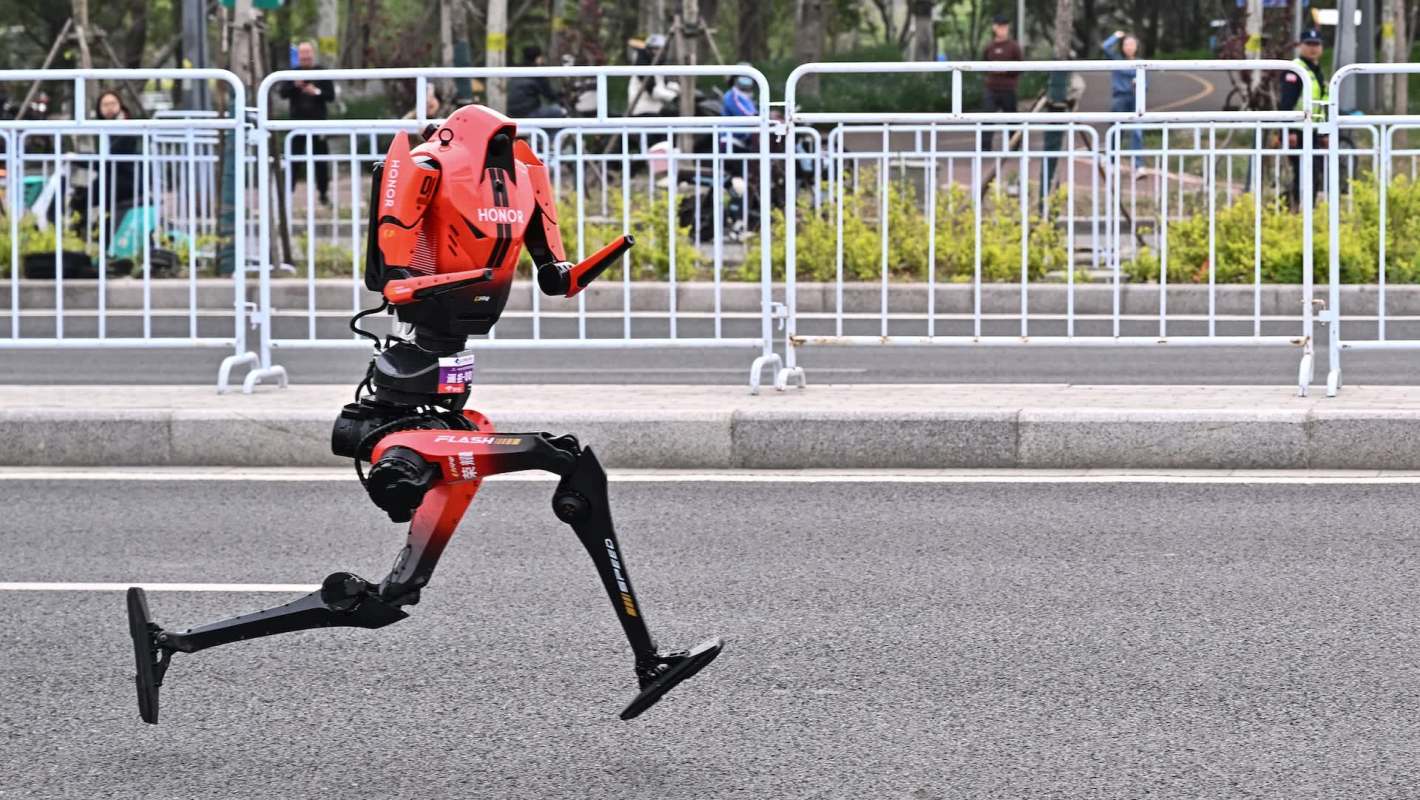
A robot in China has achieved a world record for completing a half-marathon, with a time that beat the human world record.
The winning humanoid robot from Chinese smartphone maker Honor finished the 13-mile course in 50 minutes and 26 seconds, according to the Global Times.
The human record is currently 57 minutes and 20 seconds, set by Ugandan runner Jacob Kiplimo at the Lisbon Half Marathon. By comparison, the robot record from last year's Beijing half-marathon was 2 hours and 40 minutes.
Ars Technica reported that 300 robotic contestants, mainly from Chinese teams, competed in the 2026 Beijing half-marathon, running alongside human athletes on a parallel track. Aside from being considerably faster than the previous attempt, the robots also showed fewer balance issues and better overall performance.
The winning robot took inspiration from top human athletes by incorporating long legs measuring approximately 37 inches.
TCD Picks » Quince Spotlight
💡These best-sellers from Quince deliver affordable, sustainable luxury for all




An engineer from one of the teams told the Global Times that crucial systems, such as joint motors, gait algorithms, and battery management, must be tested on real tracks.
"We're not here for rankings, but to verify that our robots can operate reliably in any environment," the engineer said.
Other companies are also pursuing the development of humanoid robots. In the United States, established firms like Boston Dynamics are competing with startups such as Figure AI and Agility Robotics.
Tesla, led by Elon Musk, is diversifying its focus beyond electric vehicles to concentrate on creating an Optimus humanoid robot. Additionally, Chinese firms, such as Unitree Robotics and MirrorMe Technology, have announced that their humanoid robots can reach speeds of 10 meters per second, according to Ars Technica.
|
Which of these savings plans for rooftop solar panels would be most appealing for you?
Click your choice to see results and earn rewards to spend on home upgrades. |
 Save $1,000 this year 💸
 While this does not indicate an imminent future where robots take over human activities, the advancements from these events can enhance the functionality of existing robots.
If developers can enable these robots to navigate crowds, uneven terrain, and unpredictable scenarios, they could increase efficiency in various industries, take on hazardous tasks, and assist in household activities. One was even recorded chasing wild boars from an urban neighborhood.
Du Xiaodi, an engineer from the winning Honor team, said the sector was still in an early phase, but there is confidence that humanoid robots will eventually reshape many industries, including manufacturing.
"Running faster may not seem meaningful at first, but it enables technology transfer, for example, into structural reliability and cooling, and eventually industrial applications," Du said, according to Reuters.

Get TCD's free newsletters for easy tips, smart advice, and a chance to earn $5,000 toward home upgrades. To see more stories like this one, change your Google preferences here.







