


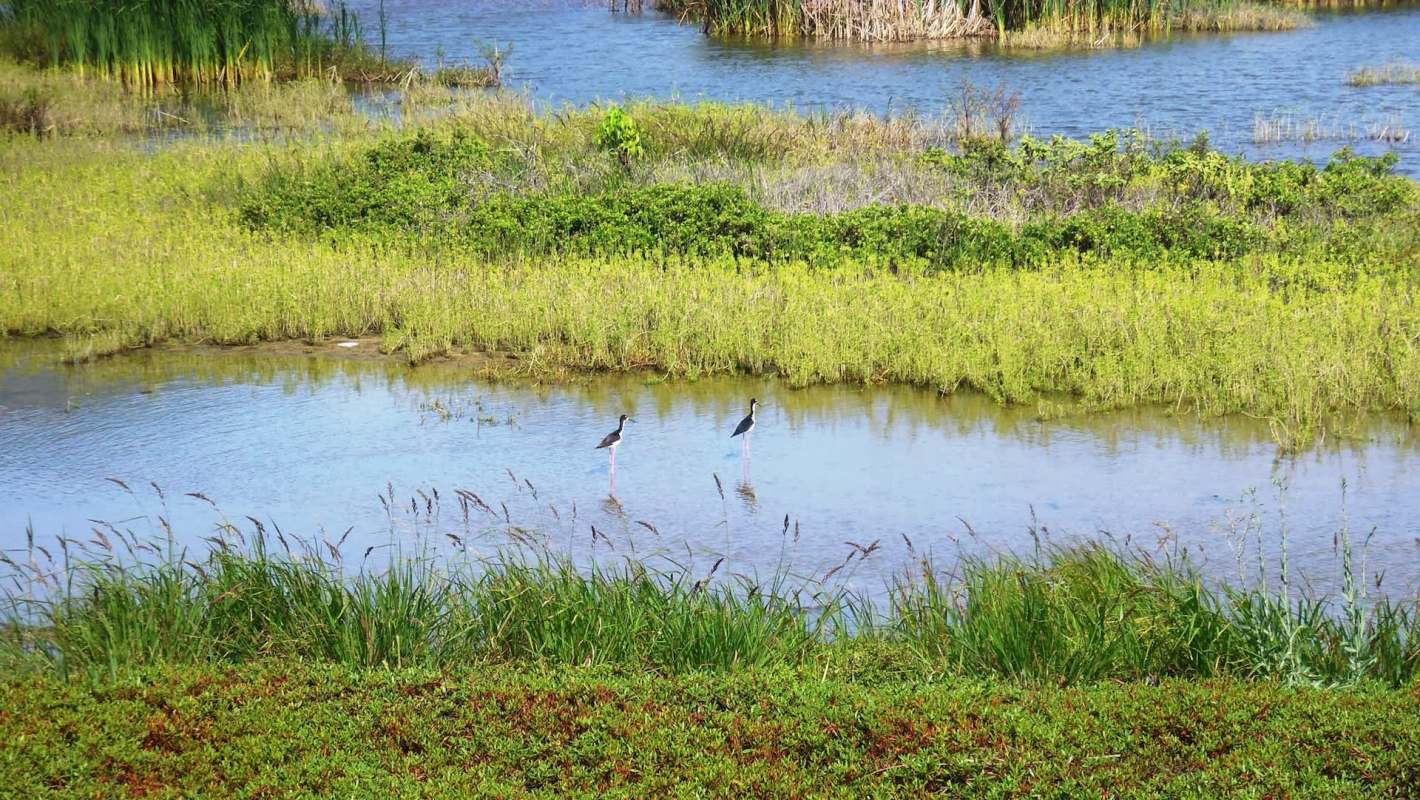
For generations, the Honu'apo Estuary in Ka'u has been a place where life gathers — a spot where kids learned to swim, families fished for dinner, and neighbors watched the tides shift across a landscape shaped by their ancestors. Now, after nearly two decades of planning, one of the state's most meaningful ecological and cultural restoration efforts is finally on the brink of becoming real progress on the ground.
As the Hawai'i Tribune-Herald reported, the state Department of Land and Natural Resources has advanced a long-awaited plan to revive about eight acres of wetland habitat along the southeast coast of Ka'u.
A newly filed environmental assessment outlines the first phase of work, which will clear invasive vegetation, plant native species, deepen water channels, and install a predator-proof fence and public walkways. The goal is to bring the wetland back to life while respecting its cultural history.
"While we wish it could've happened sooner … we are just thankful that the wetland restoration project that we have dreamed about for more than two decades is finally able to move forward," said Megan Lamson, a director with the Hawai'i Wildlife Fund.
The land itself was purchased by the state in 2006 for $3.2 million, below its appraised value of $3.675 million, a discount that project leaders believe reflected a shared desire to protect the area from luxury development. Funding came from several channels, including $1.5 million from NOAA's Estuary Protection Fund, a $1 million Hawai'i Legacy Lands grant, $500,000 from Hawai'i County, and $1,700 raised by Ka'u residents.
Partnerships have been central since the beginning. Ka 'Ohana O Honu'apo, a community group deeply involved in the effort, worked with DLNR in 2011 to secure a U.S. Fish and Wildlife Service wetlands conservation grant that brought in $549,000. That funding supported the environmental assessment and will cover the first phase of the on-the-ground restoration work.
"We're excited," DLNR project representative Afsheen Siddiqi said. "We're getting to the part where we might get to do some good work on the ground."
Perk up the winter blues with natural, hemp-derived gummies Camino's hemp-derived gummies naturally support balance and recovery without disrupting your routine, so you can enjoy reliable, consistent dosing without guesswork or habit-forming ingredients. Flavors like sparkling pear for social events and tropical-burst for recovery deliver a sophisticated, elevated taste experience — and orchard peach for balance offers everyday support for managing stress while staying clear-headed and elevated.
Learn more → |

Cultural preservation is equally important to the project. The area contains 88 historically significant sites and more than 200 archaeological features, including petroglyphs, pre-contact burial and ceremonial areas, and the remnants of the Kamala'i heiau. A nearby fishpond last used centuries ago is being restored, and community members have contributed countless hours during 60 workdays since 2021.
"Restoring the estuary is not just for the wildlife; it will enhance the natural and cultural resources that can be utilized by the community," KOOH Director Jodie Rosam told the Tribune-Herald.
|
Do you think America does a good job of protecting its natural beauty? Click your choice to see results and speak your mind. |
 Definitely 👍
Get TCD's free newsletters for easy tips to save more, waste less, and make smarter choices — and earn up to $5,000 toward clean upgrades in TCD's exclusive Rewards Club.
Cool Picks






