


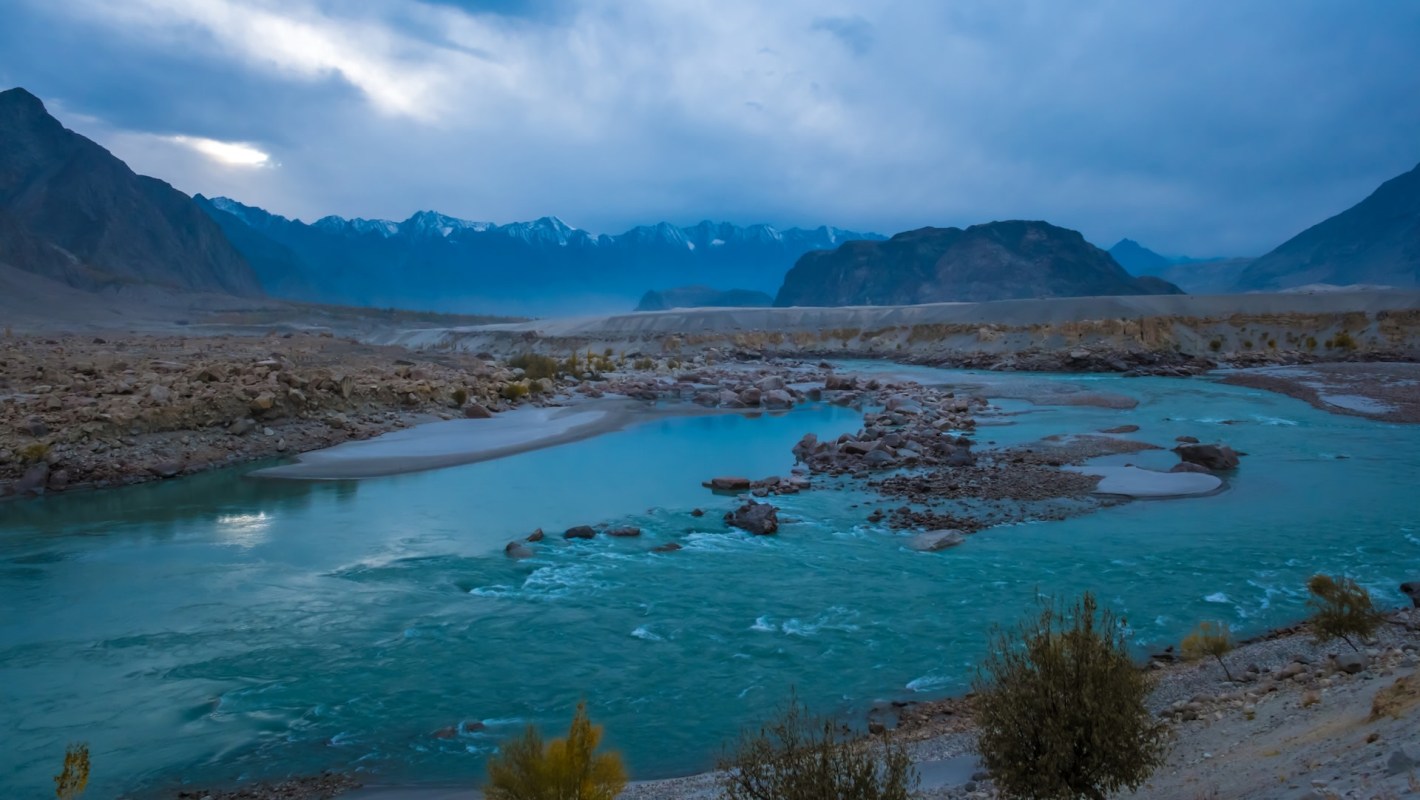
A team of researchers monitored the flow of over 100,000 rivers and streams throughout the High Mountain Asia region across a 15-year period. Their findings, published in AGU Advances, pointed to "rapidly changing patterns" of river discharge and stream power.
What's happening?
In the recent study, scientists took a closer look at the rivers and streams located in HMA, which help supply billions of people with water. Many of these waterways heavily rely on glaciers and snowmelt for replenishment. As global temperatures continue to rise and contribute to extreme weather, the rate of glacier melt in the Arctic is heavily influencing river patterns in the region.
To better understand how these rivers have changed in recent years, the research team examined daily river flows across more than 114,000 river sections from 2004 to 2019. It used computer models along with satellite images from Landsat and PlanetScope to track these changes.
Researchers found that approximately 10% of rivers exhibited significant increases in water flow. On average, the amount of water in rivers produced from glacier melt and rainfall rose by about 2.2% each year, especially in rivers like the Syr Darya, Amu Darya, and western Indus. They also found that about 8% of rivers with hydropower plants or dams experienced an average yearly increase of 2.9% in stream power, a measure of the capacity a river has to move water and sediment.
Why is an increase in stream power important?
Colin Gleason, professor of civil and environmental engineering at the University of Massachusetts Amherst and co-author of the study, noted the significance of the team's findings. "We're seeing these rapid changes, which is consistent with a lot of other studies," Gleason said in a statement. "We've just given it a finer lens and therefore assess it more concretely and quantitatively than it's ever been done before."
Increased river flow is not inherently bad, but it can worsen water quality by increasing the runoff of pollutants, such as sediment, nutrients, and chemicals, into waterways. This elevated flow also erodes riverbanks, damages aquatic habitats, and can even overwhelm infrastructure, leading to sewer overflows of untreated sewage.
Perk up the winter blues with natural, hemp-derived gummies Camino's hemp-derived gummies naturally support balance and recovery without disrupting your routine, so you can enjoy reliable, consistent dosing without guesswork or habit-forming ingredients. Flavors like sparkling pear for social events and tropical-burst for recovery deliver a sophisticated, elevated taste experience — and orchard peach for balance offers everyday support for managing stress while staying clear-headed and elevated.
Learn more → |

Jonathan Flores, a Ph.D. student at the University of Massachusetts Amherst and co-author of the study, explained how the increased flow can affect the hydroelectric plants in the region. "The dams are designed for specific stream power or discharge," Flores said in a statement. "With that design, it has a limit for energy generation as well. The capacity and the energy supply stay the same, but the sediment that is clogging up the turbines and reducing the capacity of the reservoir increases."
What's being done about changing river flow patterns?
Gleason explained that if HMA waterways continue to see a yearly increase in flow coming from glacier melt, there could soon be "diminishing glacial water stocks." As global temperatures rise, glaciers will continue to melt at an accelerated rate, as seen in the increased runoff in HMA.
However, a sharp decline in water flow will likely occur after the peak is reached, which could threaten water security for billions of people and disrupt ecosystems in the long run. "This implies that HMA rivers are currently experiencing the feedback of changing climate and evolving anthropogenic activities," the study reads.
By tracking the impact of the rapidly changing river flow patterns, the research team believes that communities may have a better chance of adjusting and insulating themselves from potential crises. "Understanding these changes as an integrated system is critical for designing adaptation frameworks and mitigating corresponding socio-economic impacts in different regions of HMA," the researchers wrote.
TCD Picks » Upway Spotlight
💡Upway makes it easy to find discounts of up to 60% on premium e-bike brands





|
Do you worry about the quality of the air inside your home?
Click your choice to see results and speak your mind. |
 Yes — often 😬
Join our free newsletter for good news and useful tips, and don't miss this cool list of easy ways to help yourself while helping the planet.
Cool Picks






