


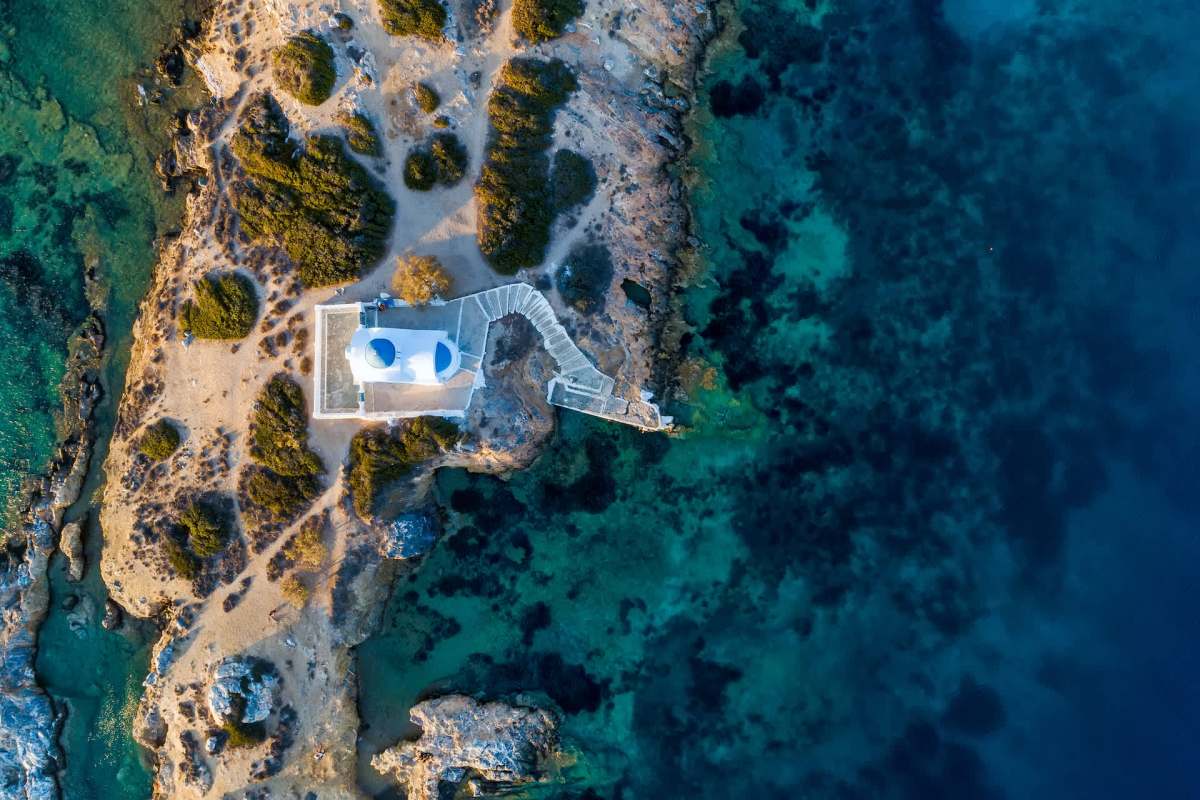
To help combat a dwindling fish population in the Aegean Sea, one Greek community is proposing a dramatic ban that could reshape the region's fishing industry.
As Oceanographic reported, the Greek island of Amorgos is looking to establish three marine areas where fishing will be banned for at least five years. These locations are Katapola, Nikouria, and Gramvousa.
There would also be a 1.5-nautical-mile zone around the island where the ban would apply in April and May, the most active breeding period for fish species in the region. The proposal is pending approval from the Greek government.
The ban was brought forth by the Amorgorama, a collection of fishers in Amorgos. According to the group, fish populations have decreased by as much as 90% around the island over the last couple of decades. "There is no other choice. There are no fish," Capt. Michalis Vekris said in an interview with ekathimerini.com. "Compared to 20 years ago, the decline is 90%."
In support of the Amorgorama, a study was conducted by researchers at the Agricultural University of Athens to understand the economic impact that the ban would have on the fishing industry in the region. Assistant professor Angelos Liontakis noted that over $5,200 in estimated losses is not enough to deter the anglers from following through with the ban.
"Fishermen from Amorgos want to continue. They are not interested in business profit as much as the sustainability of fishing," Liontakis said. "They have accepted that something has to be done so that future generations can fish. The state should support them."
Declining fish populations can have sprawling impacts, including disruptions to food webs, loss of biodiversity, and the destruction of vital ecosystems such as coral reefs and wetlands. They can also lead to economic instability in coastal communities and worsen food insecurity in vulnerable communities.
"The case of Amorgos is unique in Greece. It is an innovative example of cooperation between fishers, scientists, institutions, civil society, local and national authorities, with the common goal of protecting the seas and local fishers' livelihoods," Angela Lazou, Greece projects manager at the Blue Marine Foundation, told Oceanographic.
"The success of this initiative can play a vital role in the way we protect our seas in Greece and can become a beacon of inspiration and positivity for other fishing communities in the Aegean Sea, Greece, and throughout the Mediterranean."
|
Do you think America does a good job of protecting its natural beauty? Click your choice to see results and speak your mind. |
 Definitely 👍
Join our free newsletter for good news and useful tips, and don't miss this cool list of easy ways to help yourself while helping the planet.
TCD Picks » Quince Spotlight
💡These best-sellers from Quince deliver affordable, sustainable luxury for all




Cool Picks






