


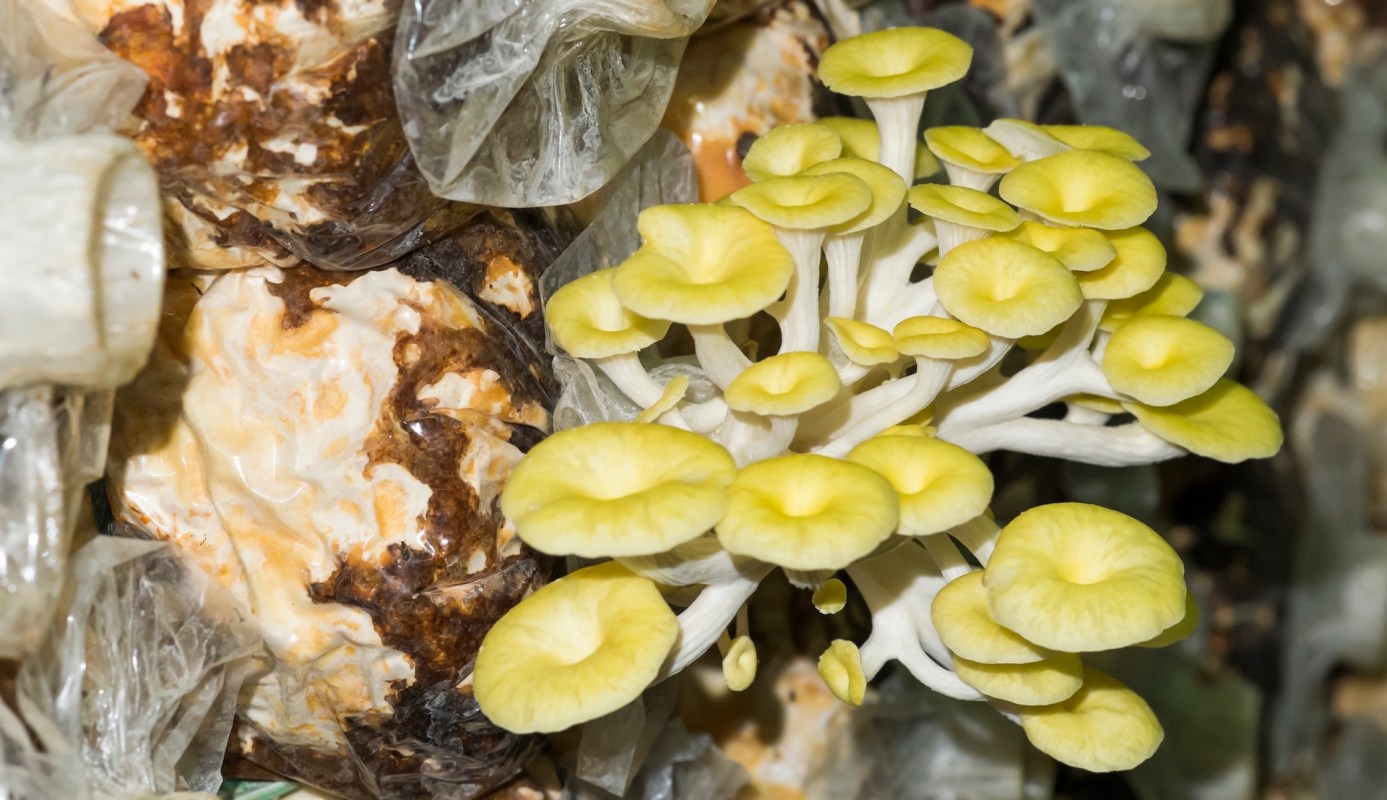
Experts in the Pacific Northwest aren't taking the threat of invasive golden oyster mushrooms lightly, even though they are primarily setting up shop in the United States hundreds of miles away.
What's happening?
OregonLive reported on a striking yet invasive mushroom species that is raising concerns among mycology enthusiasts.
While the golden oyster mushroom isn't yet posing a significant risk to Western forests, it is taking hold in the Northeast and Midwest. Shifting weather conditions — exacerbated by human-caused pollution — and the "aggressive" mushroom's proclivity for expansion mean it could soon become a problem in new territories, though.
The Pacific Northwest's forests don't have as many of the tree species that the mushroom thrives on, but there are native hardwood species where it could take hold. Urban areas also often feature elm trees, which is what it feeds on in the Northeast.
Recent posts to iNaturalist, a platform for citizen scientists, show three sightings in the West. Seattle and Boise, Idaho, have had confirmed appearances, while a disputed sighting has been made in Portland.
"I'd put my money that it is since it looks and grows just like it and is fruiting seemingly out of substrate blocks in that photo," mycologist Aishwarya Veerabahu said of the Portland sighting in an e-mail to OregonLive.
Veerabahu co-authored a study on the spread of the mushroom in North America, which was published in the journal Current Biology.
Why is the spread of the golden oyster mushroom concerning?
The golden oyster mushroom, originally from Asia, was brought to the U.S. at the dawn of the 21st century for food cultivation. Like many invasive species, though, it found its way out and is now uncontrolled.
In the Midwest and Northeast, it's transforming forests and outcompeting local fungi. It's made its way to half of America's 50 states and a Canadian province, according to Veerabahu's study.
Their spread can reduce biodiversity, and the negative impact on native species could have damaging consequences for local ecosystems. For example, should native fungi be crowded out by displaced species, that could deprive established local creatures of a vital food source.
TCD Picks » Quince Spotlight
💡These best-sellers from Quince deliver affordable, sustainable luxury for all




|
Which of these savings plans for rooftop solar panels would be most appealing for you?
Click your choice to see results and earn rewards to spend on home upgrades. |
 Save $1,000 this year 💸
 Researchers have said that it is unknown how the golden oyster mushroom will impact forests in the future, and that uncertainty has added to their fears.
It emphasizes the importance of native plant species. They help support a healthy ecosystem by providing food and shelter for pollinators, which are responsible for one out of every three bites of food humans eat, according to Pollinator Partnership.
Native plants can also help keep invasive species at bay and save gardeners time and money on garden maintenance.
What's being done about golden oyster mushrooms?
Researchers and citizen scientists can continue to track the spread of the fungi by regularly monitoring and sharing their locations. Quickly addressing the issue when and where it crops up is critical to prevent the mushroom from spreading out of control.
One smart move for foragers is to harvest it without allowing spores to escape into nature during the process. Once that's done, you can then eat the golden oyster mushroom, which can be cooked with pasta, made into soup, or eaten on its own.
However, when foraging for mushrooms, it's important to be absolutely certain about species identification, as some can cause serious illness or death.

Get TCD's free newsletters for easy tips, smart advice, and a chance to earn $5,000 toward home upgrades. To see more stories like this one, change your Google preferences here.
Cool Picks




