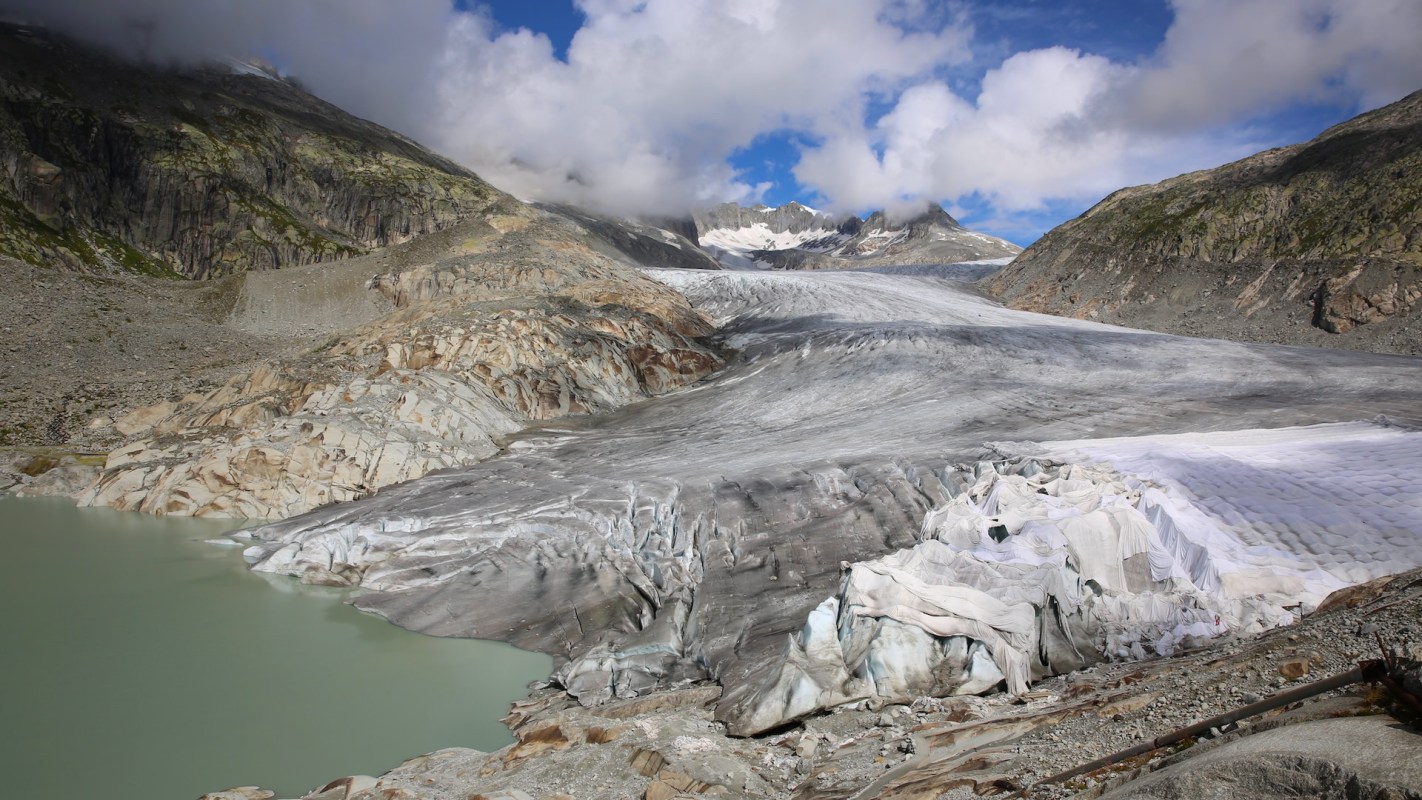
Communities around the world are holding funeral ceremonies for an unlikely recipient: glaciers. A new study predicts glaciers in the European Alps will reach a peak rate of extinction in eight years.
What's happening?
The Guardian reported the Nature Climate Change journal had projected higher glacier loss.
The study forecasts that more than 100 glaciers in the Alps will "melt away permanently by 2033." The outlook is similar for the West. In the U.S. and Canada, glaciers have an expected "peak year of loss less than a decade" after the Alps. Over 800 could disappear each year in this time, according to the study.
The emotional toll is palpable for naturalists and spiritualists alike. Nā Lisa Tunahai, a Māori political leader, visited a retreating glacier in New Zealand. She described it as "shrinking into oblivion" due to "the actions of humans."
Why are the Alps important?
The loss of scenic landscapes is heartbreaking, with more practical implications.
Researchers note that melting events mark turning points for water resources and cultural heritage. As stated in the Guardian, "two billion people downstream [rely] on mountain water for … supplies and food security."
As ice melts, sea levels rise. Communities face higher tides during storms and increased disruption to food systems.
Scientists emphasize that extreme weather has existed. It's the overheating planet that makes extreme weather more powerful and dangerous.
What's being done about glacier loss?
The study shares a crucial difference in potentialities.
Cutting carbon pollution to keep global temperatures from rising is the first step. Anything below 1.5 degrees Celsius "would cap annual glacier losses at about 2,000 a year in 2040," per the report.
TCD Picks » Upway Spotlight
💡Upway makes it easy to find discounts of up to 60% on premium e-bike brands




|
How worried are you about rising ocean levels? Click your choice to see results and speak your mind. |
 Very 😰
 Current government plans, which are on track for a high 2.7-degree-Fahrenheit rise, would see losses peak at 3,000 a year. Future choices matter.
Policies that reduce reliance on oil, gas, and coal can make sustainable shifts. Preserving these vital freshwater sources is possible by reducing human-produced pollution.
Addressing critical climate issues will help communities manage a changing world.

Get TCD's free newsletters for easy tips to save more, waste less, and make smarter choices — and earn up to $5,000 toward clean upgrades in TCD's exclusive Rewards Club.
Cool Picks