


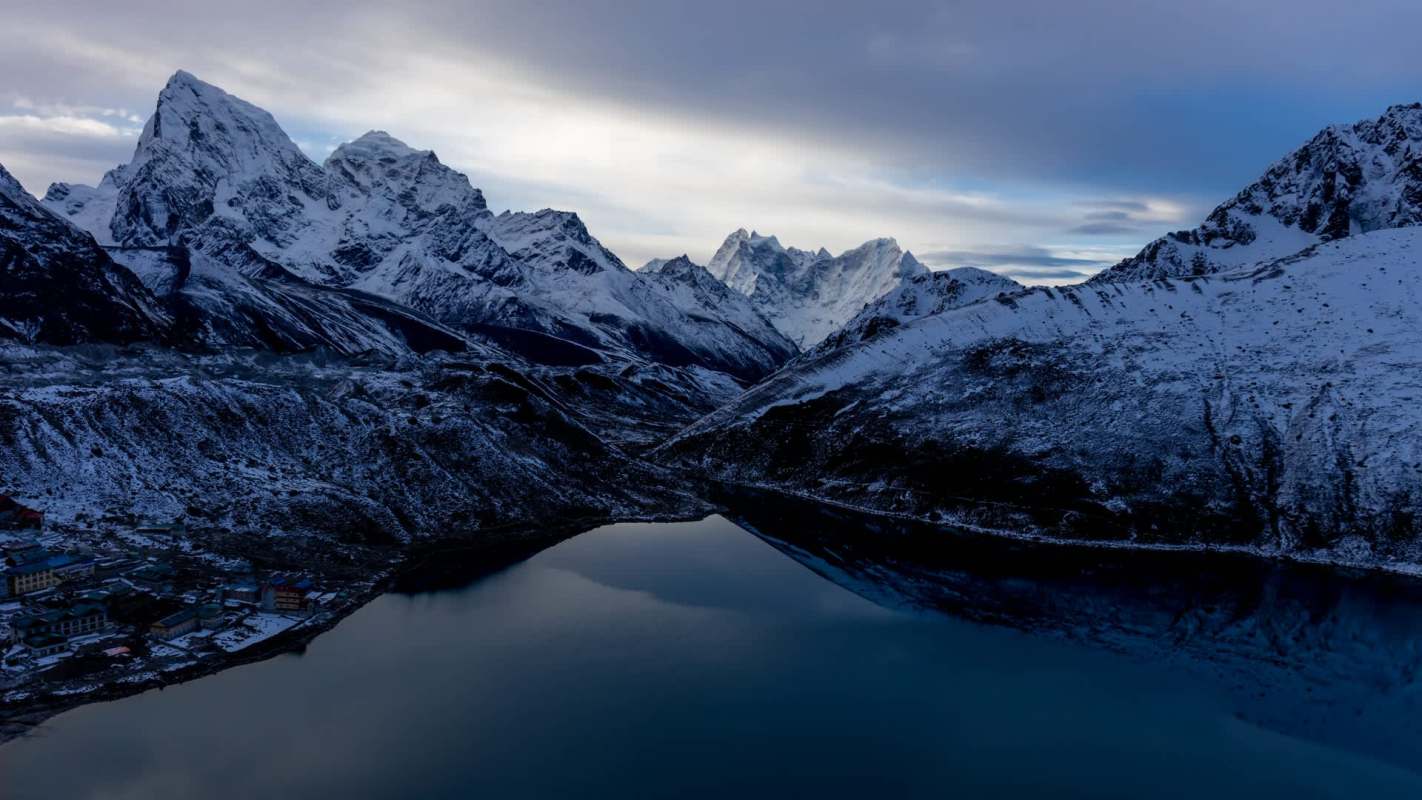
New research has uncovered a troubling development affecting glaciers' ability to regulate the surrounding air temperature.
What's happening?
The study, published in the journal Nature Climate Change, examined the impact of rising global temperatures on glacier temperature decoupling.
Put simply, glacier temperature decoupling is when the air above a large glacier is cooler than the surrounding atmosphere. This essentially creates a microclimate where the colder air acts as a natural air conditioner, slowing down ice melt.
Researchers led by scientists from the Institute of Science and Technology Austria pored over data from 350 weather stations in summer seasons spanning 62 glaciers worldwide.
At present, for every degree Celsius the average global temperature increases, the air above glaciers rises by 0.83 degrees Celsius on average.
With a comprehensive global model, the team projected that this overall natural cooling effect will peak in the next 10 to 15 years, as Earth.com observed (with some regions peaking at different times). Thereafter, the glaciers — at that point smaller and thinner — will lose their ability to resist rising temperatures and will "recouple" with the surrounding atmosphere.
TCD Picks » Quince Spotlight
💡These best-sellers from Quince deliver affordable, sustainable luxury for all




Why is the research concerning?
The study adds further detail to an already concerning picture. As heat-trapping pollution caused by human activity warms the atmosphere, glaciers' capacity to self-regulate temperature is projected to vanish. This could have dire consequences for the millions worldwide who live within reach of them.
A village in Switzerland was partially destroyed by glacial melt. Many other areas, from Alaska to the Himalayas, lie at risk of floods caused by retreating glaciers.
The loss of permafrost, a major natural carbon sink, is another huge concern.
What's being done about glacier melt?
The study's lead author, Thomas Shaw, dismissed short-term interventions, telling Earth.com that cloud seeding and glacial covering is simply "like putting an expensive Band-Aid on a bullet wound."
|
Do you think America does a good job of protecting its natural beauty? Click your choice to see results and speak your mind. |
 Definitely 👍
 Substantial glacial ice loss looks inevitable, but the extent of the damage will depend on how successfully humankind reduces harmful pollution and pivots to clean energy.
It's a long-term global issue that requires a multifaceted approach, from raising awareness to backing the right political candidates who will take the issue seriously.

Join our free newsletter for good news and useful tips, and don't miss this cool list of easy ways to help yourself while helping the planet.







