


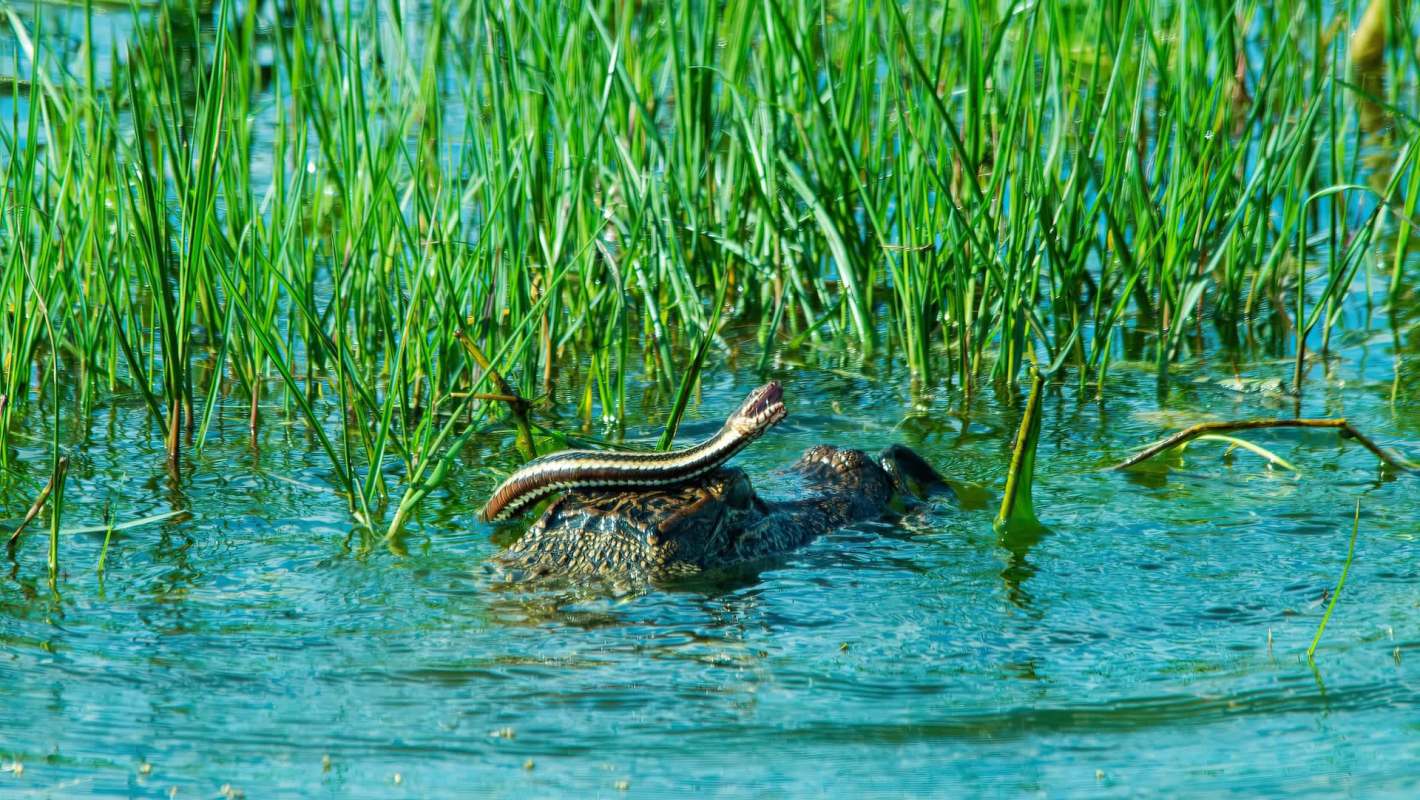
In nature's version of "Alien vs. Predator," Florida alligators are battling invasive Burmese pythons as the gators become more active during mating season.
Naples Daily News reported that as the apex predators become more active in May and June, officials have warned residents they may spot more gators on the move.
That matters for more than potential wildlife watchers. Florida's roughly 1.3 million alligators will eat most anything, and evidence shows they sometimes prey on Burmese pythons. But the relationship goes both ways: Burmese pythons have also been recorded preying on smaller alligators.
That back-and-forth is a reminder that displaced species can reshape ecosystems in unpredictable ways. Burmese pythons are not native to Florida. They were brought to the area from Southeast Asia through the exotic pet trade in the early 2000s, according to the National Invasive Species Information Center.
Since their arrival, they have devastated populations of small mammals and other wildlife in the Everglades and elsewhere, including some endangered species.
If native predators such as alligators are helping reduce python numbers, even occasionally, that could offer a limited boost for ecosystem balance. Florida officials have been working tirelessly and employing various measures, including the Python Challenge, contract hunters, and raccoons and opossums, to eradicate the snakes from the environment.
TCD Picks » Quince Spotlight
💡These best-sellers from Quince deliver affordable, sustainable luxury for all




More visible gator activity across the state, including in and around waterways where people walk dogs, ride bikes, fish, and engage in recreational activities, also increases the likelihood of human-gator interactions.
Florida Fish and Wildlife Conservation Commission officials advise residents to use designated swim areas during daylight hours and to keep pets leashed and well away from shorelines. It also advises you never feed an alligator and keep your distance if you see one.
Learning how to safely share space with native wildlife can protect people, pets, and the broader environment at the same time — something that becomes even more important as non-native animals add new stress to already fragile habitats.

Get TCD's free newsletters for easy tips, smart advice, and a chance to earn $5,000 toward home upgrades. To see more stories like this one, change your Google preferences here.







