


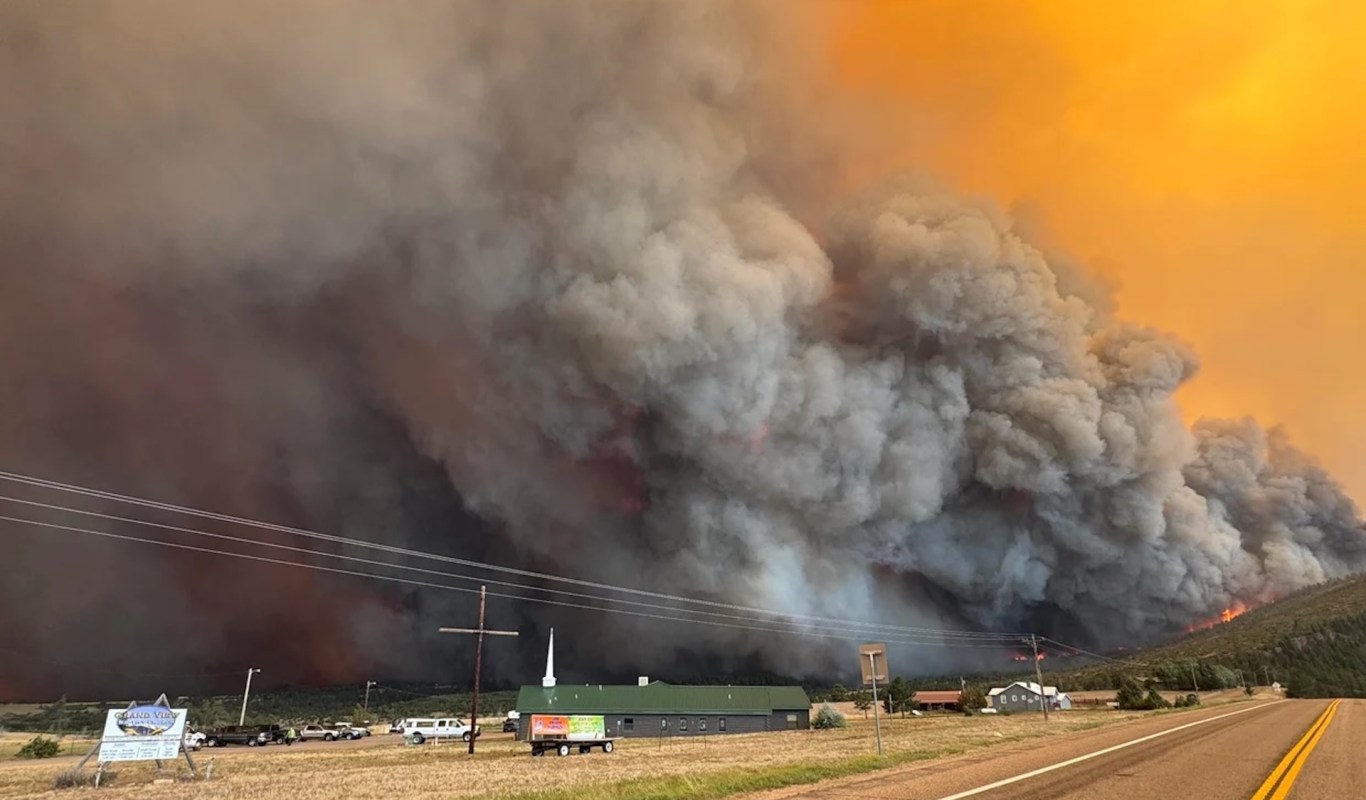
Residents in southern Colorado were told to evacuate on Monday after one wildfire surged in size, and officials said another blaze was also moving quickly.
What happened?
According to CBS Colorado, authorities first issued an evacuation order for Aspen Acres, a neighborhood in southeastern Custer County, before expanding it to cover the entire town of Beulah.
By Monday, the Aspen Acres Fire had swelled to nearly 23,000 acres with 0% containment, prompting a response from multiple agencies as dangerous weather fueled its advance.
Alongside the evacuations, officials closed Highway 165 from the San Isabel Dam to mile marker 15, and the affected area included Bishop Castle, the popular roadside attraction on that highway, per CBS Colorado.
The Pueblo County Sheriff's Office warned on Facebook that intense winds were hampering firefighting efforts.
"Due to the high winds of approximately 100 miles per hour, no air support is currently available," they wrote in the post. "An unspecified number of structures have been affected by the fire. If you have livestock but no means to transport them, it is encouraged to cut your fences."
TCD Picks » Quince Spotlight
💡These best-sellers from Quince deliver affordable, sustainable luxury for all




Officials said a second fire near Isabel Lake in Custer County was also spreading rapidly, increasing concern for residents in the area about 150 miles south of Denver, CBS Colorado reported.
Why does it matter?
Wildfires are not only a threat to forests. They can displace families within hours, damage homes and businesses, disrupt tourism, and force road closures that cut off access to entire communities.
CBS Colorado reported Colorado's public health and environment department also issued an air quality health advisory, warning that smoke ranging from moderate to heavy could continue through at least Tuesday morning.
Smoke exposure can be especially dangerous for children, older adults, and people with asthma and other respiratory conditions, and heart disease.
Worsening extreme weather disasters threaten lives and livelihoods by damaging homes, putting workers at risk, straining emergency services, and worsening air pollution that can travel far beyond the immediate fire zone.
When communities are repeatedly hit by destructive events such as wildfires, the effects can ripple through local economies, increase insurance pressures, and make recovery harder for families.
What's being done?
Resources were being mobilized on Monday as fire agencies worked to respond to both blazes.
The sheriff's office noted an evacuation center was opened at 1650 Cooper Place in Pueblo County for evacuees and household pets, while a separate location for large animals was set up at 4 Bar S on 6675 Hwy 78 W.
Local organizations were also stepping in, CBS Colorado reported. The YMCA of Pueblo said evacuees could use its facilities during normal operating hours to rest, charge devices, access free Wi-Fi, and participate in family-friendly activities. Evacuees were asked to provide proof of evacuation, and children were required to remain with a parent or guardian.
Pueblo County Sheriff David J. Lucero also announced Stage 2 fire restrictions for Pueblo County, including a ban on the use and sale of fireworks, as well as no smoking and no open flames, per CBS Colorado.
FEMA is stepping in to provide federal funds to help pay up to 75% of the state's eligible firefighting costs, as noted in a press release.
On Tuesday morning, the Pueblo County Sheriff's Office reported the fire was still 0% contained.

Get TCD's free newsletters for easy tips, smart advice, and a chance to earn $5,000 toward home upgrades. To see more stories like this one, change your Google preferences here.







