


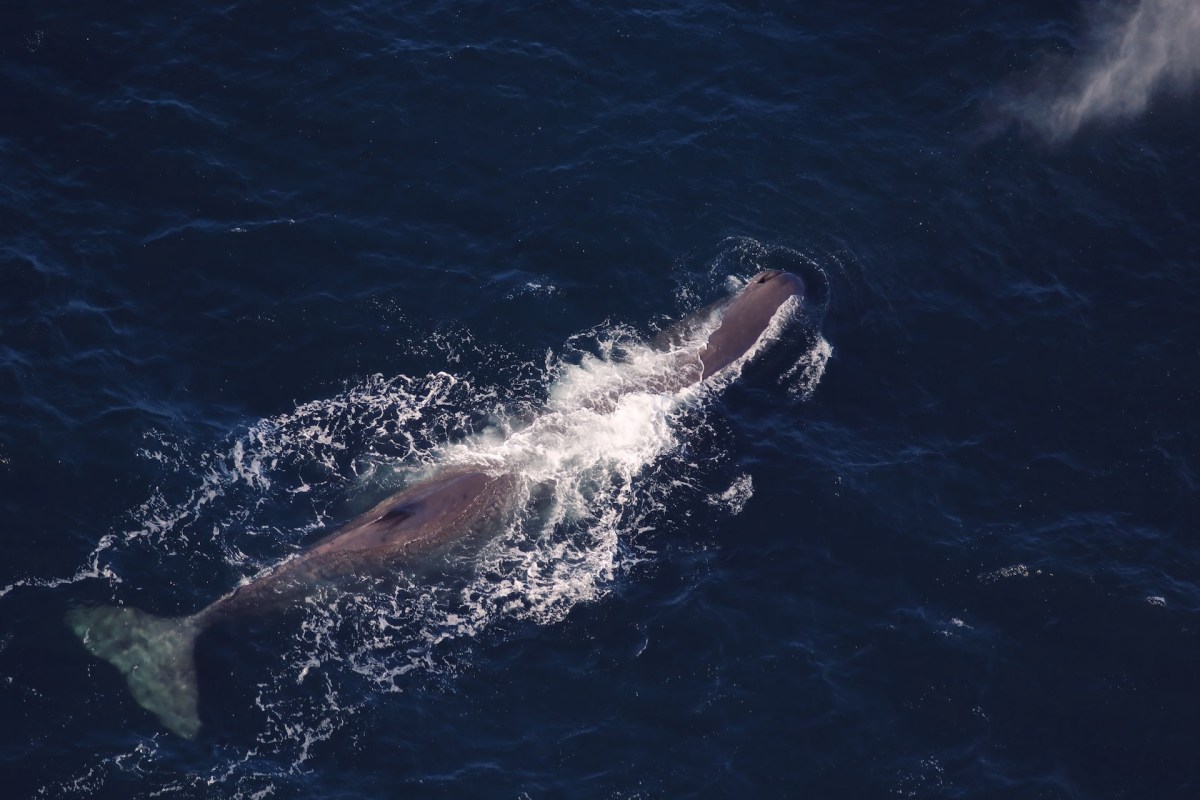
Scientists are using drones to tag and monitor sperm whales in the waters off Dominica in the Caribbean, an area that hosts the world's first sperm whale reserve.
Traditional tagging methods involved standing on a boat's prow and using a 20-foot pole to attach the tag to whales.
However, the noise of the boat and its proximity can cause stress to whales, and the process takes an immense amount of time and coordination to achieve, according to The New York Times.
"We want to reduce the disturbance to the animal while improving the quality of the data that we collect," Daniel Vogt, a research engineer at Harvard and the lead author of this study, told the Times.
Drones not only have the ability to descend and attach suction-cupped sensors to a whale's skin, but they're also able to identify and measure individual whales, compare their behavior at the water's surface, and even collect biological samples.
By flying through the mist ejected from a whale's blowhole, drones can collect information about its genetics, hormones, and microbiomes.
"This is definitely the future," Jeremy Goldbogen, a marine biologist at Stanford University who was not involved with the research, shared with the Times.
"It's really exciting to see these new innovations."
Among the 90 different whale species, many are either endangered, such as the blue whale, or critically endangered, including the Rice's whale and the North Atlantic right whale.
It's important to know the vital role that whales play in maintaining a healthy ocean and planet.
TCD Picks » Quince Spotlight
💡These best-sellers from Quince deliver affordable, sustainable luxury for all




|
Should we be harnessing the ocean to power our homes? Click your choice to see results and speak your mind. |
 Absolutely 👍
 Sperm whales have a worldwide range and migrate seasonally to feed and breed. Their movements (and feces) serve to fertilize marine ecosystems and boost the production of phytoplankton, also known as microalgae.
Phytoplankton produce their own food through photosynthesis and serve as a food source for tiny animals called zooplankton. In turn, zooplankton are eaten by baleen whales, which use keratin-fringed plates in their mouths to filter zooplankton and small fish.
An estimated 37 billion metric tons of carbon dioxide are captured by phytoplankton, which is about 40% of all the CO2 produced. They also generate more than half of the world's oxygen supply.
While whales play a crucial role in supporting this life-giving process, they are also able to sequester up to 33 tons of carbon dioxide from the atmosphere in their bodies because of their immense size.
When they die and drift to the ocean floor, it may take up to 1,000 years for that carbon to cycle back to the surface.
By studying these aquatic mammals, scientists can track their hunting patterns, social interactions, vocalizations, and overall health, thereby improving conservation efforts.
The use of drones allows researchers to study whales from a safe distance. Since many only spend eight minutes on the surface out of a 45-minute dive, it helps them do so more quickly and efficiently.
The "tap and go" method that they use to place these suction-cupped tags offers a "new and creative way to take advantage of what a drone can do," said Ari Friedlaender, an ecologist at the University of California, Santa Cruz, who was not involved with the study.
The Times also noted that the tags are only temporary for the whales and won't end up as ocean trash.
After collecting data for hours or days, they automatically detach and are then recovered using telemetry or satellite messaging systems.

Join our free newsletter for good news and useful tips, and don't miss this cool list of easy ways to help yourself while helping the planet.
Cool Picks






