


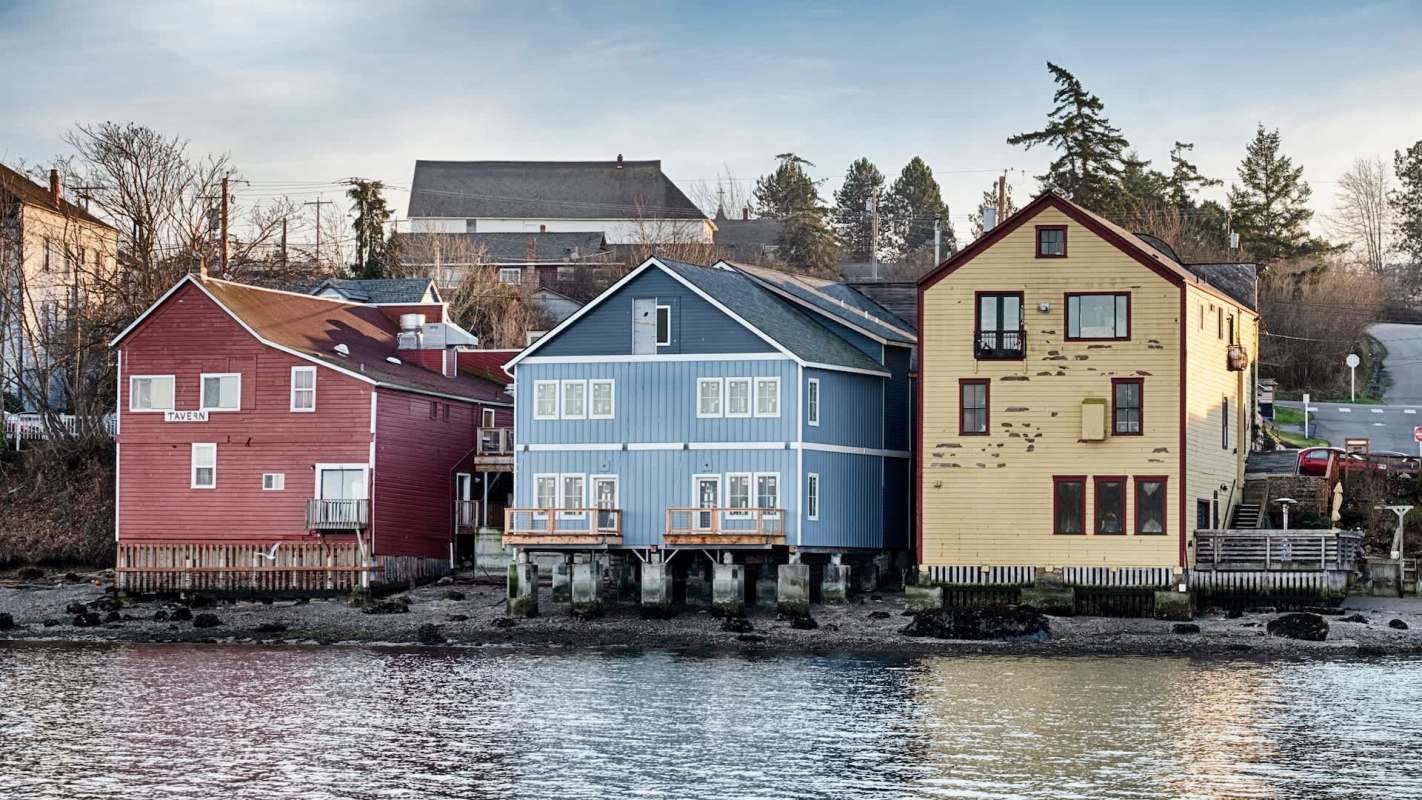
With rising tides threatening the structural integrity of coastal buildings, this town is left with a serious conundrum.
Several historical spaces in Coupeville, Washington, are projected to fall victim to the sea in the coming years, leaving owners struggling to find a logical solution.
What's happening?
The Coupeville Cash Store, set precariously stilted above the ocean's maw, is one of many historical buildings that need to either elevate their height to accommodate the sea or abandon their locations altogether.
According to the South Whidbey Record, relocating the storefront is impossible for the owner, but the cost to lift the original structure up may prove to be inaccessible as well.
The building already underwent a massive "$3.5 million renovation just three years ago," which only further emphasizes how quickly the sea levels have been rising year over year. The source added that "elevating buildings … could cost anywhere from $500,000 to $1 million each … it may not be feasible for the town to provide funds that benefit private owners."
Why is this important?
More and more coastal areas are sinking beneath the waves, and the way humans add to the ocean's rise is hard to miss.
The more dirty energy people burn, especially putting polluting gases into the atmosphere, the higher the tide reaches.
Already, planet-overheating pollution from fossil fuel sources has caused sea levels to rise so significantly that historical buildings like those in Coupeville are faced with consistently difficult choices.
As the world continues to increase in temperature, issues like widespread flooding across many coastal communities are an inevitable hazard to the safety of people living there and the environment being swallowed up by the sea.
What's being done about this?
The biggest contributors to an overheating planet continue to be fossil fuels like gasoline and coal.
TCD Picks » Quince Spotlight
💡These best-sellers from Quince deliver affordable, sustainable luxury for all




|
How worried are you about rising ocean levels? Click your choice to see results and speak your mind. |
 Very 😰
 A silver lining, however, is that many big companies have taken initiatives to switch to cleaner energy sources.
Anything from solar to nuclear to wind can significantly impact major carbon pollution linked to rising sea levels.
It is crucial to understand how human operations continue to affect the planet, and becoming more educated on such critical climate issues will allow more people to get involved in keeping world coastlines consistent.

Get TCD's free newsletters for easy tips to save more, waste less, and make smarter choices — and earn up to $5,000 toward clean upgrades in TCD's exclusive Rewards Club.
Cool Picks






