


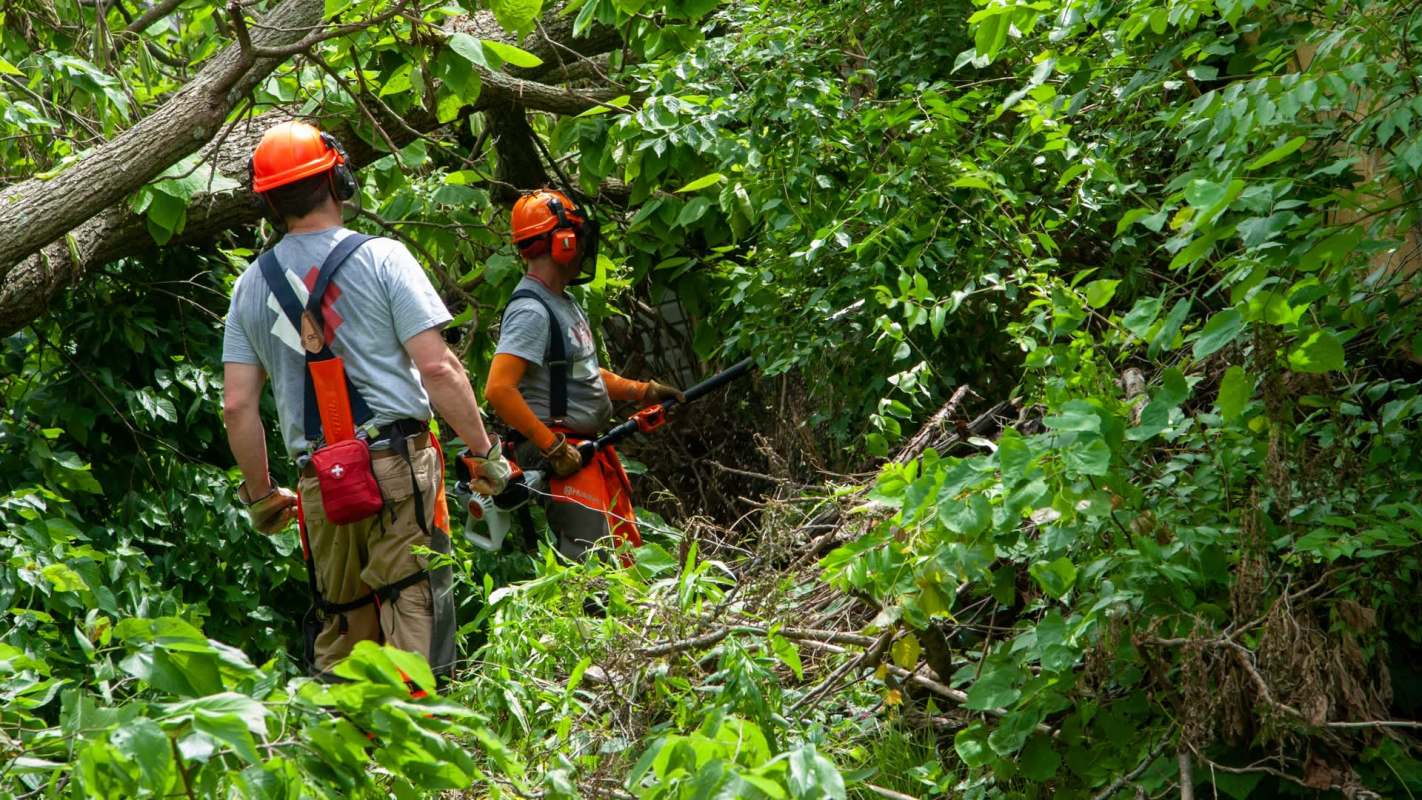
After the National Trust for Scotland received funding to remove several invasive plant species from Corrieshalloch Gorge, the site might not deserve the nickname "ugly hollow" anymore.
According to the BBC, NTS hired contractors to descend into the gorge and remove several invasive plants, including Japanese knotweed, rhododendron ponticum, and American skunk cabbage. The gorge — formed by glacier meltwater from the last ice age approximately 11,000 years ago — reaches a depth of 197 feet.
Workers rappelled down the crags on ropes to clear or kill invasive plant species in Corrieshalloch Gorge National Nature Reserve. This dangerous project was crucial. Invasive plants hoard resources and push out native species, weakening biodiversity.
And biodiversity is the key to a healthy planet. A wide range of flora and fauna support one another in a delicate balance. This balance is important for every species, including humans. Without biodiversity, extreme weather can increase, diseases can run rampant, and food and water supplies can dwindle around the globe.
For example, if a species of bird that eats mosquitoes goes extinct, the mosquito population could grow out of control. An increase in the population of disease-carrying insects could lead to outbreaks of West Nile virus and other illnesses.
Removing the invasive plants safeguards all the plant and animal species in the nature reserve. But invasive species don't just wreak havoc in the wild. Introducing invasive plants to your own garden can disrupt your local ecosystem.
Creating a natural lawn or rewilding your yard is a beautiful way to embrace the native species in your area. Native plants are easy to care for, requiring minimal maintenance and water, as they thrive naturally, saving homeowners both time and money.
By planting native flowers, shrubs, and trees, you're encouraging biodiversity and supporting the native animals around your home, from birds to butterflies. You can enjoy a low-maintenance, flourishing green space while creating a friendly atmosphere for pollinators. According to the U.S. Department of Agriculture, about 35% of the world's food crops rely on pollinators for reproduction.
"It is thanks to the continued generosity of our members and supporters, including players of People's Postcode Lottery, that we're able to continue our vital work to care for and protect Scotland's natural heritage at this special place for everyone to enjoy, now and into the future," Rob Dewar, NTS invasive non-native species project officer, said.
|
What is the biggest reason you don't grow food at home? Click your choice to see results and speak your mind. |
 Not enough time ⏳
Join our free newsletter for good news and useful tips, and don't miss this cool list of easy ways to help yourself while helping the planet.
TCD Picks » Quince Spotlight
💡These best-sellers from Quince deliver affordable, sustainable luxury for all




Cool Picks






