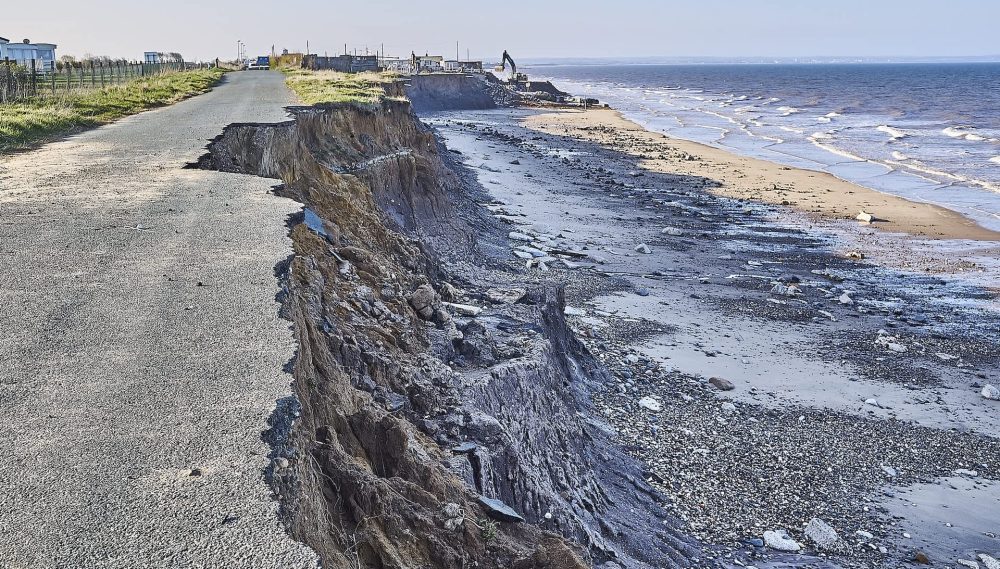
Coastal erosion along North Carolina's Outer Banks has become impossible to ignore as homes are literally falling into the sea. Experts warn that the forces driving these collapses are only accelerating, both nearby and globally.
What's happening?
The Outer Banks, a chain of narrow islands off the North Carolina coast, has seen sand erosion eat away at shorelines and now into homes themselves, according to 13News Now. The islands naturally shift over time, but decades of development have left buildings and infrastructure exposed as coastlines quickly disappear.
The culprit isn't always a major storm, according to coastal geologist Christopher Hein of the Virginia Institute of Marine Science.
"What's causing these houses [to collapse] are not major hurricanes, they're storms that here don't feel like much," he told 13News Now.
Weird spring storms, shifting tides, and gradual sea-level rise are slowly moving sand and undermining home and road foundations, so when things fall, they fall fast.
Why is coastal erosion concerning?
The same offshore storms around the Outer Banks can also drive erosion in parts of the nearby Hampton Roads region in Virginia, with one of the highest rates of sea level rise in the U.S. But globally, they're just a few of many.
TCD Picks » Good Store Spotlight
Get 10% off your next purchase with code TCD10



The burning of oil, coal, and gas has driven rising global temperatures, accelerating sea-level rise, and putting coastal communities at risk. This isn't just an East Coast problem; California beaches could disappear within the next 75 years, and across the Atlantic, the French community of Labenne is losing 6 feet of coastline every year.
Erosion and flooding threaten public health, economic stability, and community safety, often with lower-income communities bearing the greatest consequences from weak local infrastructure, lingering pollution, and limited support.
"These changes have not been occurring at the rate they are today. Period," Hein warned. "None of this is new; it's just happening faster."
What's being done about it?
Dare County, North Carolina, emphasized that protections for local Outer Banks wetlands and dune systems are crucial for filtering stormwater runoff and offering long-term protection from floods and storm surges.
TCD Picks » Quince Spotlight
💡These best-sellers from Quince deliver affordable, sustainable luxury for all




|
Which of these savings plans for rooftop solar panels would be most appealing for you?
Click your choice to see results and speak your mind. |
 Save $1,000 this year 💸
 Hampton Roads is already planning for what's next. Virginia Beach voters approved a $560 million stormwater bond for flood mitigation, while Norfolk is working with the Army Corps of Engineers on floodwalls and surge barriers.
Homeowners can help too; rain gardens, rewilding dunes, flood-tolerant landscaping, and checking local flood zone maps are all helpful actions that can buy valuable time.

Get TCD's free newsletters for easy tips to save more, waste less, and make smarter choices — and earn up to $5,000 toward clean upgrades in TCD's exclusive Rewards Club.