


Extreme weather is a genuinely terrifying new global reality, making the topic fertile ground for misinformation to quickly take root in its chaotic, destructive aftermath.
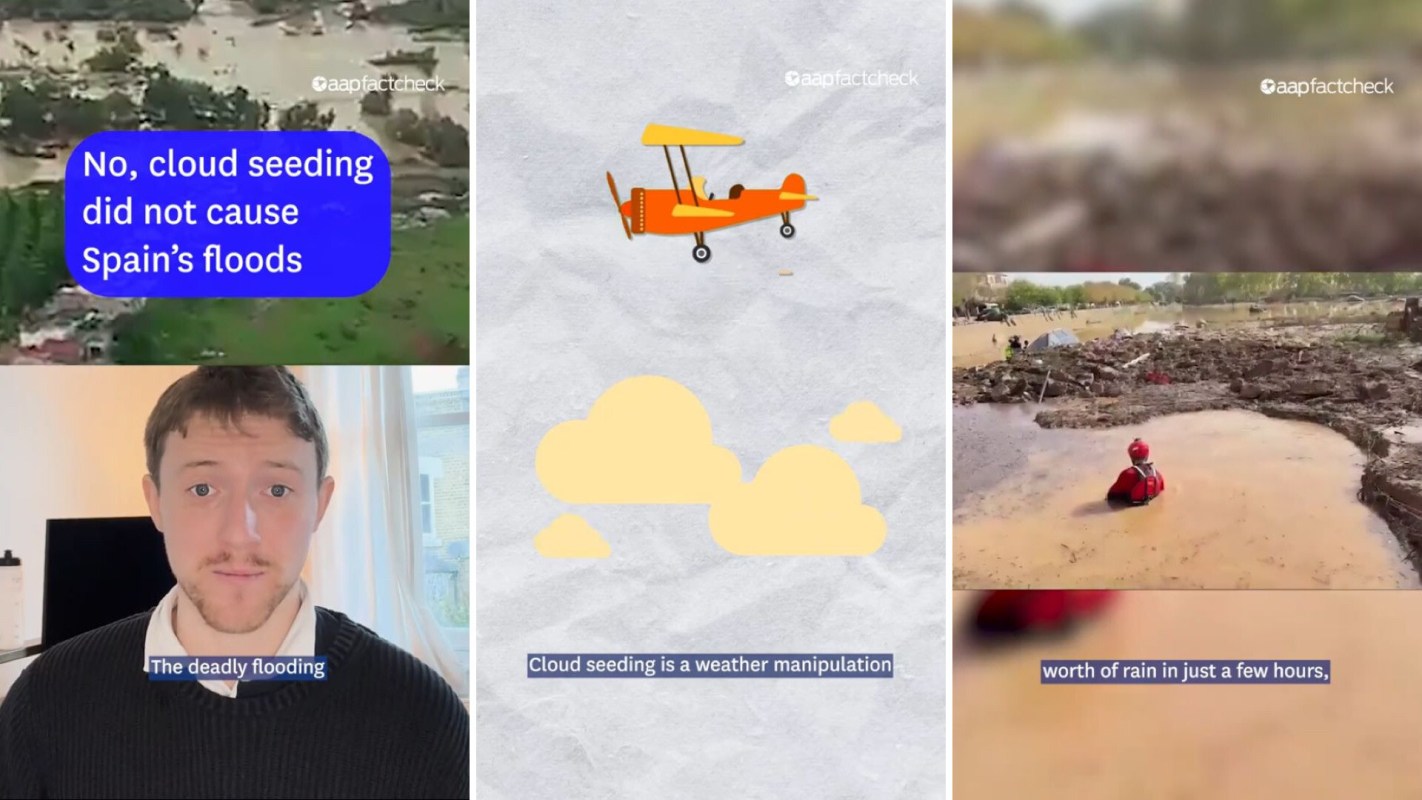
After devastating floods in Spain killed more than 200 people in 2024, claims that "cloud seeding" caused the torrential rain and flooding went viral on TikTok, forcing AAP FactCheck (@aapfactcheck) to step in and explain what really happened.
@aapfactcheck Misinformation has begun to circulate online following a flash flooding event in southeast Spain, including claims the weather event was manufactured using cloud seeding technology. #spain #flood #floods #weather #news ♬ original sound - AAP FactCheck
"The deadly flooding in Spain was not caused by cloud seeding," an AAP reporter said at the beginning of the clip. "But that hasn't stopped misinformation spreaders from blaming the technology."
Cloud seeding is a real, benign form of weather modification, a decades-old technology that uses substances like silver iodide to generate precipitation on an extremely limited scale.
According to the National Oceanic and Atmospheric Administration, "No technology exists that can create, destroy, modify, strengthen, or steer hurricanes in any way, shape, or form." As AAP reiterated, cloud seeding is only capable of mildly enhancing rainfall when rain is "already likely."
The clip went on to identify the culprit behind the flooding in Spain: DANA. Per LiveScience, "DANA" is an acronym for "a Depresión Aislada en Niveles Altos," a high-altitude, isolated depression.
When a mass of cold air collides with a mass of warm air near the surface, volatile storms often result. In Spain, it caused a "year's worth" of rain to fall in just "a few hours."
Because extreme weather is a somewhat new concept, first recognized around 2004, it's understandable that the general public is confused and scared whenever these increasingly severe events strike.
If they seem unnatural, that's because they are — but not in the way the rumors suggest.
Weather can neither be controlled nor negotiated with, which amplifies fear and makes us crave answers — particularly those offering potential causes and solutions. The good (and bad) news is that scientific consensus exists regarding the causes of extreme weather, as does a solution.
TCD Picks » Quince Spotlight
💡These best-sellers from Quince deliver affordable, sustainable luxury for all




|
Do you worry about the quality of the air inside your home?
Click your choice to see results and speak your mind. |
 Yes — often 😬
 The United Nations explained that an overheating planet and warmer seas cause more moisture to evaporate, which in turn supercharges violent weather and creates more powerful storms.
"As greenhouse gas emissions blanket the Earth, they trap the sun's heat," the U.N. warned. "Warmer temperatures over time are changing weather patterns and disrupting the usual balance of nature. This poses many risks to human beings and all other forms of life on Earth."
Both the U.N. and the scientific community have further identified how we can combat extreme weather events: by reducing our reliance on dirty energy and transitioning to clean energy.
Extreme weather didn't happen overnight, and efforts to curtail it will require time and effort. At an individual level, staying aware of how climate issues influence weather systems is one way to protect yourself and your loved ones.

Join our free newsletter for good news and useful tips, and don't miss this cool list of easy ways to help yourself while helping the planet.
Cool Picks






