


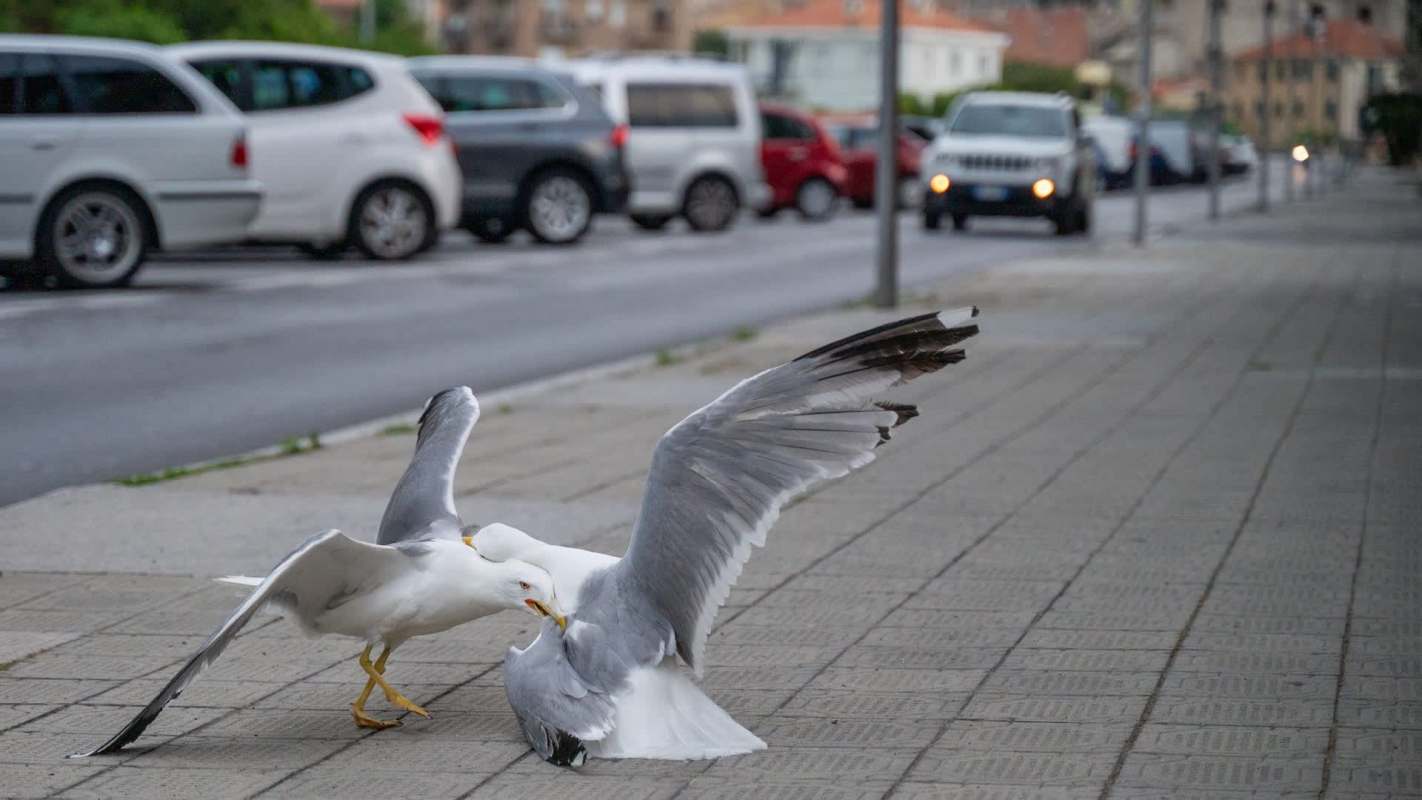
Wildlife in cities is getting noticeably bolder, according to a new global analysis, and researchers say the shift appears to be happening in predictable ways as human development expands.
Animals living alongside people were found to be more aggressive, more exploratory, and more active than animals of the same species living in less urbanized areas, according to a study published in the Journal of Animal Ecology.
Teams from Lewis & Clark College, CEFE-CNRS in Montpellier, and North Dakota State University reviewed data from 80 previous studies covering 133 species in 28 countries, the British Ecological Society wrote in a Phys.org article.
The clearest pattern showed up in birds, though the authors said that's at least partly because birds made up more than 70% of the available research. Insects, amphibians, and reptiles represented only 10% of the dataset, indicating that many urban species remain poorly studied.
"We found that no matter where you are in the world, urbanization is changing behavior in consistent, predictable ways," first author Dr. Tracy Burkhard said. "The strongest result was that animals seemed to be more risk-positive. They're more bold."
The researchers said this isn't limited to the animals people already associate with city life, such as pigeons, gulls, and rats. Similar changes are appearing in birds more commonly associated with rural habitats, such as the whitethroat, yellowhammer, and redpoll, as they are now adjusting to life in human-dominated environments.
TCD Picks » Quince Spotlight
💡These best-sellers from Quince deliver affordable, sustainable luxury for all




Burkhard warned that if animals become more willing to take risks around humans, "We're going to be coming into contact with wildlife a lot more in certain areas, and that is potentially bad for both us and wildlife."
Human activity is a major part of the story. Cities reshape habitats with roads, buildings, noise, artificial light, and fragmented green space. They also create new temptations, including food waste, bird feeders, and shelter in structures.
Over time, animals that can tolerate or exploit those conditions may be more likely to survive and reproduce, leaving cities filled with species and individuals that are better adapted to living close to people.
These behavioral changes could also ripple across entire urban ecosystems by altering how animals compete, feed, migrate, and reproduce. Because the available data is heavily skewed toward birds, scientists say there is still much more to learn about how other animals respond to rapid urban growth.
The researchers said city planning needs to take animal behavior more seriously.
One major recommendation is to create connected green spaces so that urban wildlife populations are not cut off from one another. Corridors and habitat links can keep urban wildlife groups connected and support gene flow.
Better-designed cities can also reduce stressors that push wildlife into risky behavior.
More research is also needed, especially on insects, reptiles, and amphibians. Co-author Dr. Anne Charmantier said the study's taxonomic imbalance should push researchers to study "all organisms living in cities," not just the most visible ones.

Get TCD's free newsletters for easy tips, smart advice, and a chance to earn $5,000 toward home upgrades. To see more stories like this one, change your Google preferences here.







