


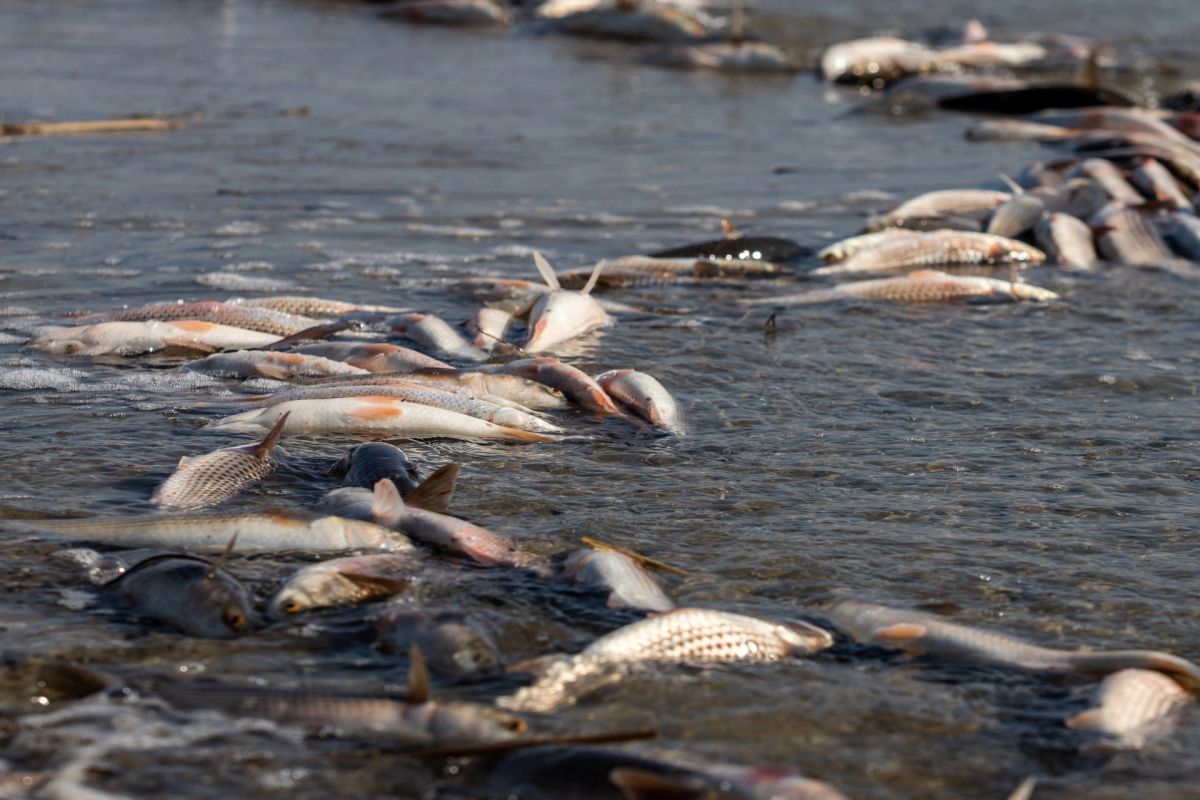
A common farm pesticide may be quietly shortening the lives of fish by making them age faster, according to Science. Researchers found that long-term exposure to the insecticide chlorpyrifos damages fish at the cellular level, causing them to die earlier than normal. Instead of killing fish right away, the chemical slowly speeds up the aging process, changing fish populations over time.
What's happening?
Scientists studied more than 24,000 lake skygazer fish from three lakes in China over four years. Two of the lakes are contaminated by runoff from nearby farms, while the third is much cleaner.
The difference was striking: Polluted lakes had up to 88% fewer large fish and as many as 96% fewer fish older than three years compared with the clean lake.
The team connected those losses to chlorpyrifos, a pesticide used on crops. Fish living in contaminated water had shorter telomeres, which are protective caps at the ends of chromosomes. Telomeres work like a biological clock: When they get shorter, cells behave as if they are older. The fish also had more lipofuscin, a buildup of damaged proteins often called cellular "junk."
Researchers exposed fish to small, realistic amounts of chlorpyrifos in a lab. After four months, all fish in clean water survived, but many exposed fish died. Survivors had telomeres up to one-third shorter than normal.
Researcher Jason Rohr told the Guardian that the study's results "challenge the assumption that chemicals are safe if they do not cause immediate harm."
Why is the impact of pesticides on fish concerning?
Older fish are important because they reproduce more and help keep populations stable. When pollution removes them early, lakes become filled with only young fish, weakening the entire ecosystem.
Because many animals share similar aging systems, scientists warn that long-term, low-level chemical exposure could harm other wildlife in similar ways.
Slow, invisible damage from pesticides like chlorpyrifos quietly weakens fish populations and, subsequently, the communities that come into contact with the pesticide.
According to the Natural Resources Defense Council, chlorpyrifos is a potent neurotoxin that may "increase risk of developmental delays, learning disabilities, lower IQ scores, and ADHD."
TCD Picks » Upway Spotlight
💡Upway makes it easy to find discounts of up to 60% on premium e-bike brands





|
What's the most you'd pay per month to put solar panels on your roof if there was no down payment?
Click your choice to see results and speak your mind. |
 $200 or more 💰
 Until recently, in the United States, farmers have sprayed about 5 million to 8 million pounds of the chemical on crops every year.
What's being done about chlorpyrifos?
Because small amounts of pesticides are common in the environment and many animals age in similar ways, the researchers warn that even low doses could cause long-term harm to living things.
Earthjustice and other environmental advocates across the country pushed the Environmental Protection Agency to ban chlorpyrifos on food in 2021, but the ban lasted less than two years after chemical companies and farm groups sued to block it.
In 2023, a federal appeals court weakened the rule, which allowed the pesticide to be used on many crops, while the EPA has proposed restricting its use once again.
As legal processes still unfold, the future of chlorpyrifos remains uncertain, leaving wildlife, food systems, and public health caught between science and industry pressure.

Get TCD's free newsletters for easy tips to save more, waste less, and make smarter choices — and earn up to $5,000 toward clean upgrades in TCD's exclusive Rewards Club.
Cool Picks






