


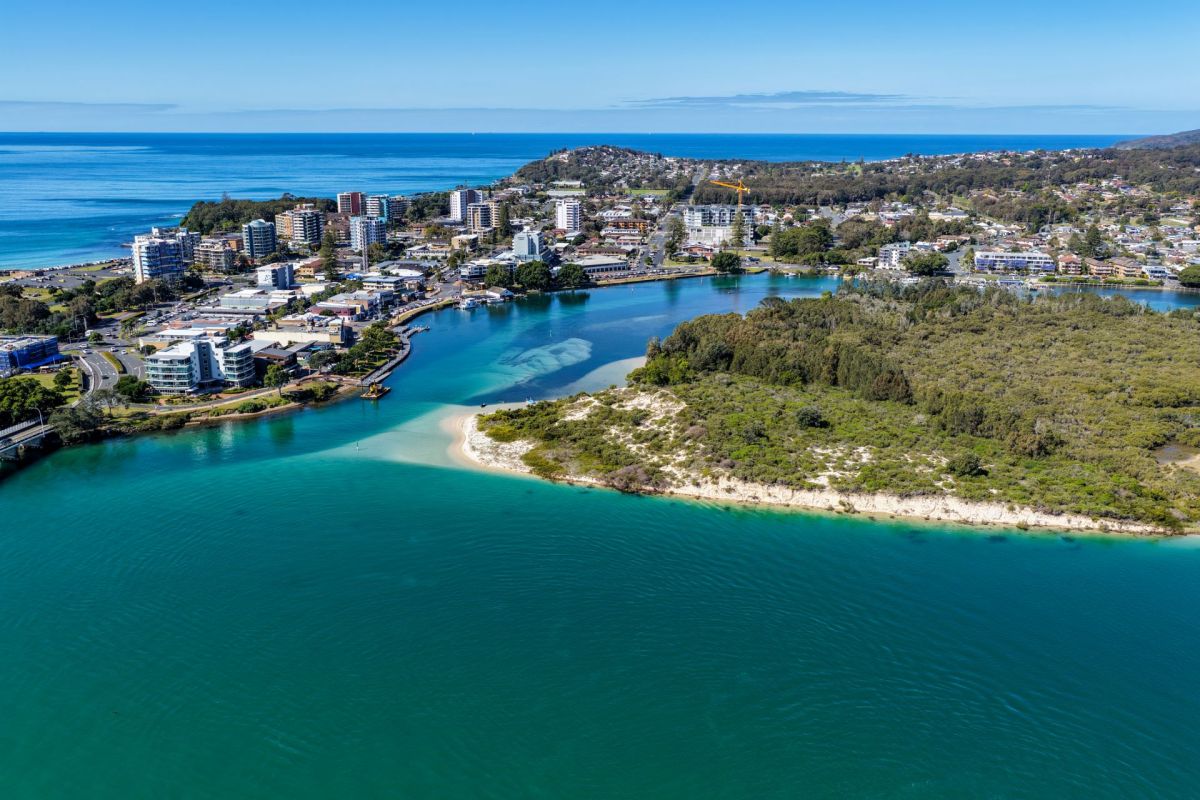
A new study has found that sea levels around the Canary Islands have been rising faster over time, closely following global trends.
What's happening?
In a news release from the University of Las Palmas de Gran Canaria, a pair of researchers from the school's Institute of Oceanography and Global Change shared their findings from a detailed study analyzing sea levels around the Canary Islands from 1993 to 2022.
First published in the Journal of Marine Science and Engineering, the study revealed sea levels rose significantly at both Las Palmas de Gran Canaria and Santa Cruz de Tenerife.
Using data from satellites and coastal tide gauges, the climate researchers found that local ocean currents and swirling eddies play a major role in why some areas experience higher sea levels than others.
According to the researchers, sea levels have been strongly influenced by ocean processes such as the North Atlantic Oscillation, Atlantic Multidecadal Oscillation, and the Atlantic Meridional Overturning Circulation.
Why are rising sea levels concerning?
Seasonal cycles also greatly impact sea-level changes around the Canary Islands, largely driven by water temperature. This is the result of thermal expansion, meaning the volume of water increases as it becomes warmer.
As temperatures continue to rise across the globe, so do ocean temperatures. This has coincided with record levels of air pollution stemming from human activities, such as the burning of gas, oil, and coal. This substantial warming trend has directly contributed to steadily increasing water levels.
"The seasonality of local sea level is primarily thermosteric (driven by temperature-induced expansion and contraction of seawater) with additional contributions from wind and atmospheric pressure," noted the study.
The impacts of sea-level rise are often worsened by sinking land and more intense storms. As a result, flood risks can increase, threatening public safety, food security, and the long-term viability of coastal communities.
What's being done about rising sea-levels around the Canary Islands?
The climate researchers noted that sea levels around the Canary Islands could rise by more than a foot by 2050 under the worst-case emissions scenario, with some cities facing even higher levels when land subsidence is taken into account.
TCD Picks » Quince Spotlight
💡These best-sellers from Quince deliver affordable, sustainable luxury for all




|
Should we be harnessing the ocean to power our homes? Click your choice to see results and speak your mind. |
 Absolutely 👍
 However, their local projections differ from leading global estimates, suggesting the need for region-specific models and continued monitoring to help coastal communities prepare for future sea-level rise.
"Future work should further explore the role of mesoscale and seasonal processes and integrate high-resolution regional models with observational data," added the researchers.
"Enhanced long-term monitoring and localized projections will be essential for effective adaptation planning in this vulnerable region."

Get TCD's free newsletters for easy tips to save more, waste less, and make smarter choices — and earn up to $5,000 toward clean upgrades in TCD's exclusive Rewards Club.
Cool Picks






