


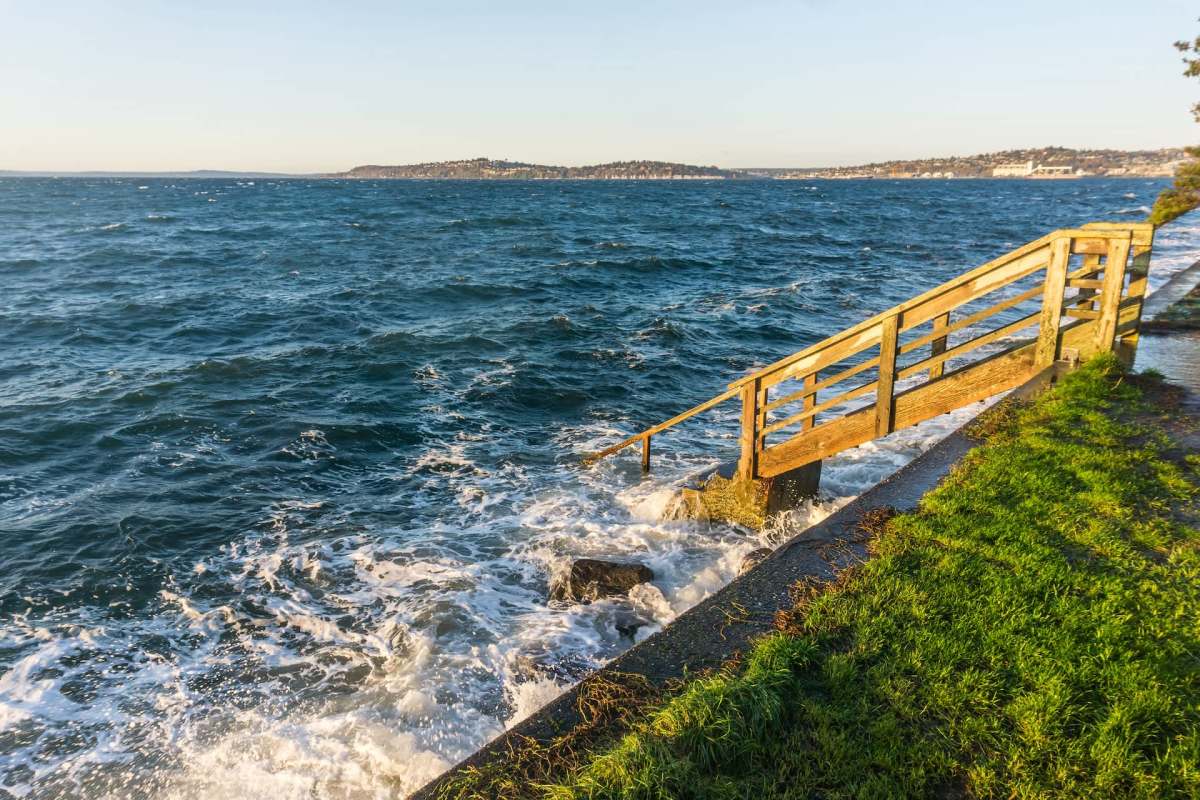
State leaders in California are searching for solutions to protect coastal communities from rising sea levels, but doing so may come at a cost for residents.
What's happening?
Per KMPH Fox 26, state legislators met in San Diego County to discuss rising sea levels and what that could mean for taxpayers. Several people presented research about the impacts of future flooding.
A representative from the San Diego Water Quality Control Board suggested creating mitigation banks along the coast to protect communities from extreme weather events. However, the recommendation came with some hesitation.
"When you kept talking about that, the concern I kept hearing, because of the communities I represent, that means more cost," California Assembly Member David Alvarez said. "That means that's out of taxpayers and ratepayers, which is certainly not a place we want to be."
Why are rising sea levels concerning?
Burning dirty fuels produces planet-warming pollution that supercharges extreme weather events. Hurricanes and intense rainfall can result in flooding, and coastal communities are particularly at risk.
More than 90% of trapped heat is absorbed by the oceans, which causes water volume to expand, according to NASA. That, along with water released into oceans by melting polar ice, leads to rising global sea levels.
TCD Picks » Quince Spotlight
💡These best-sellers from Quince deliver affordable, sustainable luxury for all




Nearly one-third of the United States population lives in coastal areas, according to the National Oceanic and Atmospheric Administration. Additionally, the rate of local sea-level rise in several places on the U.S. coastline is greater than the global average.
Per the Public Policy Institute of California, the Golden State has experienced about 8 inches of sea-level rise over the past 100 years. In Southern California specifically, 31% to 67% of beaches could completely erode by 2100 unless big changes are made.
What's being done about rising sea levels?
The best way to help mitigate rising sea levels is to understand the problem. Taking action to reduce energy consumption, such as utilizing cleaner energy sources, can help reduce the amount of heat-trapping pollution in the atmosphere that exacerbates sea-level rise.
Nature-based solutions can also reduce the impacts of sea-level rise, such as flooding and erosion, as the NOAA observed.
For example, oyster reefs and marshes act as natural barriers. Meanwhile, the NOAA noted that conserving and restoring wetlands can save hundreds of millions of dollars in storm damage.
|
Should taxpayers help pay to clean up the Great Pacific Garbage Patch?
Click your choice to see results and speak your mind. |
 We should pay for all of it 👍
Join our free newsletter for good news and useful tips, and don't miss this cool list of easy ways to help yourself while helping the planet.






