



The goal isn't only to plant trees to help with carbon sequestration, but also to plant the right kinds of trees.
One native gardener noticed a line of invasive trees outside of their office building and wondered what the best course of action was for tackling the invasive plants. They sought advice from experts in the r/NativePlantGardening subreddit.
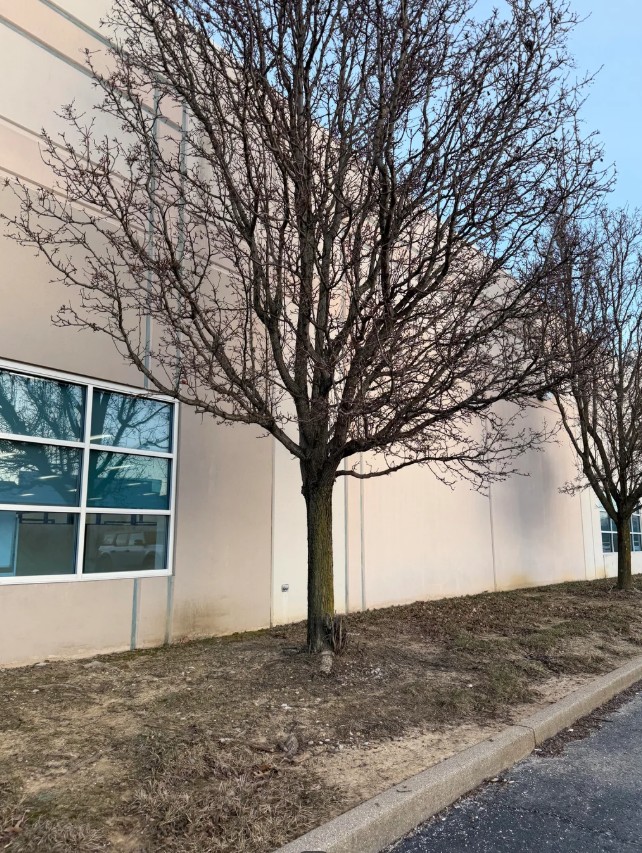
"Is there anything I can do about these huge callery pears in front of my office?" the original poster asked, sharing a picture of two barren trees outside an office building.
"The berries look like blood spatter on the building," the OP described, showing unmistakable discoloration on the walls near the trunks of the barren trees. "I would love for them to be gone," they continued, but "I'm not too sure the building owner would feel the same."
Callery pear trees are one of the most popular ornamental trees planted in North America, according to the Arnold Arboretum. They were brought to the United States from China in the early 1900s by a U.S. Department of Agriculture employee, who was looking to crossbreed pear varieties for maximized fruit production, according to the National Invasive Species Information Center.
However, callery pear trees emerged as a popular landscaping tree as these trees produced explosively beautiful spring blooms. These callery pear seeds were initially assumed to be sterile, per Dyck Arboretum, which means that the trees would flower, but they wouldn't produce fruit.
TCD Picks » Quince Spotlight
💡These best-sellers from Quince deliver affordable, sustainable luxury for all




What landscapers and gardeners have found, however, is that these trees will cross-pollinate with other Callery pear or other varieties of pear trees, which produces fruit that wildlife and pollinator birds feed on. Callery pear seeds are then spread to new areas through wildlife droppings, which will eventually grow into separate Callery pear trees.
Although it has a beautiful bloom, this ornamental tree is non-native, highly aggressive, and, for many, foul-smelling. Its aggressive growth can easily displace native vegetation and block out sunlight from native trees and plants with its dense thickets.
Native plants are the cornerstone of a healthy ecosystem, feeding and providing shelter for local wildlife, including local pollinators. Pollinators support plant reproduction, helping to protect the food supply of both humans and wildlife.
You, too, can support local ecosystem health by replacing your invasive grass lawn with native plant species, which are slower growing and less water-dependent than invasive plant species. This lawn upgrade can save homeowners like yourself time and money on lawn maintenance and water bills.
|
Which of these savings plans for rooftop solar panels would be most appealing for you?
Click your choice to see results and speak your mind. |
 Save $1,000 this year 💸
 Alternatively, you can save time and money on yard work and water bills by landscaping with xeriscape plants, or locally-acclimated, drought-tolerant plants.
Effective control of invasive plant species requires plant knowledge and keen observation skills to identify them in the wild, as the OP did.
Commenters suggested the OP look into replacing the invasive trees with alternative, native trees that would keep the building owner happy, too.
"Some communities offer free tree replacement for select invasives," one commenter suggested.
"If you're able, offer to manage the replacement yourself (hopefully with the help of the city or something)," another commenter wrote.

Get TCD's free newsletters for easy tips to save more, waste less, and make smarter choices — and earn up to $5,000 toward clean upgrades in TCD's exclusive Rewards Club.







