


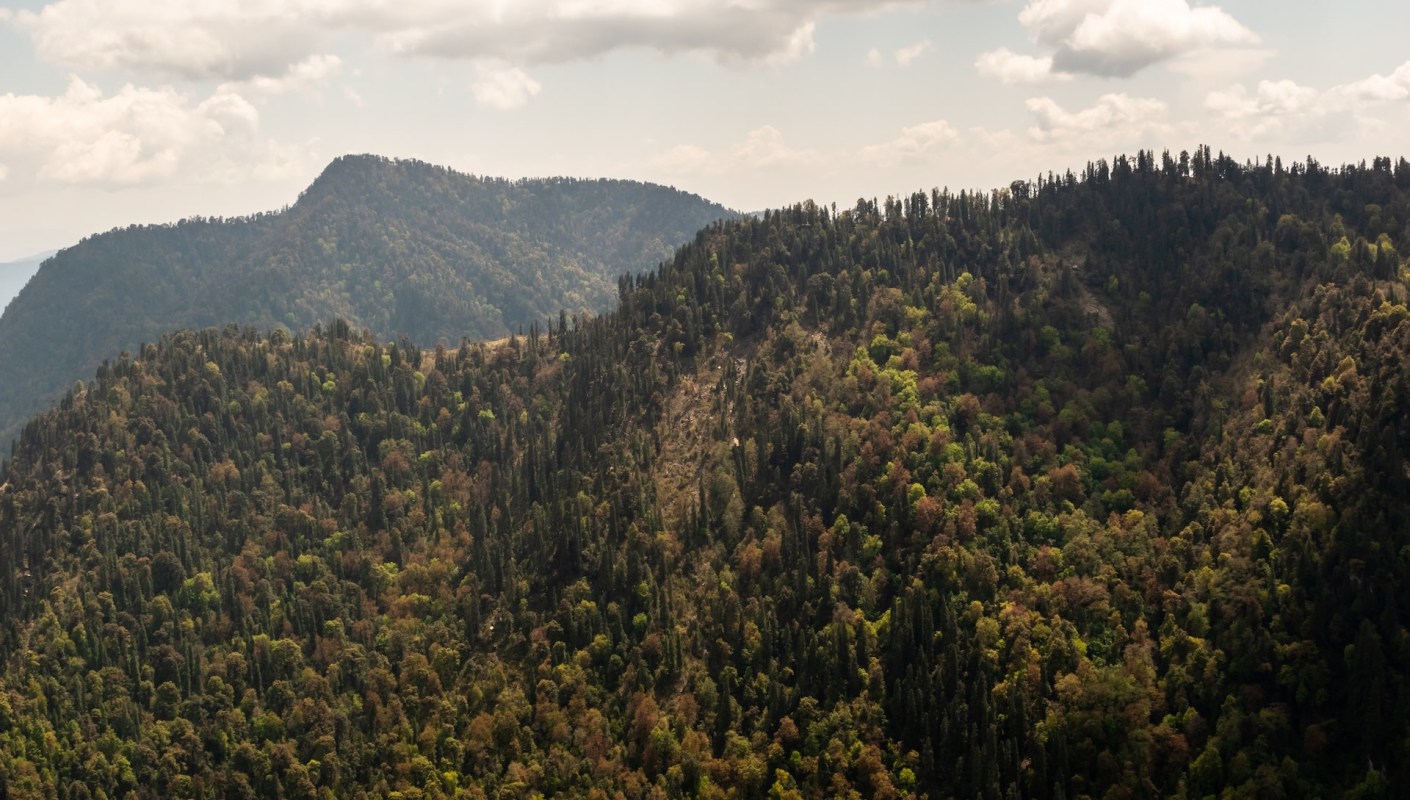
A Bengal tiger was spotted roaming at nearly 10,000 feet in the Himalayan mountains — an elevation far higher than the species' typical range.
The rare cat sighting is a clear warning sign that climate shifts and habitat loss are reshaping where Bengal tigers call home.
What's happening?
According to The Times of India, the out-of-place Bengal tiger was sighted at an altitude of over 9,875 feet in the Kumaon Himalayas, located in the west-central Himalayan section of India's Uttarakhand state.
The sighting was reported by researchers conducting an unrelated snow leopard study in the region and supported by camera-trap evidence and fresh droppings.
Officials said the sighting is the highest confirmed tiger sighting in the region's history, as tigers are typically found below 6,000 feet.
The International Union for Conservation of Nature has listed Bengal tigers as an endangered species, with poaching and illegal killing the greatest threats to the big cats.
The IUCN estimated that only about 3,140 adult tigers remained in the wild as of 2022. About 70% of those tigers call India home, according to World Wildlife Fund data shared by CNN.
Why is this sighting important?
The presence of a Bengal tiger in what is normally snow leopard territory suggests a possible shift in habitat for the vulnerable big cats.
Experts suggested the tiger may have been moving through a high-altitude corridor likely due to climate shifts, habitat pressures, and the search for new territory and prey.
The sighting also raises concerns about increased competition between big cats for increasingly limited resources, such as food and suitable habitats.
TCD Picks » Quince Spotlight
💡These best-sellers from Quince deliver affordable, sustainable luxury for all




|
Do you think America does a good job of protecting its natural beauty? Click your choice to see results and speak your mind. |
 Definitely 👍
 "Finding a Bengal tiger in the upper Himalayan zones shows that there is an unusual overlap in territories between major carnivores like tigers and snow leopards," divisional forest officer Aditya Ratna said, per The Times of India.
"It raises critical questions about wildlife movement, habitat shifts, and the connectivity of our mountain landscapes."
As warming temperatures and human development continue to reshape the Himalayas, rare sightings like this one may unfortunately become more common.
That's why coordinated conservation efforts that account for how tigers move, adapt, and compete in a rapidly changing landscape are so essential.
What's being done to protect Bengal tigers in the Himalayas?
Following the sighting, scientists have stressed the importance of ongoing monitoring to determine whether high Himalayan landscapes could one day support tiger populations.
Doing so will require protecting wildlife corridors, reducing human-wildlife conflict, and monitoring climate-driven shifts in the region.
Across the area, conservation efforts are already focused on keeping natural tiger habitats intact while allowing tigers to move as climate and landscape conditions change.
Governments and conservation groups in countries such as India and Nepal are expanding protected areas, strengthening anti-poaching patrols, and maintaining cross-border forest corridors.
These efforts are supported by camera-trap monitoring, cross-border cooperation, and community programs aimed at reducing human-wildlife conflict, helping ensure Bengal tigers can survive — and adapt — in high-altitude and shifting environments.

Get TCD's free newsletters for easy tips to save more, waste less, and make smarter choices — and earn up to $5,000 toward clean upgrades in TCD's exclusive Rewards Club.
Cool Picks






