


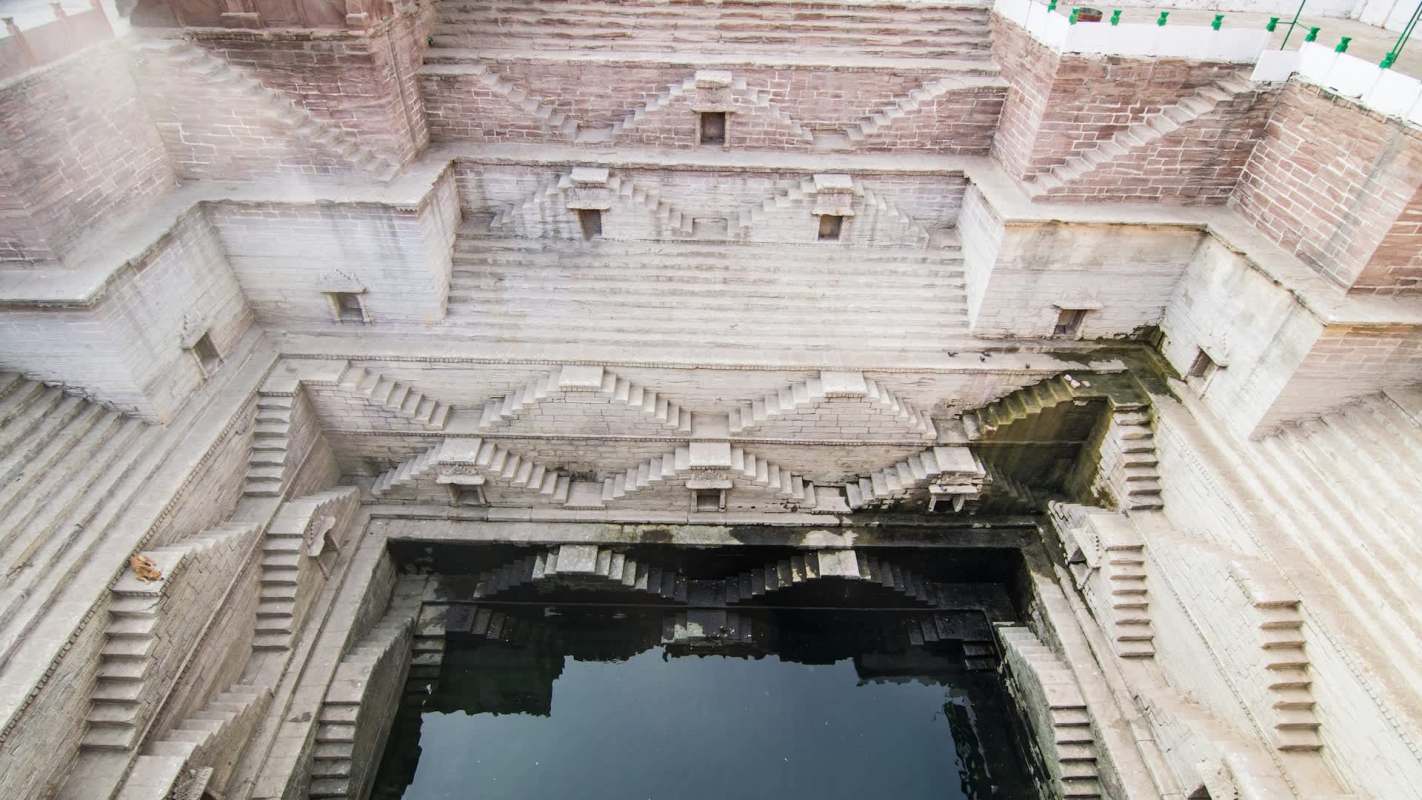
In Bansilalpet, a neighborhood in the major Indian city of Hyderabad, cheers rang out at the sight of a deceptively meaningful "trickle of clean water," the Guardian reported.
That jubilation followed an 18-month project to restore a stepwell, an ancient subterranean architectural form dating back to as early as 200 C.E.
According to Britannica, India's stepwells were established in antiquity to ensure that potable water was steadily available in the country's "capricious monsoonal climate zone that is bone-dry for much of the year, yet drenched by torrential rains for many weeks."
The Guardian noted that India's stepwells "were abandoned" and prohibited after Britain colonized India, falling into deeper disrepair in recent years as they became ad hoc landfills.
India's Central Ground Water Board warned that persistent overexploitation of groundwater placed several states at risk of a "day zero" water crisis — a terrifying neologism referring to the day when a municipality's water levels drop to a point where taps run dry.
Day-zero drought scenarios are no longer speculative or far-flung; the South African resort town of Knysna is at immediate risk of water loss, and Cape Town "narrowly avoided" one in 2018.
Over the past 1.5 years, workers hauled 6.6 million pounds of debris and trash from Bansilalpet's stepwell, then dutifully restored its walls and features for use.
The Guardian credited architect Kalpana Ramesh, who has brought 22 Indian stepwells back to life after centuries of disuse and decades of decay. She told the outlet that after collecting rainwater for her own household use for 15 years, the practice inspired her.
"I was sure that the system of harvesting rain to recharge groundwater would work on a larger scale, even today when the built-up area in cities has left very little natural ground for rainwater to seep in," Ramesh explained.
The excitement in Bansilalpet, according to the architect, was an encouraging signal for the future restoration of all 25 existing stepwells across the broader Indian state of Telangana.
TCD Picks » Quince Spotlight
💡These best-sellers from Quince deliver affordable, sustainable luxury for all




|
Which of these savings plans for rooftop solar panels would be most appealing for you?
Click your choice to see results and speak your mind. |
 Save $1,000 this year 💸
 Ramesh founded a water-harvesting and conservation initiative called The Rainwater Project to address water scarcity in India and to implement sustainable water management systems, and she urged locals to keep water sources near stepwells clean.
"Rainwater should not be allowed to go in drains. There is enough potential to make rainwater work for cities," Ramesh said.

Get TCD's free newsletters for easy tips to save more, waste less, and make smarter choices — and earn up to $5,000 toward clean upgrades in TCD's exclusive Rewards Club.
Cool Picks






