


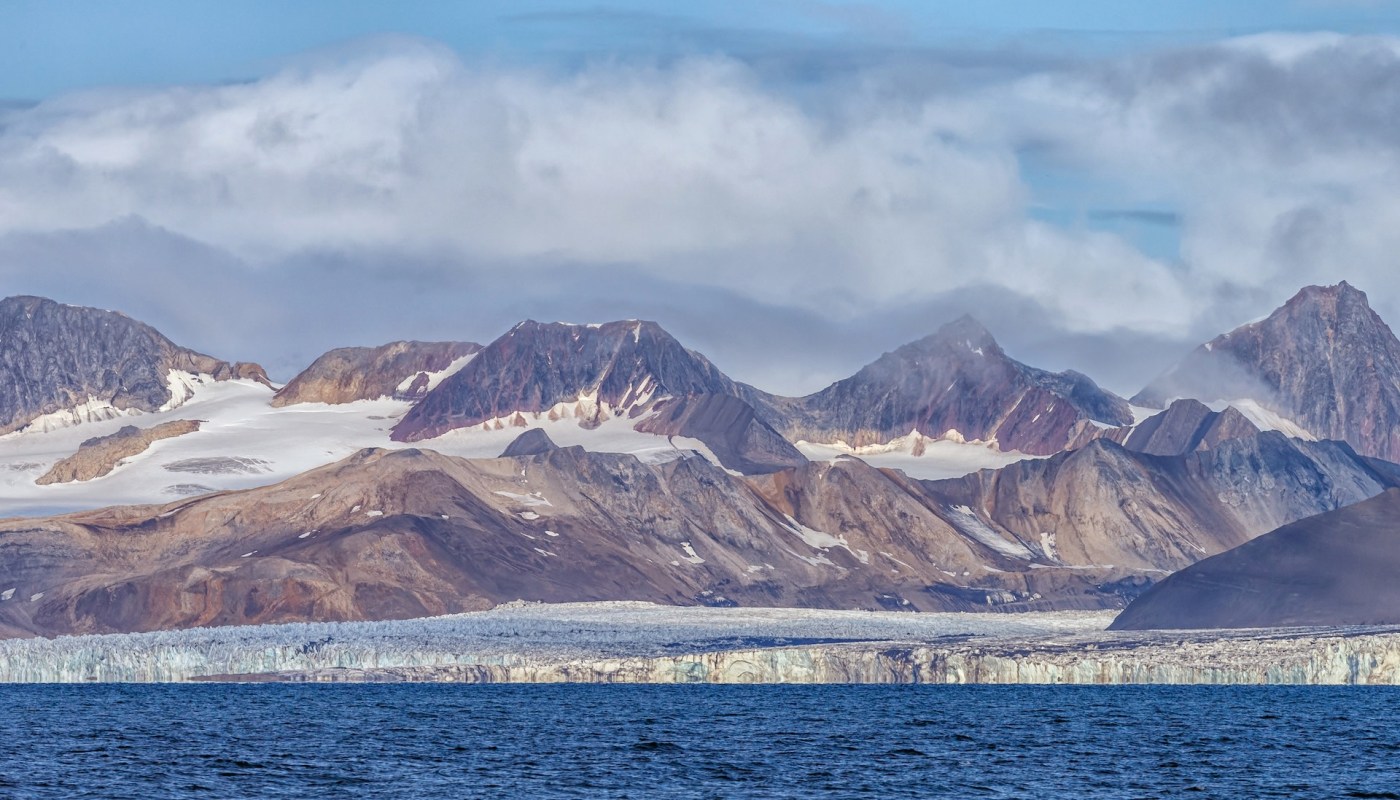
For years, the rapid rate of Arctic sea ice loss has concerned climate researchers all around the globe. But as the latest data reveals a surprising new trend in the Arctic, experts are still recommending not to let our guard down.
What's happening?
In a recent study, a team of researchers revealed that there has been a substantial slowdown in Arctic sea ice loss over the past two decades. While this can potentially be viewed as a positive development, the study concluded that this slowdown is still consistent with natural internal climate variability rather than a long-term weakening of global climate trends.
Mark England, associate professor at the University of California, Irvine and co-author of the study, spoke to the Washington Post about the seemingly paradoxical discovery.
"Even though there is increased emissions [and] increased global temperatures, you can still get periods where you have very minimal loss of Arctic sea ice for sustained periods," explained England.
According to state-of-the-art computer simulations, extended periods with minimal sea ice decline despite "increasing greenhouse gas emissions" are actually not uncommon at all.
While this can seem counterintuitive with what we already know about harmful carbon pollution and the rise of the global temperature, researchers believe that this trend is the result of natural climate variations that have substantially offset the long-term, human-caused trend of ice loss.
Why is research into the slowdown in Arctic sea ice loss important?
While the observed pause in the rate of ice loss might continue for another decade, climate models appear to indicate that internal climate variations have significantly masked the human-driven ice loss. This means that despite the pause from sea ice loss, this natural variability is expected to eventually shift, potentially leading to an even faster rate of ice decline than before.
One of the most prominent displays of natural variability is the way that our oceans are able to absorb energy. Scientists note that the ocean must release the extra heat it absorbs in the summer before ice can form again in the fall. This essentially insulates the atmosphere and keeps the ocean temperatures stable for longer, continuing the feedback loop.
Alex Crawford, an assistant professor of environment and geography at the University of Manitoba, pointed to the significance that oceans play in global trends.
"There's always energy going back and forth between the atmosphere and ocean," Crawford said. "For various reasons, the oceans can store much, much more energy than the atmosphere."
TCD Picks » Quince Spotlight
💡These best-sellers from Quince deliver affordable, sustainable luxury for all




|
Do you worry about companies drilling too deep into the ground? Click your choice to see results and speak your mind. |
 Definitely 💯
 What's being done about carbon pollution?
On the surface level, a pause in Arctic sea ice loss can seem like a step in the right direction. But as carbon pollution continues to hit record numbers year after year, global temperatures are also climbing at levels our planet hasn't seen before.
Eventually, this combination will result in a ramp-up of sea ice loss.
"This temporary period can't go on forever," England added. "It's a bit like a kind of sugar rush. It feels good … and at some point it will kind of crash."
For now, increasing our ability to reduce carbon pollution will play a pivotal role in our climate outlook. By shifting away from dirty fuels and turning to renewable energy sources like solar and wind power, we can potentially lower the rate of the global temperature increase and look to a cooler future.

Join our free newsletter for good news and useful tips, and don't miss this cool list of easy ways to help yourself while helping the planet.
Cool Picks






