


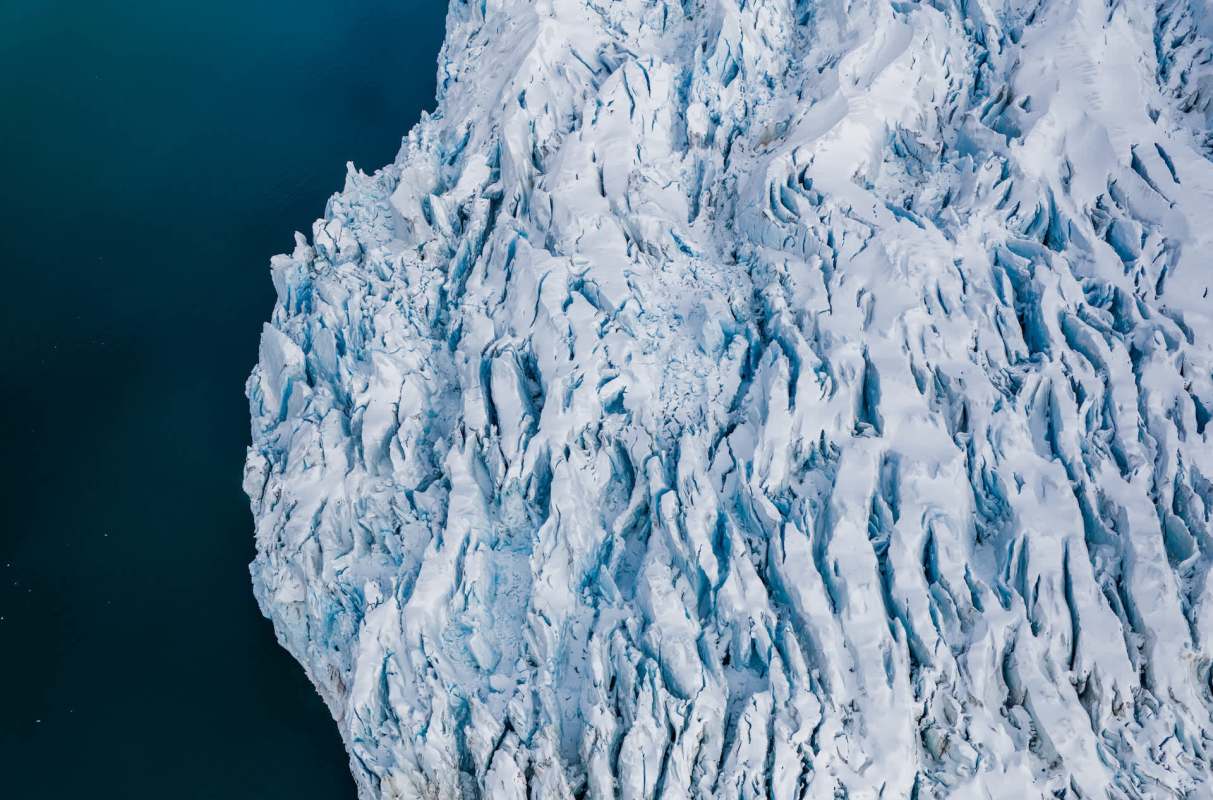
Arctic glaciers are shrinking faster than expected — and it's not just heat from the sun driving the melt. Scientists working in Svalbard, a Norwegian archipelago in the high Arctic, are sounding alarms over microscopic life that could supercharge ice loss, with ripple effects reaching far beyond the polar regions, per the Guardian.
What's happening?
Recent studies show that microbes living in Arctic snow and ice are playing an outsized role in how quickly glaciers melt. Some of these organisms produce dark pigments that stain the ice, causing it to absorb more heat and melt faster — a process known as "biological darkening."
Each summer, a darkened zone roughly the size of Iceland forms on Greenland's ice sheet, contributing as much as 13% of its annual runoff. That's no small number — the Greenland ice sheet alone contains enough water to raise global sea levels by more than 20 feet.
As Dr. Arwyn Edwards, a glacier ecologist, described to the Guardian, the process is a "step-by-step progression." He compared watching the Arctic's decline to visiting a loved one with dementia: Each visit reveals more loss, even if it's hard to notice day to day.
Why is this concerning?
What happens in the Arctic doesn't stay in the Arctic. Billions of people around the world rely on glacier-fed rivers for drinking water, farming, and hydropower. If ice continues to vanish at this pace, we could see more dangerous flooding in coastal cities, food supply disruptions, and even faster spread of waterborne diseases.
Microbes are also tied to methane — a heat-trapping gas much more potent than carbon dioxide. As glaciers retreat, they can release methane trapped underground. While some "methane-eating" microbes may help curb the damage, they won't be able to offset all the pollution.
The result could add trillions of dollars in costs linked to stronger storms, higher tides, and more extreme weather.
This story echoes others we've reported, like the rise of "blood snow" in the Alps and severe droughts affecting Wyoming rivers. All point to how our warming planet supercharges natural systems in ways scientists are only beginning to grasp.
What's being done about it?
Researchers are now racing to catalog Arctic microbial life before it disappears, hoping to preserve genetic resources that might hold keys to medical or industrial breakthroughs. There's even discussion of creating a "microbial seed vault" similar to the world-famous crop seed bank in Svalbard.
On a broader scale, cutting pollution from gas, oil, and coal remains the most direct way to slow this feedback loop. Installing solar panels alongside battery storage, for example, can make households more resilient to outages during extreme weather. Services like EnergySage make it simple to compare quotes from vetted installers and save up to $10,000.
TCD Picks » Quince Spotlight
💡These best-sellers from Quince deliver affordable, sustainable luxury for all




While the microbes may seem invisible, their impact is anything but. The race to understand them underscores the urgency of protecting glaciers — not just for polar bears and whales, but for communities everywhere.
|
Do you worry about the longevity of EV batteries? Click your choice to see results and speak your mind. |
 For sure 💯
Join our free newsletter for good news and useful tips, and don't miss this cool list of easy ways to help yourself while helping the planet.
Cool Picks






