


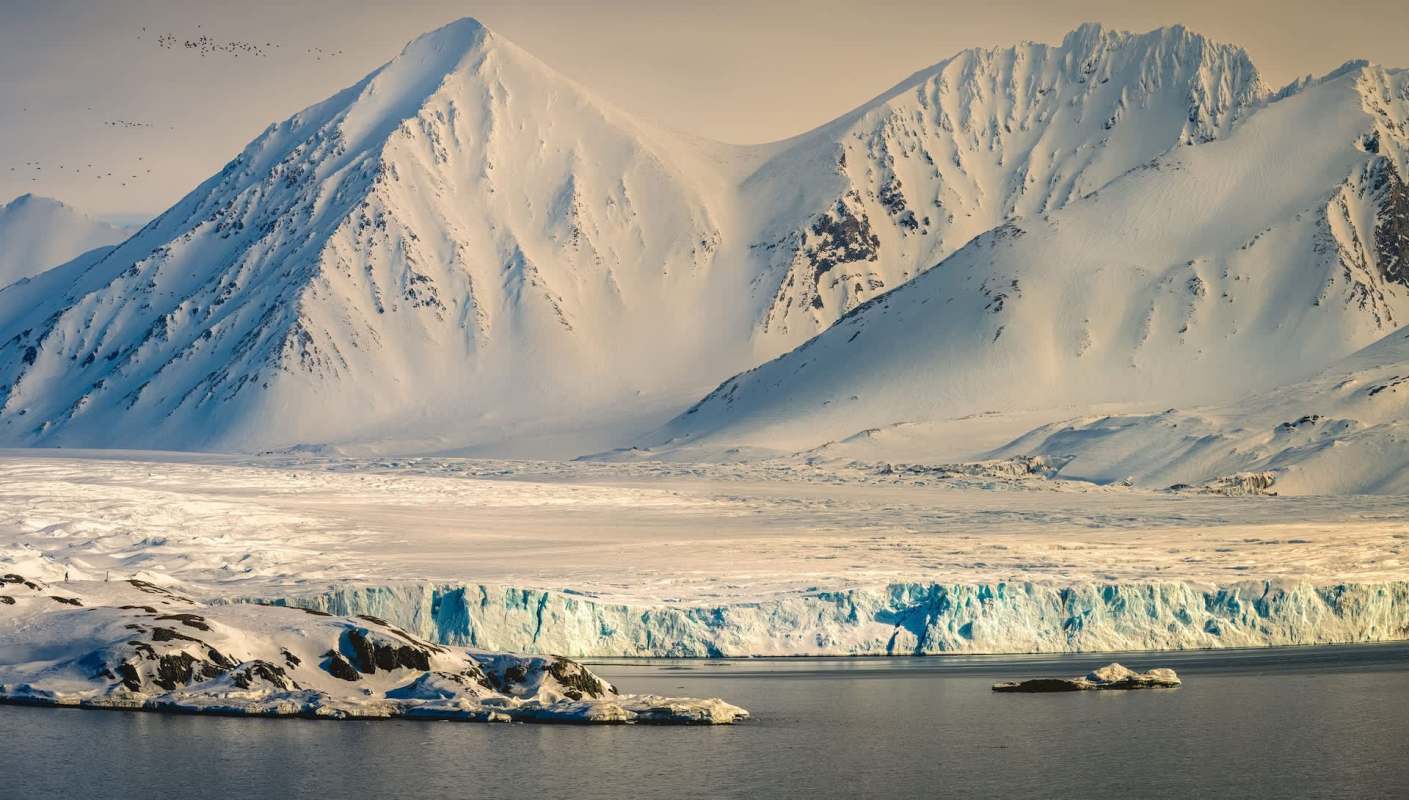
As temperatures surge across the Arctic, scientists say the region's food web is unraveling in real time.
What's happening?
From melting glaciers to vanishing sea ice, the Arctic is shifting from a frozen world into a watery one.
As The New York Times observed, the area is warming seven times faster than the rest of the planet, and that's having severe knock-on effects for animal species.
Reindeer, once able to roam freely over ice bridges to find grass and lichen, are increasingly trapped on land and resorting to eating seaweed — "survival food," as Norwegian ecologist Åshild Ønvik Pedersen told the Times.
Polar bears, deprived of the ice platforms they need to hunt seals, are turning inland, preying on reindeer and raiding bird nests near human settlements.
Underwater, once-barren seafloors are now dense with brown kelp forests, displacing native species and rewriting the region's food chain.
TCD Picks » Quince Spotlight
💡These best-sellers from Quince deliver affordable, sustainable luxury for all




"When the sea ice melts and more heat comes, these organisms cannot survive," said Vipindas Kavumbai, an Indian microbiologist studying bacteria in Arctic fjord waters, per the NYT. "Other organisms replace them."
Why is melting sea ice concerning?
The rapid transformation threatens not only Arctic wildlife, but also the communities and research teams who depend on stability in these extreme environments.
"I think a lot of what we have today will be lost," said Norwegian ecologist Jon Aars, who has studied polar bears for over two decades, per the NYT.
While some species may adapt — and new ecosystems could emerge — many experts fear an irreversible collapse of the Arctic's delicate balance.
|
Do you think fracking should be illegal in America? Click your choice to see results and speak your mind. |
 Yes — everywhere 👏
 These shifts also ripple outward. Melting ice accelerates global sea-level rise, while the loss of reflective snow cover traps more heat in the atmosphere, worsening warming everywhere.
As scientists warned in Alaska and the Amazon, such "feedback loops" create self-reinforcing cycles of change that are difficult to reverse.
What can be done to protect sea ice?
Researchers are intensifying monitoring efforts, using satellite sensors and animal trackers to understand how life is adapting.
Individuals can help slow the warming driving these changes by reducing dirty energy use — from switching to electric vehicles to supporting and talking about clean-energy policies.

Join our free newsletter for good news and useful tips, and don't miss this cool list of easy ways to help yourself while helping the planet.







