


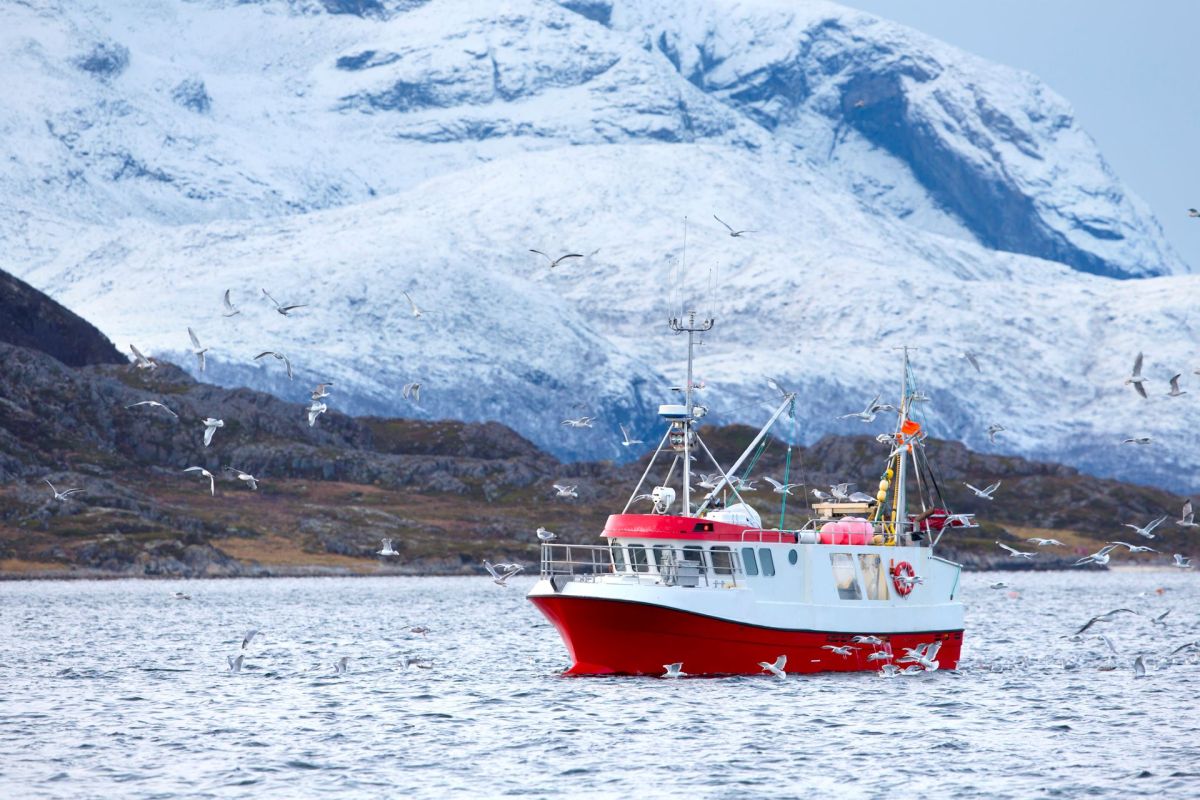
In an effort to protect additional marine life and the environment, officials have halted a remote krill fishery in Antarctica early for the first time ever.
As reported by the Associated Press, the Commission for the Conservation of Antarctic Marine Living Resources has decided to shut down the krill fishing season about four months earlier than scheduled. This was the result of over 661,000 tons of krill being caught throughout the 2025 harvest.
Krill fishing in Antarctica has been a booming industry in recent years, primarily driven by the demand for omega-3 supplements as well as animal feed. While the fishery was once heavily regulated, a number of governments were unable to reach an agreement on a management plan to control the fishery. This allowed for unregulated fishing in the area over the past year, resulting in a record-high krill catch and the early closure of the season.
There have been increasing concerns regarding its impact on the Antarctic ecosystem, particularly on penguin and whale populations. Many marine animals rely on krill as a primary food source, including whales, seals, penguins, fish, and squid. Since so many species depend on the small fish for survival, assuring a healthy krill population is essential to a well-balanced and sustainable food web.
On perhaps a surprising note to some, krill also play a role in carbon sequestration, the process of capturing and storing atmospheric carbon dioxide. They achieve this by consuming phytoplankton, which absorb carbon dioxide during photosynthesis. The carbon then gets stored in the krill's bodies and is transported to the deeper parts of the ocean.
The early closure of the krill fishery may greatly affect the supply chain for krill products such as fishmeal, pet food ingredients, and human dietary supplements. This could potentially impact consumers as well as regional economies that may rely on krill fishing industries.
However, by safeguarding against krill overfishing, we are not only protecting vital food chains, but we're also assuring that we have a cooler future as well. Carbon pollution, primarily from the burning of dirty fuels, significantly impacts the environment by contributing to a rise in global temperatures. This can lead to rapidly melting Arctic ice sheets and rising sea levels.
|
Do you think America does a good job of protecting its natural beauty? Click your choice to see results and speak your mind. |
 Definitely 👍
Join our free newsletter for good news and useful tips, and don't miss this cool list of easy ways to help yourself while helping the planet.
Cool Picks






