


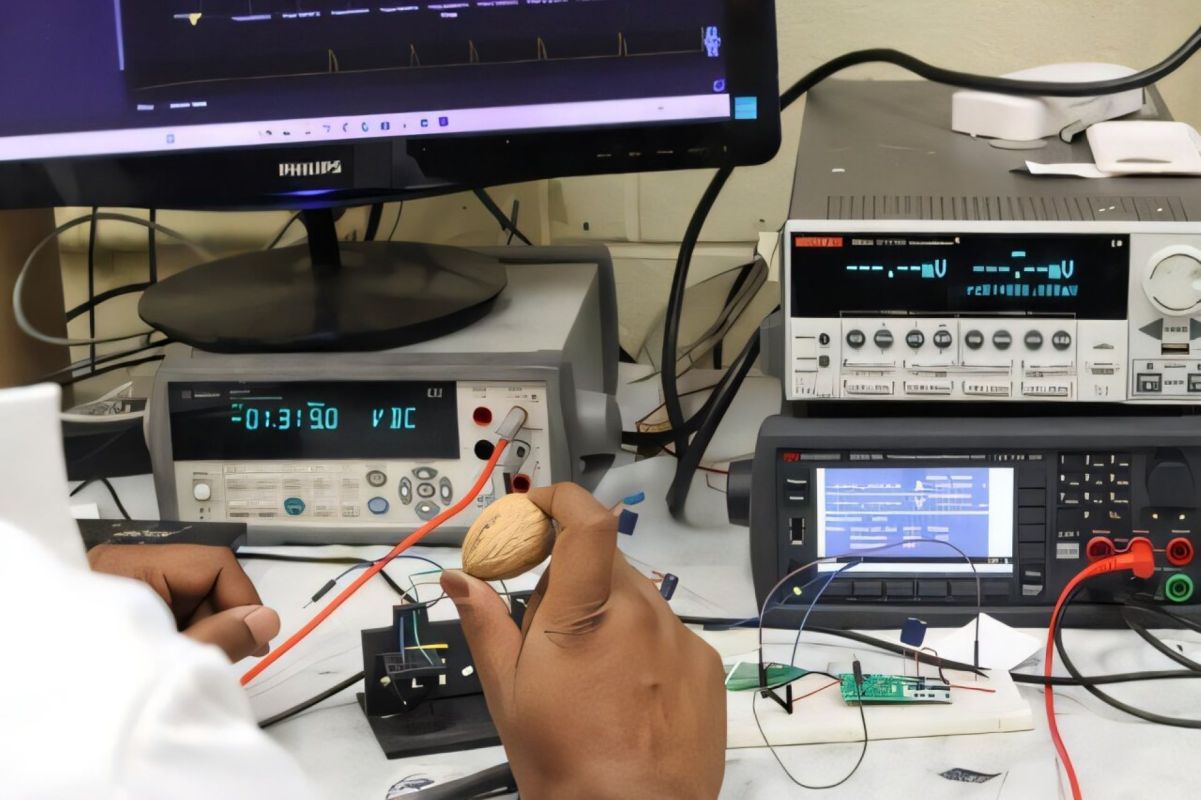
University of Waterloo engineering researchers in Canada have developed a way to capture electricity from water evaporating on walnut shells, opening up off-grid possibilities for small electronic devices.
Nazmul Hossain, a Ph.D. student in mechanical and mechatronics engineering, began his path to discovery after eating a hazelnut and studying its shell under an electron microscope, a school release explained.
What he saw was part of the nut's internal system for transporting water and nutrients for growth, but he also envisioned it as an ideal template for eco-friendly energy harvesting.
Experimentation led the researchers to walnut shells, which, after some cleaning, treating, polishing, and cutting, appeared to be the optimal surface for their needs.
They developed a coin-sized device — known as a water-induced electric generator — which was able to produce electrical energy from water evaporation on the complex network of pores that naturally occur within the shells.
"It all happens with nothing more than a single droplet of water and the shell's natural architecture, no crushing, soaking or complex processing needed," Hossain said. "It's a simple, yet powerful example of turning waste into clean energy using nature's own power."
Natural processes have informed our path toward more sustainable energy solutions, from hydro, solar, wind, and geothermal collection to wave energy generators.
However, few have been as simple or as small as this device.
As water moves, it transports electrically charged ions, which interact with the complex surface of the shell to create a charge imbalance, which in turn creates electricity, the university's report explained.
A water-induced electric generator consists of shells, water droplets, wires, and a 3D-printed case, and by connecting four of these together, the Waterloo research team shared that they were able to generate enough electricity to power an LCD calculator.
TCD Picks » Quince Spotlight
💡These best-sellers from Quince deliver affordable, sustainable luxury for all




|
Should the U.S. be investing more in battery production to catch up with China?
Click your choice to see results and speak your mind. |
 Absolutely 📈
 "This technology could be a game-changer for powering small electronic devices, especially in remote or off-grid areas," said Hossain. "Imagine environmental sensors monitoring forests, IoT and wearable health devices, disaster-relief equipment — all running on tiny water droplets from the air."
Advances in stretchable organic solar cells are opening up the possibility of small wearable devices that can be powered by the sun, and photovoltaic solutions have long been popular for off-grid energy generation.
The Waterloo researchers are also exploring the potential of wearable water-induced electric generators that are capable of harvesting energy from sweat or rain, which could complement wearable solar cells during inclement weather.
One of the more practical applications being investigated is creating sensors to detect water leaks, where the problem itself powers the solution, the report noted.

Join our free newsletter for weekly updates on the latest innovations improving our lives and shaping our future, and don't miss this cool list of easy ways to help yourself while helping the planet.
Cool Picks





