


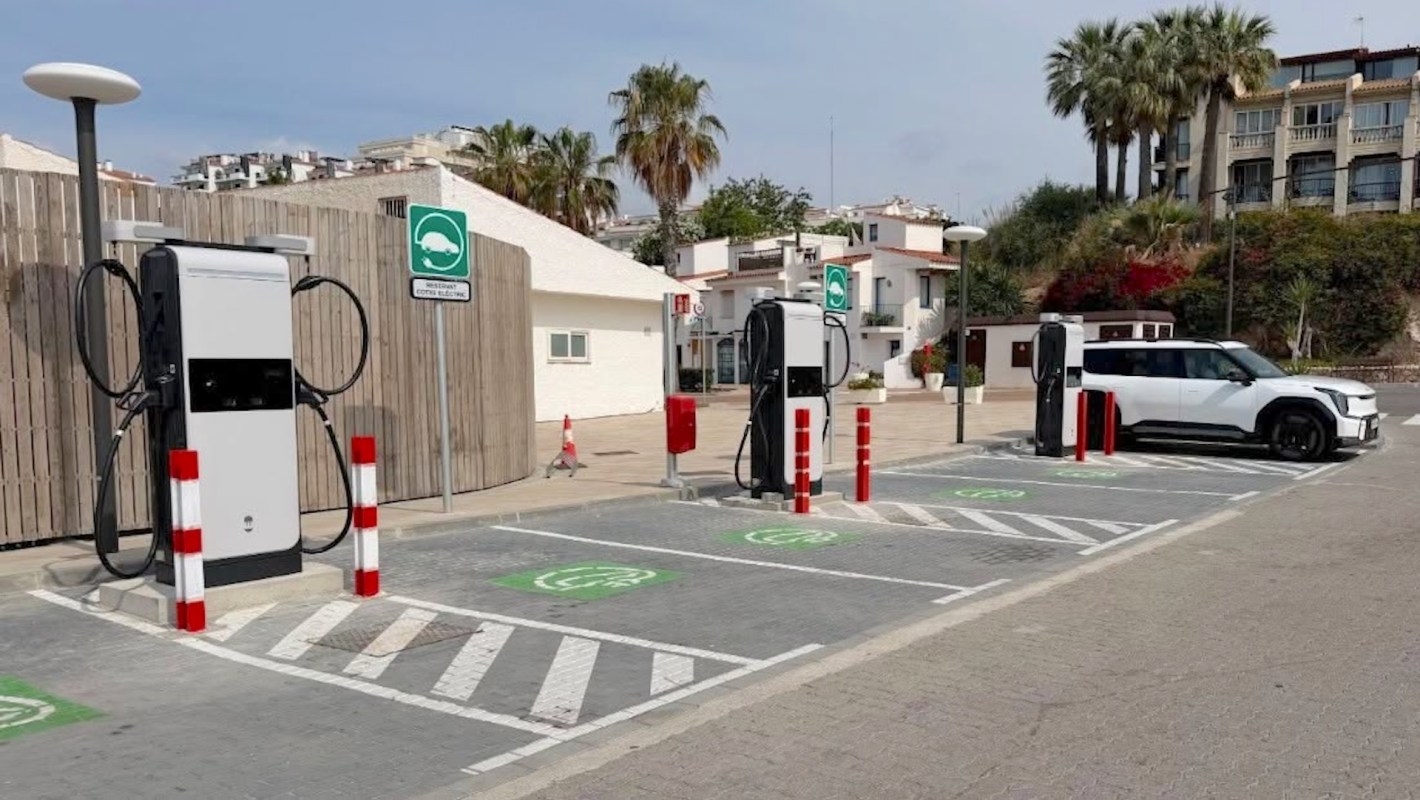
Wallbox just began public operation of its Supernova PowerRing DC chargers, the company announced in a press release. The installation will provide an early look at how the company's shared-power approach performs.
What happened?
The first public installation of Wallbox's Supernova PowerRing system is now running at Port de Sitges, near Barcelona, marking the platform's first everyday deployment since it was introduced in late 2025.
At the busy marina on Spain's Mediterranean coast, that setup can direct more electricity to one electric vehicle when only a single car is charging, then divide available power among several vehicles as activity increases, as Electrek described.
"This first deployment is an important milestone for Supernova PowerRing and demonstrates how this technology can help operators deploy fast-charging infrastructure in a more efficient and flexible way," Eduard Castañeda, Co-founder of Wallbox, said in the release.
PowerRing is designed to pool electricity instead of reserving a fixed output for each charger. At Sitges, Wallbox has installed three Supernova chargers with a combined shared capacity of up to 240 kilowatts once the system is fully enabled, the company said.
So when just one vehicle is plugged in, that EV can draw a larger share of the site's available power. When several cars are charging at once, the system reallocates that capacity among them. Wallbox said vehicles at the Sitges site can receive about 80 kW to 240 kW.
TCD Picks » Quince Spotlight
💡These best-sellers from Quince deliver affordable, sustainable luxury for all




Wallbox said the architecture is built to expand further, with support for as much as 720 kW of shared capacity and up to 400 kW for a single vehicle if enough power is available and the EV can accept that rate.
Why does it matter?
One of the biggest bottlenecks in public fast charging is not always the charger itself, but the amount of power available from the local grid. In places where space is tight or electrical upgrades are expensive, that can slow deployment.
By shifting power where it is needed, operators may be able to get more use out of existing grid connections instead of paying for infrastructure sized for peak demand that may sit idle for long stretches. That could translate into more fast chargers in more places, particularly in dense urban areas, travel stops, and sites such as marinas, where adding large amounts of electrical capacity may be difficult.
It also reflects a broader shift in EV charging, as smarter systems increasingly try to match power delivery to real-time demand instead of treating every charging session the same. Because different EVs have different charging limits, a flexible setup can make better use of the electricity already available.
If that approach proves effective at scale, it could help reduce wait times, improve charging access, and make public charging networks easier to expand as more drivers switch to electric vehicles.
What's being done?
For Wallbox, the Port de Sitges installation is the opening step in a broader European rollout of its public fast-charging business. The site also gives the company a place to show how the new architecture performs under everyday conditions.
"PowerRing has been designed to help operators optimize available power, scale their charging networks and maintain a high-quality charging experience for users," Castañeda said in the release.
If successful, that could make expansion more realistic in places where permitting, space, or utility constraints might otherwise delay projects.

Get TCD's free newsletters for easy tips, smart advice, and a chance to earn $5,000 toward home upgrades. To see more stories like this one, change your Google preferences here.






