


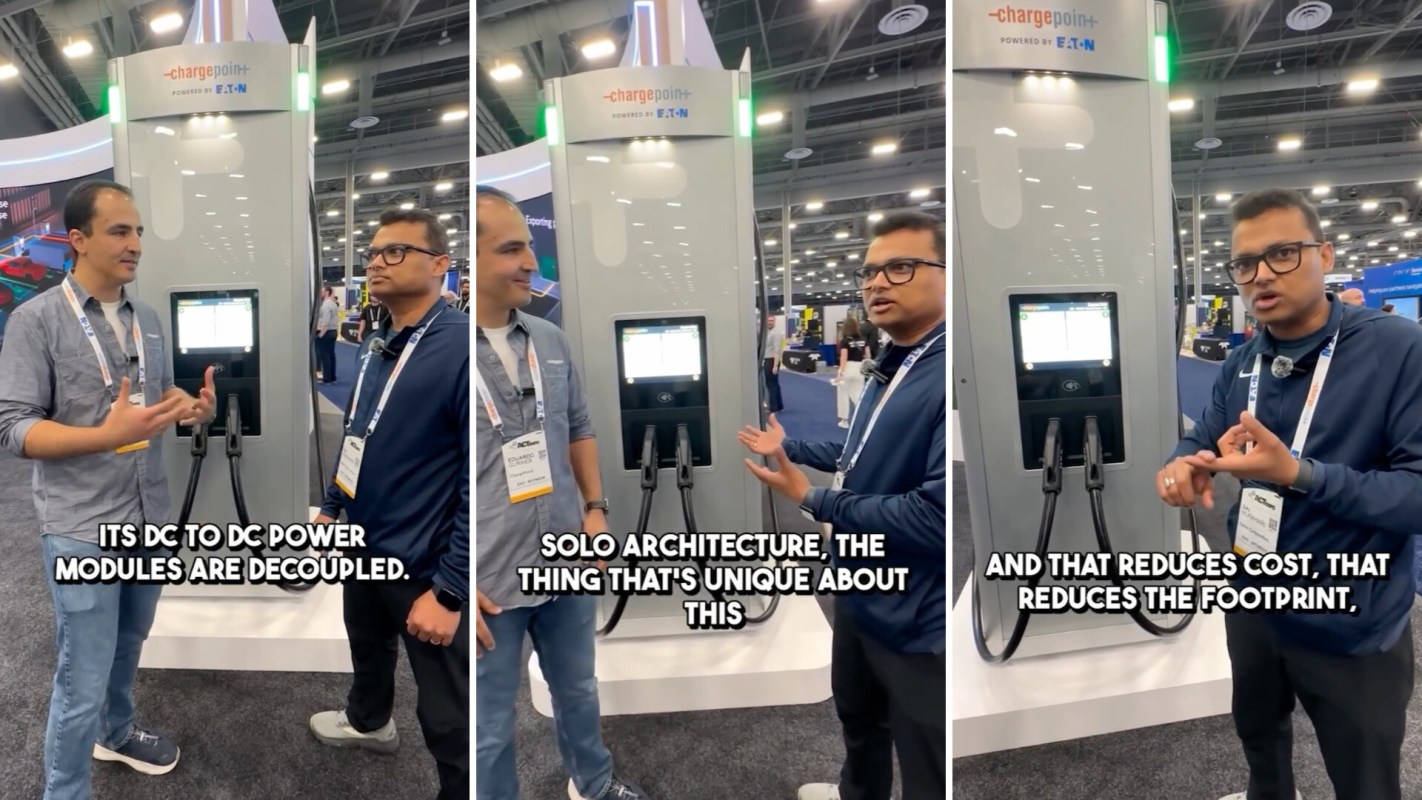
A new ultra-fast EV charger is coming to North America and Europe, and ChargePoint says the technology could help solve one of the biggest challenges facing electric vehicles: installing high-powered chargers in crowded, expensive locations.
According to a report from Electrek, ChargePoint has unveiled a new 600-kilowatt DC fast charger that it says offers "40% higher power density" than comparable units, potentially allowing more charging capacity in places where space is limited.
The Express Solo is a new standalone DC fast charger capable of sending as much as 600 kilowatts concurrently to one EV. The company is calling it the "world's fastest" standalone charger, and it will be ChargePoint's first DC fast charger sold in both North America and Europe.
The compact unit is designed to take up less room than conventional fast chargers while still boosting output.
While this development could make EV charging faster and more convenient for future drivers, many EV owners already find that charging at home is the easiest and most affordable option. Drivers interested in lowering charging costs can use Qmerit to compare quotes for professionally installed Level 2 home chargers.
The Express Solo is also able to charge two EVs at once. With an added dispenser, it can serve up to four vehicles, and the system can dynamically shift power between cars depending on demand.
The charger also works with NACS and CCS plugs via ChargePoint's Omni Port system, a notable detail as the U.S. charging market continues to move toward broader compatibility.
The new charger is also tied to a wider collaboration with Eaton, an intelligent power management company. Together, the companies have developed an approach meant to make high-speed charging easier to deploy, easier to expand, and less expensive to build.
Crushed by your bills? See instant solar savings from vetted installers in just a few clicks With energy prices through the roof, there's never been a better time to go solar — and EasyHome can help you find the best prices from the best installers in your area. EasyHome takes the guesswork and headaches out of energy upgrades by showing you estimated savings from a network of vetted local partners. To get started, just enter your ZIP and share a few details about your home — seeing your estimate is really that easy. |

As Electrek pointed out, very few EVs on the road today can actually accept anything close to 600 kW. But the higher output still matters because it can increase the number of vehicles a charging site can serve over time.
That is especially important as more EVs hit the road and busy charging stations face long lines, limited space, and expensive grid upgrades. A charger that can fit into a smaller footprint while sharing power intelligently between vehicles could help station operators serve more customers with fewer stalls.
There could also be benefits for the environment and the electric grid. According to ChargePoint, the Express Solo's direct DC inputs could make it easier to pair the charger with on-site solar panels and battery storage, helping reduce strain on the grid while potentially lowering operating costs for site owners.
In practice, that may help make charging expansion more economically viable in areas where electrical infrastructure is a bottleneck.
While it may take time for these new chargers to appear in public spaces, EV drivers can already cut charging times at home with a Level 2 charger from Qmerit. Though not as fast as public DC fast chargers, Level 2 systems can typically provide enough overnight charging to cover most daily driving needs — all while taking advantage of cheaper at-home electricity rates.
Check out these free Qmerit tools to get quick estimates on charger installations.
To save even more on charging costs, consider pairing your charger with home solar panels.

Get TCD's free newsletters for easy tips, smart advice, and a chance to earn $5,000 toward home upgrades. To see more stories like this one, change your Google preferences here.






