


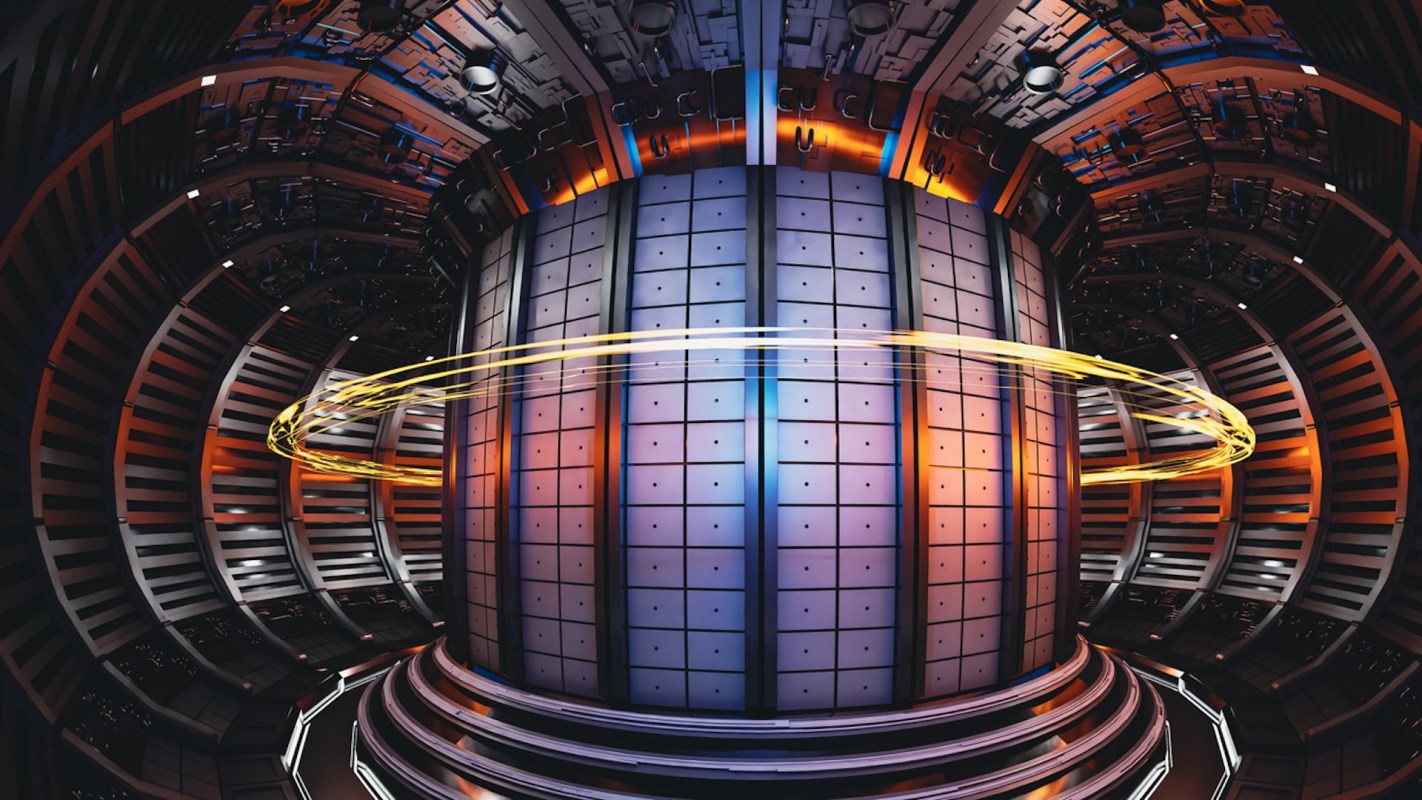
In the future, your ability to binge-watch your favorite TV show might be powered with help from the hydrogen isotope tritium.
That is, if experts at Japan's Kyoto Fusioneering and elsewhere can rein in the fantastic settings needed to harness powerful fusion reactions. Finding a sustainable way to capture the tritium fuel from the reaction chamber is a key step, according to Interesting Engineering.
Kyoto's team — with help from researchers in Canada — has developed a sieve that can collect tritium, which is hard to find naturally.
"Demonstrating the effectiveness of hydrogen recovery is a critical step toward scalable fusion power," Kyoto CEO Satoshi Konishi said in IE's story.
Fusion represents a nearly limitless form of energy that uses the same power process as the sun. The collision and resulting atom formation creates no long-lasting nuclear waste or severe meltdown risks, unlike atom-splitting fission reactors that already provide almost 20% of electricity in the United States, according to U.S. government data.
Affordably sustaining fusion has been the main hurdle for the science, and experts around the world are working on advanced magnetic containment devices and other contraptions to harness the super-hot plasma needed for it all to work.
TCD Picks » Quince Spotlight
💡These best-sellers from Quince deliver affordable, sustainable luxury for all




Fission's merits are heavily debated. While electricity is generated without air pollution, critics cite long-lasting nuclear waste, accident risks, and expense as cons. For its part, the waste is a solid ceramic pellet, not ooze, and is often mischaracterized, according to North Carolina State University associate professor and nuclear proponent Robert B. Hayes.
On the fusion front, Kyoto develops gyrotrons for plasma heating. Its team is working with experts from Canada to build the UNITY-2 project in Ontario to test the full fuel cycle and other aspects of fusion containment, IE and the company reported.
The Vacuum Sieve Tray is designed to extract tritium from hot liquid metal that's made within the reactor. The fuel must be made there because it's hard to gather naturally and can't be mined, according to IE.
Inside the vacuum chamber, the liquid metal is dispersed "into fine droplets." Trapped tritium gas can then be pulled out. It's part of a full-circle plan Kyoto is developing to make, store, and use the fuel, the report continued.
|
Should we be pouring money into nuclear fusion technology? Click your choice to see results and speak your mind. |
 Yes — it'll pay off 👍
 UNITY-2 testing is among the final stages of testing.
"These tests validate key components of the Fusion Fuel Cycle System, giving our industrial partners confidence in our ability to deliver reliable fuel supply in future commercial deployments," Konishi said in IE's story.
The elimination of fumes is one of nuclear's clear benefits. NASA has linked air pollution to greater risks for severe heat waves that could soon make some places uninhabitable. Higher temperatures are also impacting classroom performance, according to the U.S. Environmental Protection Agency.
However, cost and development time are other factors limiting nuclear's expedient reach. That's why Reuters reported that solar is among the renewable energy forms that are cheaper and faster to advance.

Get TCD's free newsletters for easy tips to save more, waste less, and make smarter choices — and earn up to $5,000 toward clean upgrades in TCD's exclusive Rewards Club.






