


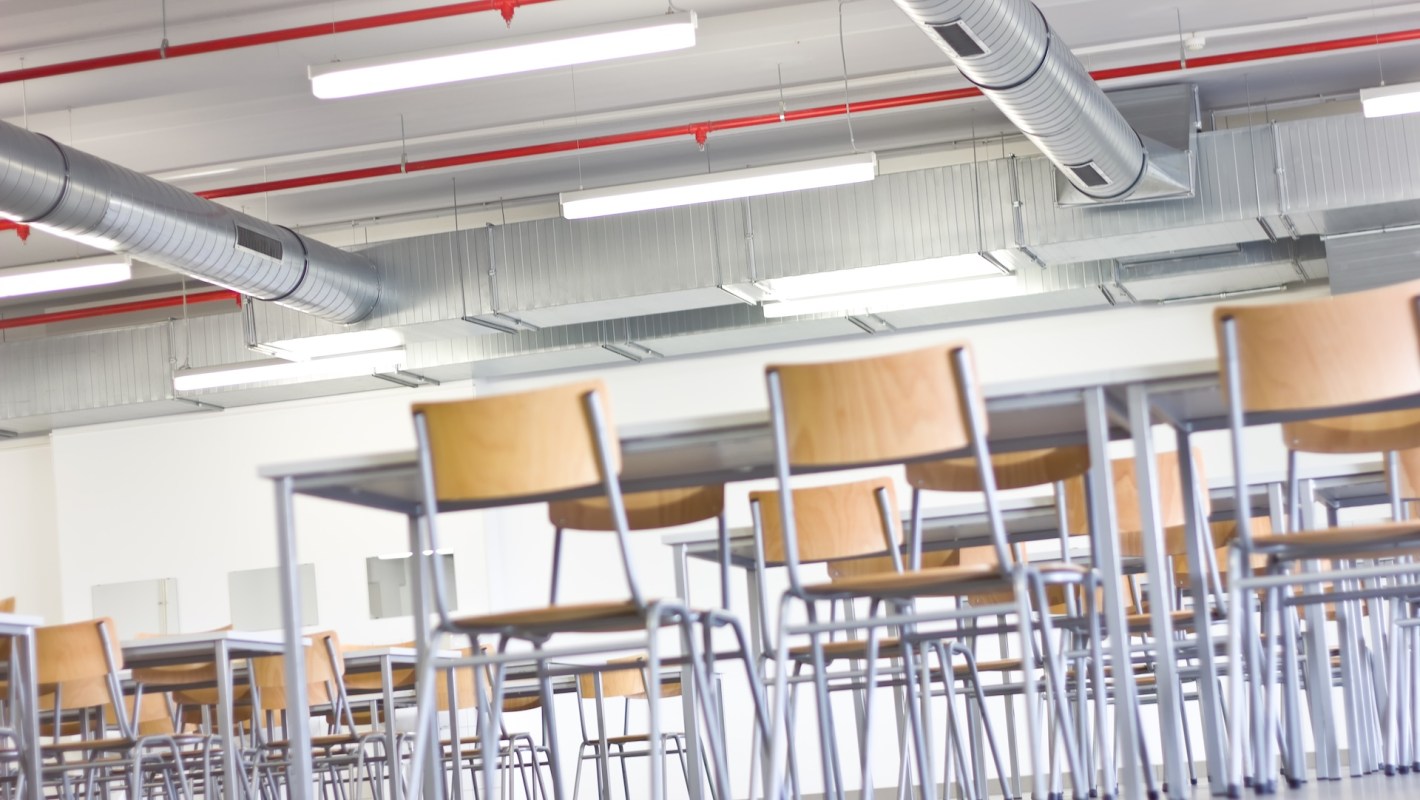
Across the western United States, wildfire smoke is increasingly reaching schools, but it might not impact every learning area the same. As Facilities Dive reports, Oregon State researchers say the air students breathe indoors can depend heavily on how their classrooms are ventilated.
What's happening?
Preliminary results from a small field study suggest that classrooms with mechanical ventilation can keep indoor pollution markedly lower, offering schools one practical way to better protect students during smoke season, the outlet revealed.
Facilities Dive revealed the findings were presented by Victoria McCrary, a graduate research assistant and Ph.D. student in Oregon State University's Sustainable, Healthy and Resilient Buildings Lab.
In the study, she monitored PM2.5, or particulate matter, in three rooms from April 2023 through July 2024, the outlet said. Each space had a different setup.
Facilities Dive noted that one classroom used a window AC and a portable air cleaner, another had a newer mechanical ventilation system, and the staff room used a mini-split HVAC unit with a portable air unit.
Smoke from two wildfires pushed PM2.5 levels in all three spaces above World Health Organization guidance for healthy indoor air, the outlet recounted. Even so, the rooms did not perform the same way.
TCD Picks » Quince Spotlight
💡These best-sellers from Quince deliver affordable, sustainable luxury for all




During the heaviest smoke, Facilities Dive said the classroom with mechanical ventilation kept PM2.5 substantially lower than the room without it.
"Our preliminary results showed that mechanically ventilated rooms showed lower [indoor-outdoor PM2.5] ratios than that of non-mechanically ventilated rooms," McCrary said, per the publication.
Facilities Dive noted she suggested the reduction was by nearly half compared to outdoors.
Why does it matter?
PM2.5 is one of the most dangerous components of wildfire smoke because the tiny particles can travel deep into the lungs and bloodstream.
McCrary cited National Library of Medicine research showing that every 10-microgram rise in PM2.5 is associated with a 16% increase in mortality from ischemic heart disease and a 14% increase in mortality from stroke.
That kind of exposure is especially risky for children.
"Children's health is more at risk compared to adults … because their body weight to breathing ratio is so much higher than adults," McCrary explained, according to Facilities Dive.
School buildings are a critical line of defense during smoke events. While the EPA's Air Quality Index helps track outdoor air, Facilities Dive said McCrary noted that there is no official indoor PM2.5 index, even though indoor levels often follow outdoor smoke trends.
The WHO target threshold she cited for healthy indoor air is 15 micrograms per cubic meter, the outlet said.
What's being done?
For schools looking for something they can act on now, McCrary's research highlights better ventilation.
Although smoke entered all of the classrooms, mechanical systems appeared to reduce exposure more effectively than window AC units or rooms without full mechanical ventilation.
The findings also suggest that school operators may need to think beyond simply closing windows. Filtration, ventilation design, and portable cleaning units can all affect how much smoke children actually breathe indoors.
McCrary said other indoor sources, such as cooking, can also affect particulate levels, making monitoring important.
The data could help guide decisions about classroom upgrades, air-cleaning strategies, smoke preparedness plans, and investments in healthier school buildings.
"We need to use buildings to help with the health and wellness of occupants when it comes to wildfires, and this is especially true when it comes to children," McCrary said, according to Facilities Dive.

Get TCD's free newsletters for easy tips, smart advice, and a chance to earn $5,000 toward home upgrades. To see more stories like this one, change your Google preferences here.






