


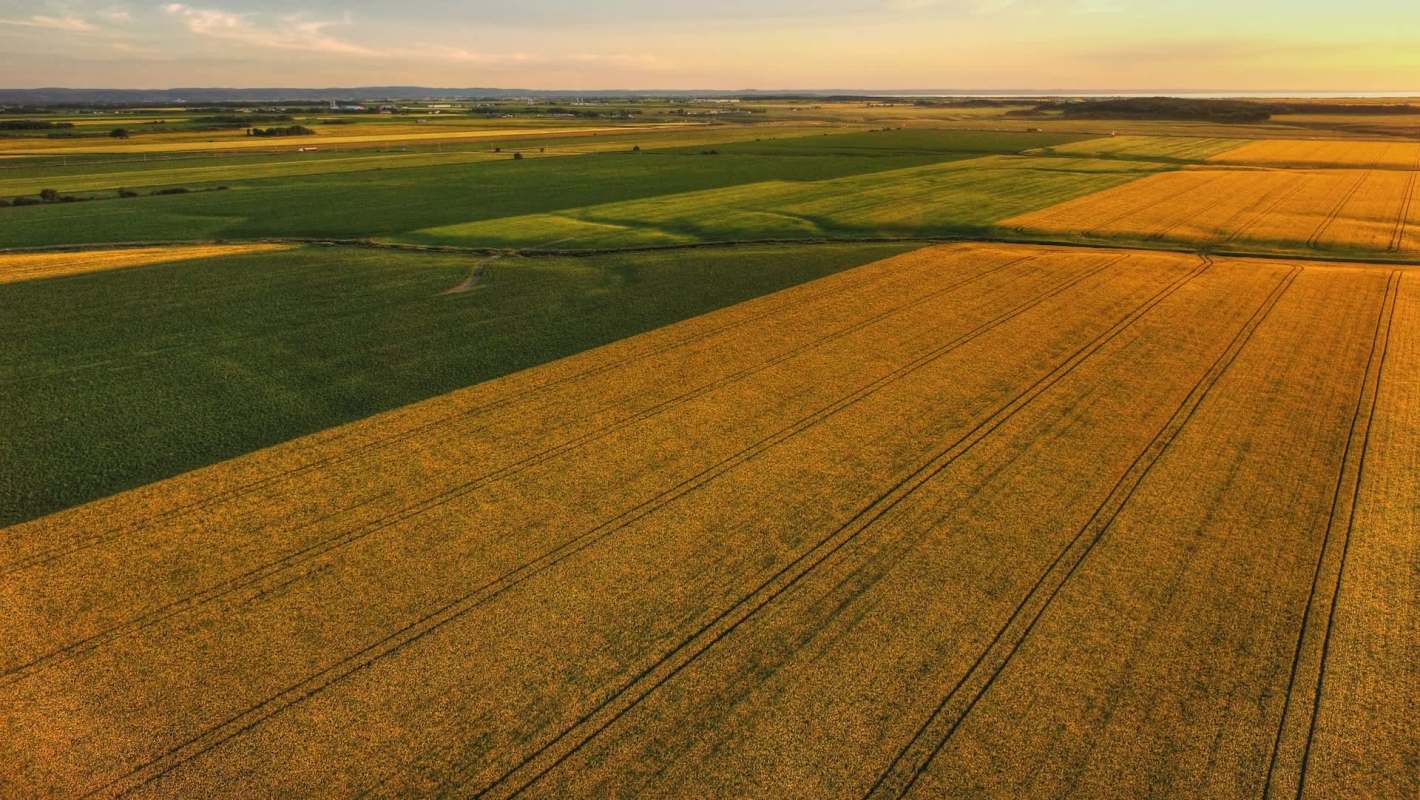
An agricultural trial underway at Northamptonshire's Manor Farm recently went from promising to potentially critical, the BBC reported.
Manor Farm, on the Castle Ashby Estate, began observing and assessing wheat crop quality from space using satellites.
On the surface, the trial might not sound all that cost-effective, but Manor Farm agronomist Louise Penn told the BBC that satellite monitoring could mean significant savings for farmers, along with improved crop yields.
Around the world, farmers have been hit with myriad setbacks in recent growing seasons, problems as diverse as the regions from which they hail. In some places, heavy monsoons have obliterated crops, whereas drought and dry conditions have wrought havoc elsewhere.
In recent months, extreme weather has battered crop yields in several countries, adding to the strain on already struggling farms.
Then, on March 2, a war in Iran led to the indefinite closure of the Strait of Hormuz — which, in addition to spiking global oil prices, abruptly put what CNBC described as a "vital commodity" in alarmingly short supply.
According to the United Nations, roughly "one-third of the global seaborne fertilizer trade" must cross the now-closed waterway, and the prices of various fertilizers skyrocketed overnight, sparking immediate fears for the global food supply.
The closure occurred just as "planting season began in earnest across much of the U.S.," as well as in the United Kingdom, where the satellite crop-monitoring trial could yield strategies for coping with an extended fertilizer shortage.
Penn is an ambassador for Agri-TechE, a non-profit organization focused on connecting agricultural enterprises with farms. That collaboration linked Manor Farm with Messium, a London-based agricultural tech firm specializing in optimizing nitrogen fertilizer for wheat crops.
As the BBC noted, calibrating the amount of fertilizer used is typically done manually. Messium's Spencer Terry maintained that satellites could save time and increasingly precious fertilizer.
TCD Picks » Quince Spotlight
💡These best-sellers from Quince deliver affordable, sustainable luxury for all




|
Which of these savings plans for rooftop solar panels would be most appealing for you?
Click your choice to see results and earn rewards to spend on home upgrades. |
 Save $1,000 this year 💸
 "We saw satellites as a very scalable way of doing these tests … for the first time we can measure nitrogen in the crops in a similar way to a lab test, but cover whole farms, several times per season," he explained.
Messium's tools can detect which areas would benefit from more or less fertilizer, optimize the timing of its application, and even calculate whether the product's cost would justify its use.
Fertilizer isn't the only challenge farmers face, which is why satellite crop analysis could make a massive difference for farmers with slim margins.
"So much goes into producing a field of wheat. If the margin is not there, we won't be putting crops in the ground. I think anything that saves farmers time, money [and] makes us more efficient ... is really great," Penn said.

Get TCD's free newsletters for easy tips to save more, waste less, and make smarter choices — and earn up to $5,000 toward clean upgrades in TCD's exclusive Rewards Club.
Cool Picks





