


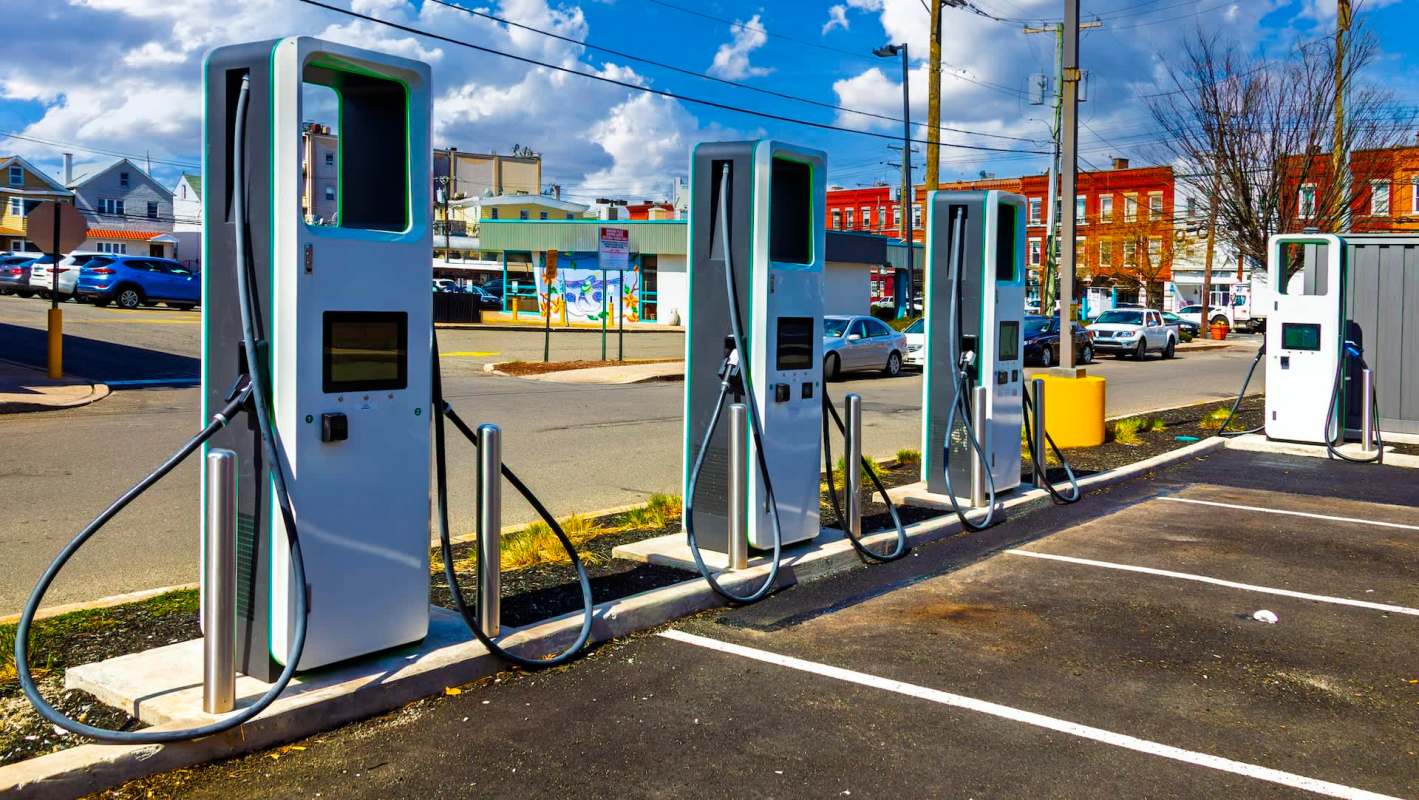
More than a quarter-million public EV charging ports are now available in the U.S., demonstrating just how far the country's shift toward cleaner transportation has progressed.
As Cars.com breaks down, that larger network gives drivers more places to plug in, expands access to quick charging, and reduces empty stretches on long-distance routes.
What happened?
Cars.com reports that the national total has reached nearly 252,000 public charging ports spread across about 81,000 locations. More than 178,000 of those ports are Level 2 chargers, and over 73,000 are DC fast chargers, according to the outlet.
Since July 2023, federal data show a 79% rise in total ports and a 50% increase in charging locations, Cars.com noted. Tesla is still the largest force behind that expansion, operating roughly 40,000 Supercharger ports nationwide.
Cars.com says Tesla is associated with about 1,600 of the DC fast chargers added this year. California has added about 1,300 DC fast chargers since January, and Florida, Texas, Illinois, and New York have logged notable gains as well, the website added.
Expansion is also coming from other major providers, including Electrify America, EVgo, and Ionna.
TCD Picks » Quince Spotlight
💡These best-sellers from Quince deliver affordable, sustainable luxury for all




Cars.com did caution that the buildout isn't the exact same everywhere. Some states like California are rapidly building out their charging networks, while other mostly rural states are making slower progress.
Why does it matter?
Charging access has long been one of the biggest concerns for would-be EV buyers.
Even as electric vehicles become more common, many drivers still worry about where they will charge during road trips, daily errands, or when they do not have access to a charger at home.
A larger public network helps ease that hesitation. More Level 2 chargers make it easier to top off while shopping, working, or dining out, while more DC fast chargers can significantly cut downtime on longer drives.
EVs can help reduce the tailpipe pollution linked to rising global temperatures and poor air quality, and many drivers spend less on electricity than they would on gasoline.
What's being done?
The latest figures suggest charging companies are responding to demand with a mix of expansion strategies.
Fast-charging growth remains an area where Tesla is scaling quickly, but it is no longer the only company pushing the network forward. Electrify America, EVgo, and Ionna are increasing their station counts as well.
More competition could improve reliability, placement, and convenience over time. The 250,000-port milestone does not mean the buildout is complete, though.
Cars.com noted there are still areas with large distances between fast chargers, and densely populated ones where getting a fast charger is highly contested.
The U.S. still has more work to do before charging is seamless everywhere. Still, charging networks are expanding more quickly, with more providers and more stations coming online than a year ago.

Get TCD's free newsletters for easy tips, smart advice, and a chance to earn $5,000 toward home upgrades. To see more stories like this one, change your Google preferences here.






