


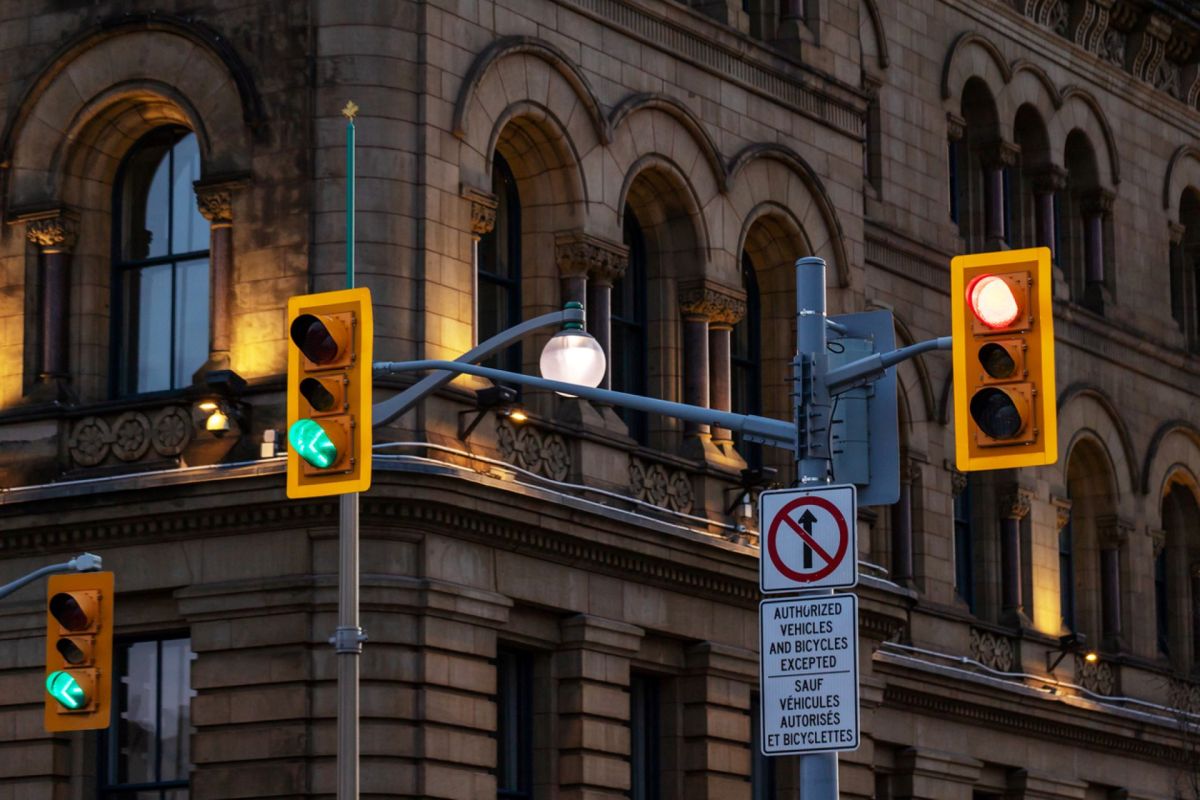
Google is expanding its revolutionary traffic light system — which should be a big win for pollution in major cities.
The tech giant announced a number of exciting climate-forward initiatives that should help the company usher in a greener future, including the expansion of an existing project that is literally green: Project Green Light, a system that makes intersections and traffic lights more efficient and less polluted.
Google first announced the system in 2021, seeing success in Hamburg and Seattle, and it will now expand to over a dozen major cities around the world, including Budapest, Rio de Janeiro, Jakarta, and Manchester, according to The Verge.
Project Green Light uses artificial intelligence to optimize and alter intersections in order to minimize vehicles' stopping and starting. Google reported that at busy intersections in cities, pollution can be 29 times higher than it is on open roads, due to the environmental toll of cars stopping and starting again.
The system helps streamline outdated traffic light systems so that lights change based on updated traffic patterns rather than the outdated ones that are used in many cities. As a result, Google has found that Project Green Light can trigger up to 30% fewer stops at a given intersection and 10% less pollution at intersections as a result.
The company predicts that the system can reduce pollution for as many as 30 million car rides each month — and as the system goes online in more cities around the world, that number can only go up.
TCD Picks » Quince Spotlight
💡These best-sellers from Quince deliver affordable, sustainable luxury for all




The Environmental Protection Agency recently announced that it's tightening up the amount of pollutants that gas-powered cars are permitted to produce (a good change, given pollution's negative effects on human health), which makes the streamlining of intersections a welcome step toward less pollution.
"Fighting climate change is humanity's next big moonshot," said Sundar Pichai, the CEO of Google's parent company Alphabet. "And as with any moonshot, we're going to have to answer some big questions to get there."
Join our free newsletter for weekly updates on the coolest innovations improving our lives and saving our planet.






