


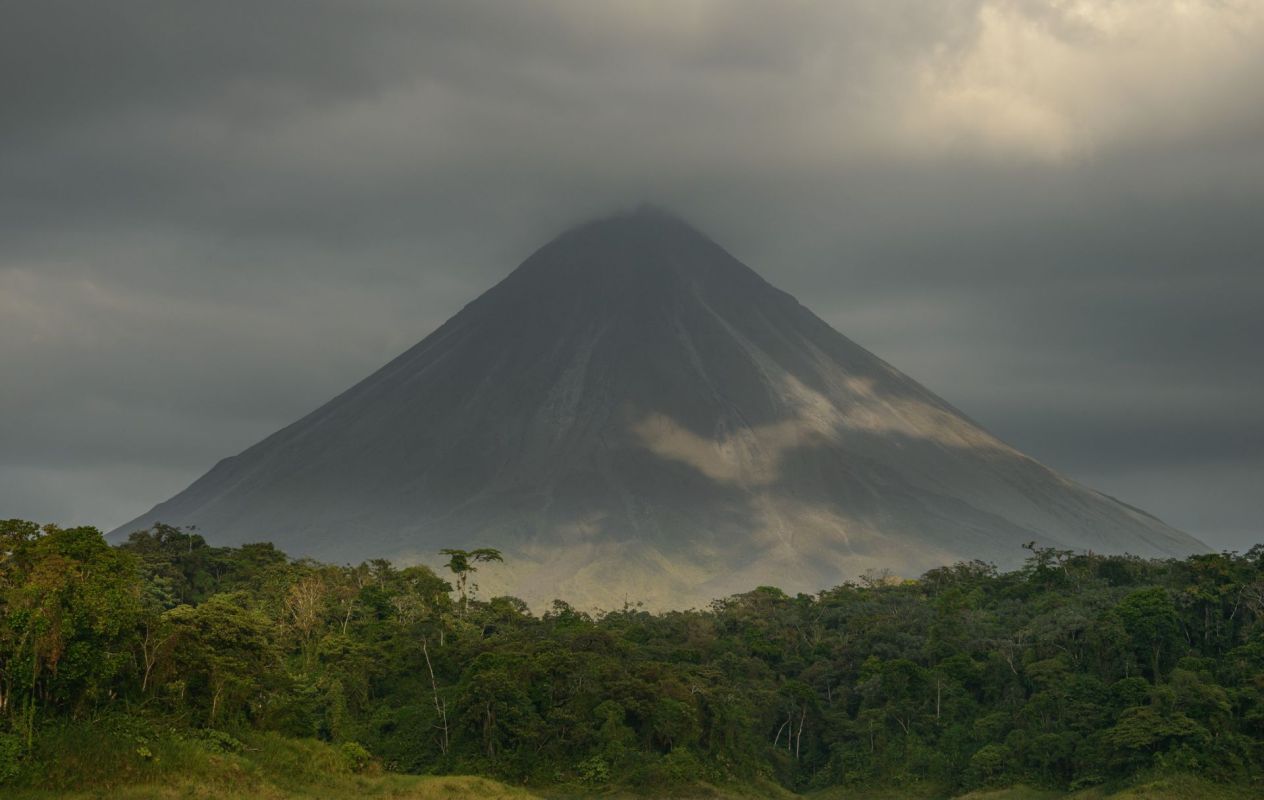
Rising magma beneath a recently erupted volcano can lead to the collapse of the volcano's slopes. An article in Phys.org said the exact conditions and triggers that incite collapse are unknown.
One scientist, however, has developed models for predicting volcano stability. Christelle Wauthier, an associate professor in Penn State's Department of Geosciences and hub director for Computational and Data Sciences, published the models in the Journal of Geophysical Research: Solid Earth.
These models could save lives.
ABC Science said that when a volcano erupts, lava will not be the most likely killer. Hot gas is a common culprit for death, as are tsunamis. Tsunamis following an eruption are caused by the slippage of rock into the water.
Wauthier and her team studied past volcano slope slips and developed a method to predict how slopes could respond to rising magma under different conditions, as well as where collapse is most likely to occur.
Penn State said that it was determined that a collapse is most likely to occur on slopes with shallow fault dips beneath the surface.
The models can help local authorities and communities assess the potential for volcanic collapse before disaster strikes. In such a case, knowledge truly is power.
"If you have an idea of which area of the volcano is more susceptible to collapse, you could place ground-based sensors such as seismometers or GPS to monitor a risky flank on a minute-to-minute or hour-to-hour basis well before a collapse happens," Wauthier said.
A collapse on its own could be detrimental to communities near volcanoes, but subsequent tsunamis are a bigger hazard.
In 1883, according to the National Oceanic and Atmospheric Administration, Anak Krakatau, a volcano in Indonesia, erupted. A slope collapse followed, triggering a deadly tsunami. ABC Science said that 90% of the deaths from the eruption were from the tsunami, which killed more than 36,417 people.
TCD Picks » Quince Spotlight
💡These best-sellers from Quince deliver affordable, sustainable luxury for all




|
Do you worry about companies drilling too deep into the ground? Click your choice to see results and speak your mind. |
 Definitely 💯
 "These collapses can be very, very dangerous," Wauthier said.
This technology is in the works at a pivotal time.
On our heating planet, shifts in climate are impacting more than just weather patterns. According to Polytechnique Insights, volcanic eruptions are also being affected. As the years pass, volcanic regions will likely see an influx of eruptions, collapses, and tsunamis.
Wauthier and her team still have follow-up research to be done. Model calculations may be strengthened, and more testing will be conducted.
As they continue to develop the models, the world can look forward to the implementation of their potentially life-saving technology.

💰Get TCD's free newsletters for easy tips to save more, waste less, and make smarter choices — and earn up to $5,000 toward clean upgrades in TCD's exclusive Rewards Club.
Cool Picks





