For years, scientists have warned that "forever chemicals" are accumulating in water, wildlife, and people. Now, research suggests the problem may be more complex, raising concerns about how these chemicals are regulated.
What's happening?
Chemists at the University at Buffalo analyzed samples of water, fish, and bird eggs and found that one of the most dangerous PFAS, perfluorooctanesulfonic acid, behaves differently as it moves through ecosystems. While PFOS is already known to persist in the environment and human body, the researchers discovered that its chemical structure shifts depending on where it ends up. The findings were published in the Journal of Agricultural and Food Chemistry and the Journal of the American Society for Mass Spectrometry.
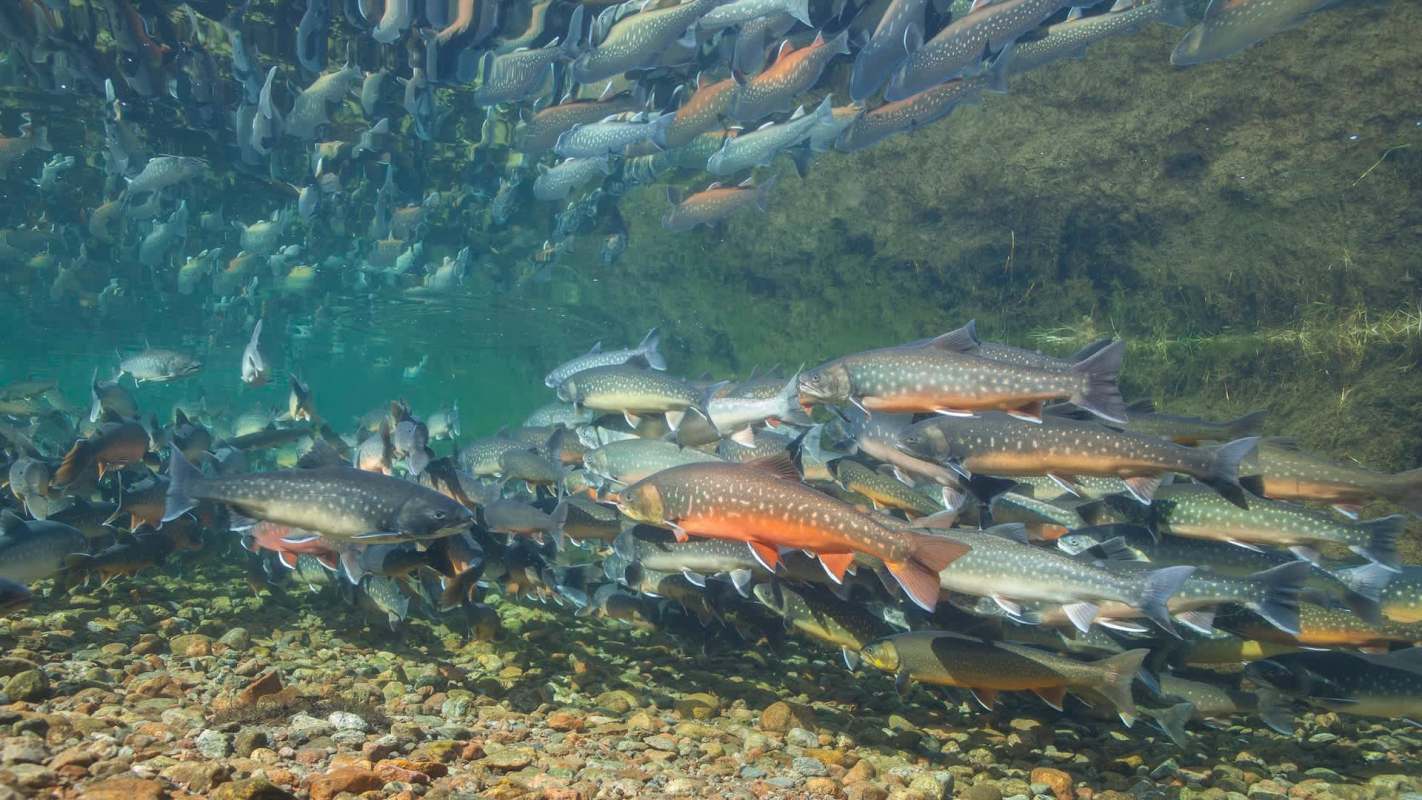
In wastewater and supermarket fish, more than half of the PFOS detected appeared in "branched" forms, which dissolve more easily in water. But in the egg yolks of fish-eating birds, nearly 90% of the PFOS showed up in a "linear" form — a structure that binds more tightly to proteins and tends to linger in tissues longer.
"Taken together, these results suggest that as PFOS moves across the food web — from water to fish to birds — its linear isomers become more prevalent than branched isomers," said Diana Aga, the study's senior author. "Our study is yet another piece of evidence that PFAS isomers can bioaccumulate at different rates and should not be treated as if they were all the same."
Why are PFAS concerning?
Per- and polyfluoroalkyl substances have been linked to cancer, immune system suppression, hormone disruption, and developmental issues. What's troubling about these new findings is that regulators in the United States and Europe typically measure PFAS as a single group, without distinguishing among different structural forms that may pose different risks.
The study also found that bottom-dwelling fish contained higher PFOS concentrations than fish in open water. That matters for people who regularly eat these kinds of fish, as it suggests some consumers may face higher exposure.
TCD Picks » Upway Spotlight
💡Upway makes it easy to find discounts of up to 60% on premium e-bike brands





What's being done about PFAS?
The researchers used advanced testing tools to separate PFAS by shape to get a clearer picture of how they behave inside living organisms. That insight could help inform future regulations that better reflect real-world risks instead of treat all PFAS equal.
Many governments are phasing out PFAS, tightening drinking-water standards, and funding cleanup efforts. For example, California introduced a PFAS ban to include more categories of items. Researchers are also working on chemical alternatives to products such as Teflon.
Individuals can limit their exposure to PFAS by tracking local water quality reports, increasing fiber intake, upgrading cookware to PFAS-free options, and supporting stronger chemical regulations.
|
Do you worry about having toxic forever chemicals in your home?
Click your choice to see results and speak your mind. |
 Majorly 😥
Get TCD's free newsletters for easy tips to save more, waste less, and make smarter choices — and earn up to $5,000 toward clean upgrades in TCD's exclusive Rewards Club.
TCD Picks » Quince Spotlight
💡These best-sellers from Quince deliver affordable, sustainable luxury for all




Cool Picks