


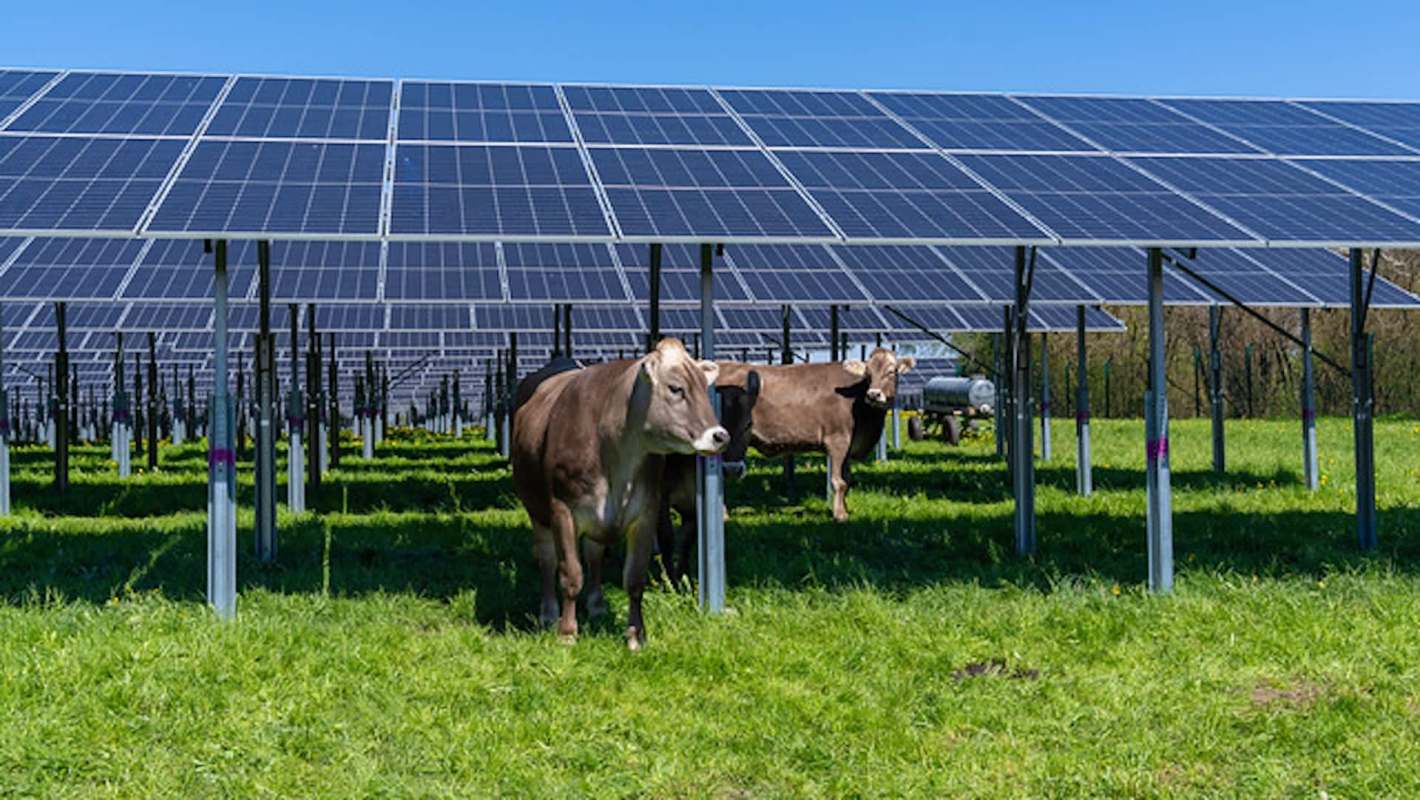
Nestlé is trying an unusual energy setup in Bavaria. The arrangement includes a large bank of solar panels installed above a working cow pasture, with the electricity helping run a nearby factory, as Indux reported.
What happened?
Even with 7,800 panels spread across 11.7 acres, the land beside Nestlé's Biessenhofen nutrition factory is still meant to support grazing and hay production. Nestlé Germany said in a press release that the 4.5-megawatt project began operating in April 2026 and is expected to supply about one-quarter of the factory's electricity, per Indux.
The project falls under agrivoltaics, a model that keeps farming in place while generating solar power on the same plot of land.
Mounted roughly 6.6 feet above the ground, the panels leave enough clearance for cattle to move around underneath them and give the animals cover during heat and rain, as the outlet noted. About 10.8 feet separate each row, which leaves room for tractors, mowers, and forage wagons to pass through.
Nestlé said the layout complies with Germany's DIN SPEC 91434 standard, which is intended to keep agriculture as the land's main use.
Next to the array, a new barn can accommodate up to 50 cows and has automated milking equipment. Before the system reached full output, Indux noted it generated electricity equal to 14% of the factory's demand and sent surplus power into the public grid.
TCD Picks » Quince Spotlight
💡These best-sellers from Quince deliver affordable, sustainable luxury for all




Why does it matter?
If the model works, it suggests a factory can make some of its own electricity without taking farmland out of production, potentially reducing part of its fossil-fuel use.
Nestlé plans to pair the solar installation with industrial heat pumps designed to capture leftover heat from production and raise it to temperatures the factory can use, Indux reported.
One heat pump has been supplying the factory's heating network with water at around 140 degrees Fahrenheit since July 2024, and the company plans to add a higher-temperature unit.
Indux noted industrial heat is often harder to clean up than electricity use alone. If factories can reduce natural gas use with on-site solar and heat pumps, they may be able to cut pollution, limit exposure to fuel-price volatility, and make operating costs more predictable. Those benefits can extend to workers, nearby communities, and consumers.
There may also be benefits for the animals. Nestlé has not demonstrated at this site that the setup improves milk production or herd health, as Indux pointed out. However, farmer Gerhard Metz has said that the panels give cows protection from inclement weather, per Nestlé.
What's being done?
At the factory level, Nestlé is using the site to test a more adaptable energy system. Electricity generated on-site can be used directly when it lines up with machinery, heating, cooling, and production demand, reducing how much the plant must rely on external sources.
The company said that its first two heat pumps may avoid more than 3,300 short tons of carbon dioxide pollution each year. It also plans to add more heat pumps, thermal storage, and cooling equipment, which could help the site better optimize its energy.
The project also points to a cost-saving strategy for businesses, schools, or cities considering the pairing of renewable electricity with equipment that can use it on-site immediately.

Get TCD's free newsletters for easy tips, smart advice, and a chance to earn $5,000 toward home upgrades. To see more stories like this one, change your Google preferences here.






